

Cash is still king in South Africa


The South African Reserve Bank’s (SARB’s) latest position paper shows that cash remains, and will continue to be, a fundamental part of the nation’s economy for years to come.
The position paper outlines three primary objectives for cash: reducing costs, ensuring equitable access, and securing physical currency.
The SARB added that market forces alone cannot guarantee universal access, cost efficiency or system-wide resilience as commercial incentives evolve.
The framework sets a sector-wide standard applicable to banks and non-bank service providers, like cash-in-transit operators, retailers, and ATM deployers.
While digital payments are becoming increasingly prevalent in South Africa, cash is essential for over two-thirds of transactions, especially in rural areas, informal markets and lower-income households.
The position paper explicitly states that South Africans still rely on cash and that it continues to play a critical role in everyday commerce.
The SARB’s data shows that roughly half of the cost of cash is carried by consumers, which works out to around R89 billion per year, via the following direct and indirect costs:
- Explicit fees (35%)
- Time spent travelling to access cash (31%)
- Accessing cash (14%)
- Losses that include crime (13%)
- The sourcing of cash from retailers (4%)
- Opportunity costs of holding cash (3%)
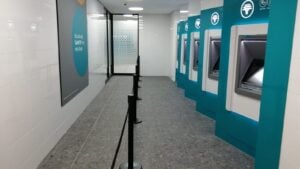
Given the costs facing consumers, the Reserve Bank has proposed a host of changes, including introducing white-label ATMs.
Cash is here to stay

Lerato Lamola, Partner at Webber Wentzel, said that cash is viewed as a critical public-interest component of the national payment system.
Lamola added that the SARB intends for cash to be treated as a system-wide public good, governed via an integrated framework that balances efficiency, competition, resilience and inclusion.
In addition to regulating bank and non-bank entities in the space, the SARB also intends to create a public entity within the cash ecosystem that would play a more active role.
The SARB recently purchased a 50% stake in PayInc, formerly BankservAfrica, which is the clearinghouse that manages PayShap.
Lamola said the public entity’s intention is to create a cash utility that will expand access to wholesale cash and reduce cash costs.
“It is further envisaged that the cash utility will create value by reducing the inventory carried by many participants throughout the supply chain,” she said.
“The proposition of white-label ATMs is seen as an important access mechanism for sustaining cash availability, particularly as traditional bank-owned ATM infrastructure is being rationalised,” she added.
She added that the SARB positions its Cash Smart Strategy as a reflection of its commitment to ensuring that cash retains a clearly defined and protected role.
It also wants to create a holistic cash ecosystem, with regulatory effect to ensure consistent and practical implementation.
With the SARB still in the early stages of its new cash strategy, further engagement and formal consultative processes will follow as the SARB finalises its framework and architecture for its cash ecosystem.
“The Position Paper is a reminder to all of us that, while digital payments represent the future of payments, cash cannot be left out of the conversation,” said Lamola.














 Loading ...