

One thing the United States doesn’t want to admit about South Africa


The United States has publicly criticised and threatened South Africa over policies it disagrees with. However, the extension of the AGOA trade deal shows that the US needs South Africa.
According to Oxford Economics analyst Jervin Naidoo, the United States’ extension of its African Growth and Opportunity Act (AGOA) until the end of 2028 is a win for South Africa and the US itself.
AGOA was enacted by the US in 2000, granting many African countries, including South Africa, duty-free access to the US market.
The trade law lapsed in September 2025 and was retroactively extended to the end of 2026, until it was recently given a further two-year extension to the end of 2028.
Naidoo said that the extension was not just a win for South Africa, where many exporters benefit from the Act, but also for the US, which has its own trade issues to work through.
In an interview with CapeTalk, Naidoo said that having South Africa part of AGOA is just as important to the Americans.
“The US needs South Africa in AGOA as much as South Africa wants to remain, as part of receiving preferential access to the US market.”
He said that trade laws enacted by China may have placed pressure on the US to extend AGOA to protect its exports from Africa.
China recently introduced a zero-tariff preference scheme for several African countries, including South Africa, on a temporary basis for qualifying goods.
This temporary tariff scheme came into effect on 1 May 2026 and will remain in effect until 30 April 2028.
Naidoo said that the AGOA extension was “More of a counter because China has opened up its market completely to African countries.”
“It’s not just in South Africa – if you look at the other countries that are eligible under AGOA (Tanzania, Kenya, Nigeria), all of these countries have Chinese interests”.
Many South African exporters benefit from AGOA, with an estimated 22% of the country’s exports to the US qualifying for duty-free treatment.
Estimates also suggest that approximately half a million South African jobs are dependent on the programme.
Tension between South Africa and the US
Although the two-year extension of AGOA is good news for South African exporters, Naidoo said that it was a “mild reprieve”.
Many South African businesses were hopeful for a longer extension of the trade agreement to help bring investor confidence to South Africa’s export industry.
“It’s not enough time to make long-term strategic decisions,” Naidoo said, with South Africa previously pushing for a 15-year extension to the programme.
Naidoo said that AGOA was an important agreement between the US and South Africa, despite “not-so-good relations” between the two countries recently.
“Having South Africa part of AGOA is important to the Americans, despite our not-so-good relations over the last 24 months,” he said.
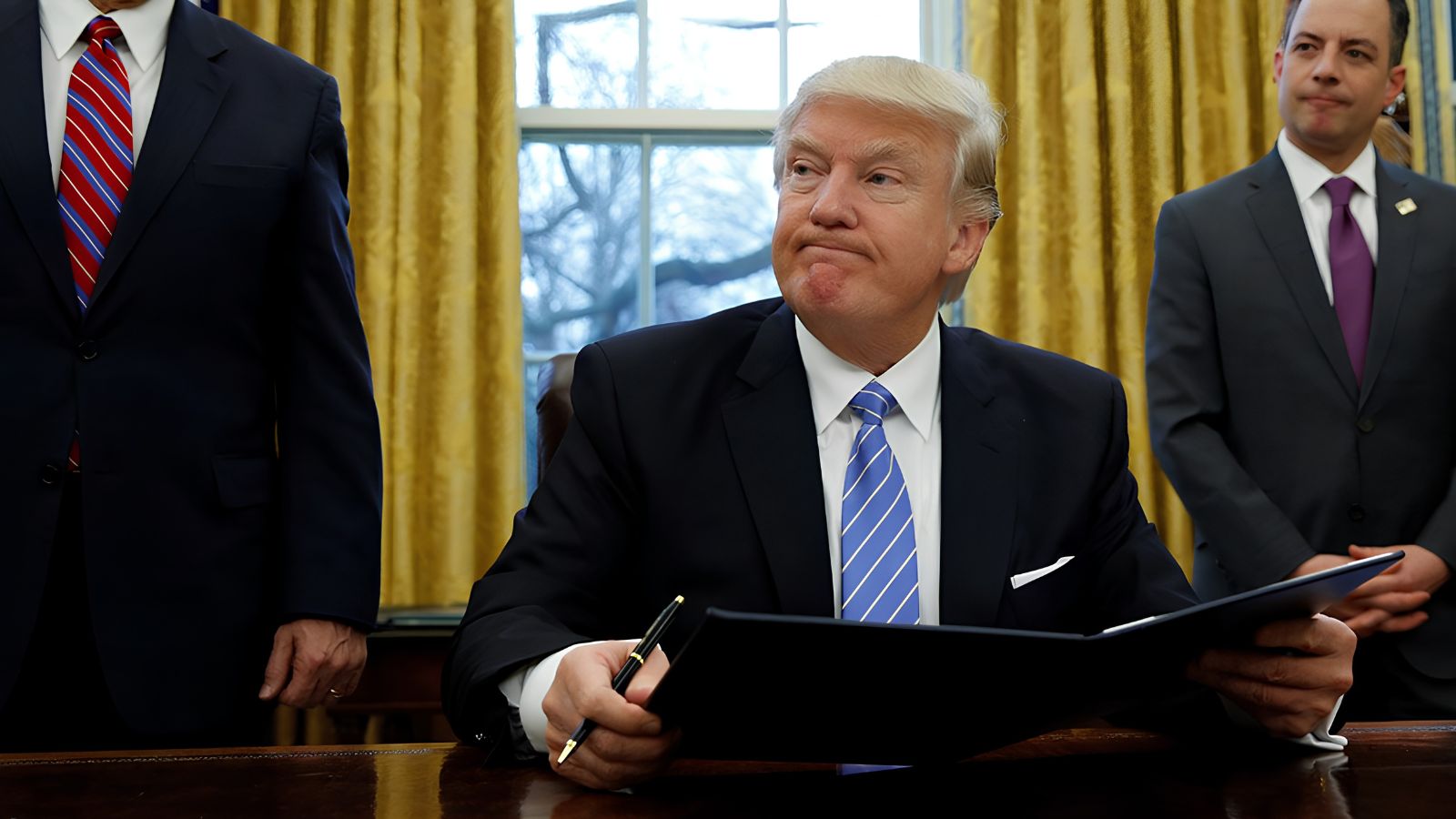
Some US politicians have pushed to exclude South Africa from AGOA, with two bills introduced in 2025 to that end.
Trade Union Solidarity has said that South Africa’s exclusion from the programme could have devastating effects on the country.
“South Africa’s exclusion will have a devastating impact on important local industries, particularly the automotive and agricultural sectors, and will put thousands of specialised jobs at risk,” the union said.
Relations between the two countries have been strained for years, with recent trade tensions centring around planned tariffs of 12.5% on South African goods exported to the US.
The US said these tariffs were planned due to South Africa’s lack of explicit laws blocking the import of goods made using slave labour.
Before this, US President Donald Trump’s administration introduced a controversial Afrikaner refugee programme in response to claims of genocide in South Africa.
South Africa has objected to the programme, with the Department of International Relations and Cooperation saying it was not supported by evidence.
“The claim of a ‘white genocide’ in South Africa is widely discredited and unsupported by reliable evidence,” the department said in October 2025.

















 Loading ...