

Red flags over R2.6 billion owed to workers in South Africa


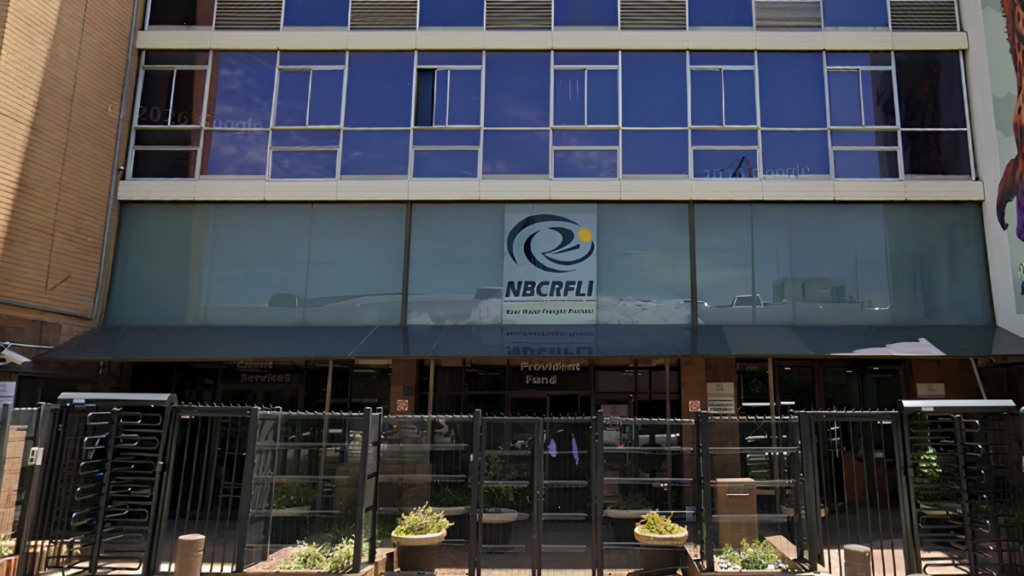
The National Bargaining Council for the Road Freight and Logistics Industry (NBCRFLI) has listed R2.59 billion in worker benefit funds as its own property.
This was revealed in an analysis of the NBCRFLI’s audited financial statements, which raised concerns about the council’s financial reporting and its reliance on investment earnings.
The NBCRFLI represents sectors that transport goods by motor vehicle for a fee, including general freight, furniture removal, courier services, and cash-in-transit (CIT).
It also oversees the storage of goods, which involves receiving, unpacking, packing, dispatching, clearing, and accounting.
The NBCRFLI does not cover all transport businesses; those that transport their own goods, like Shoprite Group, Woolworths, and Pick n Pay, are exempt.
The analysis follows a case from 2024, when Innovative Staffing Solutions (ISS) took the NBCRFLI to court after the council stopped making its financial statements public.
The High Court ruled against the council and ordered it to publish its financial statements for 2018 to 2025 and to pay ISS’s legal fees.
When the published financial records were analysed, R2.59 billion that was intended for worker benefits was listed on the council’s financial records as if it were the council’s own property.
The council did not produce separate audited financial statements for each fund, which violates legal requirements.
Not having separate audited statements for each fund makes it very difficult for workers to assess whether their funds are securely protected.
The worker benefits include Sick Pay, Holiday Pay, Leave Pay, and Wellness benefits for workers such as truck drivers, forklift operators, and warehouse staff.
Another concern was that the three key worker benefit funds did not have sufficient assets to cover workers’ owed amounts at year-end for three consecutive years.
The combined shortfalls were R35.8 million in 2021, R23.1 million in 2022, and R31.2 million in 2023.
Another R364.5 million in Wellness Fund contributions, as well as R309.7 million in medical expenses, were mixed into the Council’s income and expenses, which severely blur financial boundaries.
ISS calls on the Department of Employment and Labour to intervene

ISS Managing Director Arnoux Maré said that the council’s own rules require its financial information to be made available, and court action should not have been necessary to obtain it.
“Now that its financial statements have been made public, the council must address the concerns these statements have brought to light,” he said.
“Workers should be able to see whether those funds remain properly ring-fenced, whether each fund can meet what it owes to workers, how income earned on that money is being used, and whether it is being used for workers’ benefit.”
The NBCRFLI funds a large portion of its daily operations through interest earned on worker benefit funds, rather than relying on administrative levies.
For the year ending February 2025, the NBCRFLI earned R325 million on interest, which is more than double the R148.1 million it collected in levies.
The findings indicated that the levies contributed less than 18% of the total revenue of R837.7 million, while interest income has exceeded levy income every year since 2018.
It also found that benefit fund investments accounted for R2.59 billion of the R3.42 billion investment portfolio, which represents 76% of the total.
The findings revealed that the organisation’s financial sustainability heavily depends on interest and investment returns, which makes it vulnerable to changes in market conditions and interest rates.
For example, the Council’s only recorded deficit in eight years occurred in 2022, when interest income fell to R131.4 million.
The ISS is now urging the Department of Employment and Labour and the Registrar to intervene.
The ISS is calling on the Registrar and Department of Employment and Labour to verify compliance and require publication of the separate benefit fund accounts.
It is also urging the Council’s employer and union parties to review how investment earnings and accumulated surpluses are used.

















 Loading ...