

Severe weather hitting South Africa where it hurts


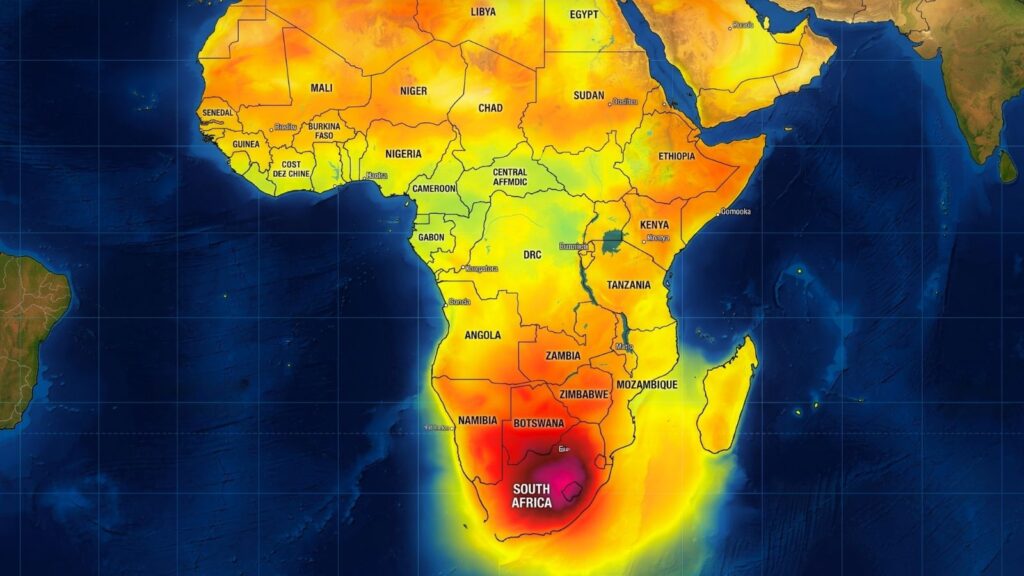
The looming El Niño weather patterns are intensifying as expected, with the impact on South Africa’s economy likely to cut growth by up to 0.2 percentage points.
According to Investec Chief Economist, Annabel Bishop, the so-called “super El Niño” is developing in line with projections, with the World Meteorological Organisation tracking rising temperatures.
The severe weather pattern will continue to intensify ahead of its forecast peak in December, the organisation said, with Pacific sea surface temperatures forecast at record levels in Q4.
The result of the 2026/27 El Niño will be a global shift in weather patterns that will hit South Africa as well.
The conditions are expected to last until February 2027, after which a La Niña (wetter) pattern is anticipated to follow.
Historically, El Niños have led to dry weather in South Africa, with drought conditions persisting for longer, putting agriculture under strain.
The dry conditions are hitting South Africa’s farmers as they plant their crops.
According to Bishop, while South Africa won’t escape the dry weather in the coming season, the latest forecast rainfall pattern for the country remains neutral to only slightly below average for the period.
Helping the situation are higher soil moisture and dam levels following last year’s La Niña.
Because of this, the impact on South Africa’s economy is also expected to be less severe than in previous El Niño events, despite global conditions being worse.
Notably, the 2024 El Niño drought was particularly substantial for the agricultural sector, reducing GDP growth from 0.5% y/y to 0.3% y/y for the year.
The 2026 El Niño will likely be a bit better, but still negative for the economy, Bishop said.
“We continue to expect the negative impact on GDP this year from the El Niño will be 0% to -0.1% y/y, and next year not worse than -0.2% y/y,” she said.
Double-whammy

The severe weather hitting the agriculture sector comes as it is facing other external pressures, such as the rising cost of fuel.
Motorists and industry fuel users were hit with a R3 per litre hikes to petrol and diesel in October, taking pump prices over R30 a litre for the first time in history.
Under-recoveries are again building for November, currently around the same levels. These rising costs are hitting farmers as the El Niño looms.
Bishop noted that agriculture has a meaningful impact on South Africa’s GDP—last year’s 1.1% y/y growth was led by the agricultural sector amid favourable La Niña conditions, with an outcome of 0.7% y/y excluding the agricultural sector.
Forecasts for GDP growth in South Africa have already been slashed, with the outlook for 2027 growing dimmer.
Bishop now expects growth in 2027 at 1.5% y/y, down from the previous 1.7% y/y projection.
“However, much depends on the global economy and, in particular, good governance and growth-creating reforms in South Africa that overcome the structural constraints to economic growth rapidly for the country,” she said.
She also flagged inflation—likely to be driven higher by fuel costs and the weather.
“CPI inflation risks being above 5.0% y/y when it enters the dry period from the El Niño, and the double-whammy could see higher interest rates as the SARB battles inflation,” she added.
In turn, this would be negative for GDP growth, and the already downwardly revised GDP forecast for next year of 1.5% risks coming out even lower as a consequence.


















 Loading ...