

Rand gets hammered as the dollar rises



The South African rand has crumbled against a resurgent US dollar over the past week, weakening by close to 7% as markets eye interest rate hikes in the world’s largest economy and money flows out of riskier markets.
According to Johann Els, Chief Economist at PSG Financial Services, the rand’s position is currently being swayed by developments in international markets rather than by local news.
While multiple economists have pointed to uncertainty around the local government elections and reports of coalition talks as contributing factors, these are being outweighed by US market developments.
The rand has weakened sharply over the past week or so, moving from around R16.42/$ on 9 November to R17.53/$ on Friday.
“This has relatively little to do with local developments, including concerns around government coalition formation, the stability of the GNU or the Reserve Bank’s decision to keep interest rates unchanged,” Els said.
“Much more of the weakness reflects a resurgent US dollar. Over the same period, the US Dollar Index has strengthened from around 101.8 to almost 104, while the dollar has moved from around $1.12 to $1.10 against the euro.”
The move has also been evident in other emerging-market and commodity currencies, suggesting it is largely a broader dollar move rather than something specific to South Africa or the rand, Els said.
The economist said that the stronger dollar is driven by two main factors: expectations of a December interest rate hike in the United States and a sell-off in technology shares, particularly amid concerns about stretched AI valuations.
“This has resulted in a broader move away from riskier assets,” he said.
Els said that, while the rand is trading weaker, there’s “no need to panic”, as the currency has developed remarkable resilience to markets and is likely to recover.
“The recent weakness should be seen primarily in the context of a stronger US dollar and a broader deterioration in global risk appetite, rather than a significant deterioration in South Africa’s underlying economic fundamentals,” he said.
“Looking ahead, I do expect the rand to recover some of its recent losses and retreat towards levels seen before this bout of weakness.”
He added that the prospects for the South African economy have improved, with better growth and a stronger fiscal outlook, and that ratings upgrades are on the cards.
“These improvements should gradually translate into a lower risk premium attached to South African assets. I therefore remain reasonably positive about the rand’s medium-term prospects, with the possibility of a stronger and, importantly, more stable currency over time,” he said.
Local uncertainty is still a factor
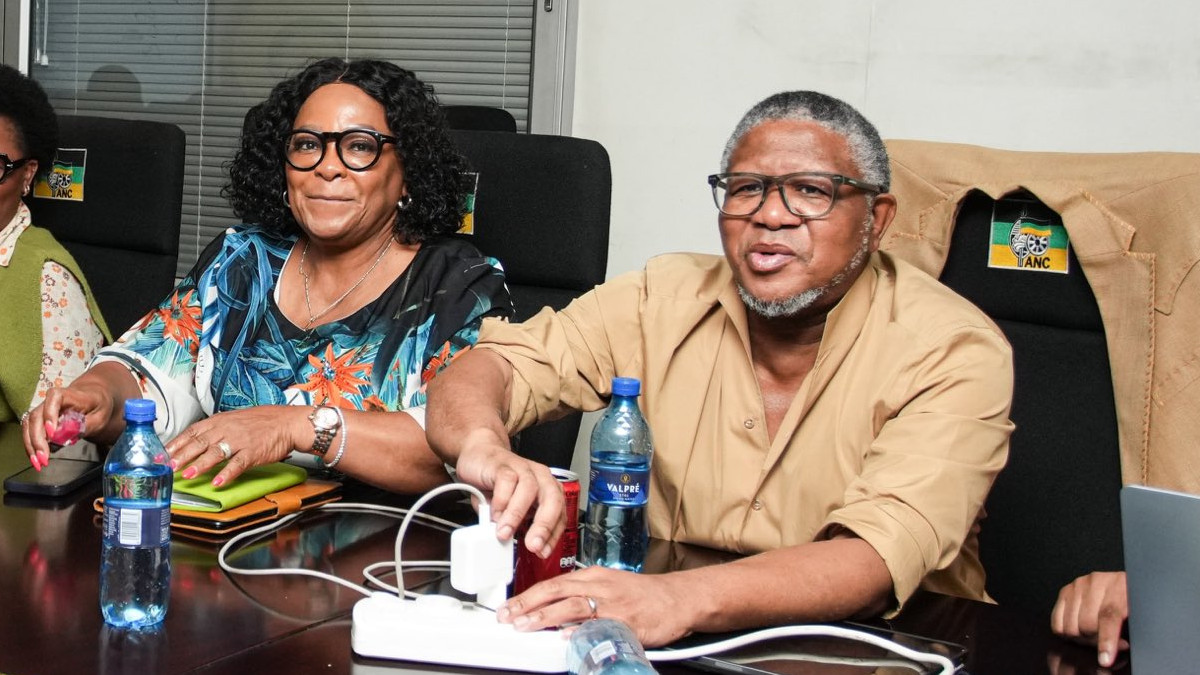
While a rising dollar is in the driving seat, local affairs are still a factor in the rand’s story—not only regarding the immediate investment case for major metros, but also in the stability of national government.
Investec Chief Economist, Annabel Bishop, noted that uncertainty persists on which coalitions will emerge from the hung councils.
However, she stressed that market reaction isn’t necessarily tied to any specific party combinations, but rather the stability of the coalitions that emerge.
After a fragmented election result, multiple parties have entered into negotiations and talks on coalitions, with the most publicised being a tie-up between the ANC and ActionSA, with parties like the EFF and MK in the mix.
This result would lead to multi-party coalitions in Gauteng’s metros in particular, on a scale similar to that seen after the 2021 elections.
“An ANC-ActionSA administration is not expected to be negative for Gauteng’s metros,” Bishop said.
“However, changing and shifting coalitions would be, and this occurred after the last municipal elections of 2021 on repeated motions of no confidence.”
For the rand, bond market and the credit rating agencies, Bishop said the best outcome isn’t specific party combinations so much as “stable coalitions that endure through budget cycles and substantially change municipal finances and infrastructure for the better”.
Nevertheless, there are combinations that increase the chances of stable coalitions.
“Stable coalitions with the ANC or DA would underpin reform and fiscal-improvement supporting credit rating upgrades from Fitch, S&P and Moody’s for South Africa,” Bishop said.
Over the longer term, regarding the GNU, uncertainty may persist if local government coalitions lead the participating GNU parties—especially the ANC and DA—to review or reassess their participation.
This is particularly important, given that the ANC is distancing itself from the DA in negotiations and leaning toward deals with parties like ActionSA, the EFF and MK in local government.
Should the DA be iced out by its biggest partner in national government, the question then becomes what happens at the national level.
DA leader Geordin Hill-Lewis has stated that the outcome of the local government coalition discussions may result in difficult questions being put to the party about its ongoing participation in the GNU.
He added that leaving the GNU isn’t off the table.
“Leaving the GNU, it isn’t ever off the table. We aren’t there to remain at all costs. We’re there to deliver change, drive reform, and get South Africa working.”
Bishop said the most market-positive outcome for the rand is stability, which has been echoed by business leaders and analysts.


















 Loading ...