

Banking CEO sends a warning to South Africa


The expiry of a trade pact that gave African countries preferential access to the US market will hurt companies and result in job losses, according to FirstRand Chief Executive Officer Mary Vilakazi.
Businesses in South Africa aren’t betting on an extension to the African Growth and Opportunity Act (AGOA) and are already making plans to identify other markets for their exports to minimize the fallout, the banker said at Bloomberg’s Women, Money & Power conference in London on Wednesday.
“There’s no doubt that it’s going to have an impact on jobs, it’s going to have an impact on those companies’ ability to grow, and more so on the countries on the continent,” Vilakazi said.
AGOA, which gives duty-free access to some key industrial exports, was first approved by the US in 2000 under the Clinton administration to help sub-Saharan African economies.
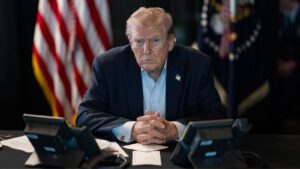
Its future was thrown into doubt by President Donald Trump’s trade wars — he imposed 30% tariffs on South Africa. The pact was set to expire on Sept. 30 if not reauthorized by the US Congress.
African governments have been lobbying the trump administration in hopes of an extension to the trade pact.
The US is South Africa’s second-largest trading partner. Countries in the region have been “reading the leaves” for the last couple of months, Vilakazi added.
“It would be great if it’s actually renewed, but I think that they are making alternative plans,” she said.
As for the 30% tariffs imposed by the US on South African goods, Vilakazi said discussions are still underway and “we are optimistic that they’re going to get to a landing.”
“We would like to see the relationship make less headlines for the reasons that they have,” she added.
Despite the storm kicked off by the tariffs, Vilakazi says ongoing reforms and reduced political risks have revived investor demand for South African assets.
Investors have been flocking back to buy its stocks and bonds, sending the benchmark FTSE/JSE Africa All Share Index to fresh records.
South Africa’s sovereign risk premium has also declined to levels last seen in 2018. The rand has also advanced to its strongest level in a year.
The country’s so-called government of national unity — set up after last year’s elections failed to produce an outright winner — has been working to implement structural reforms to lift economic growth.
So far, those changes have stabilized the nation’s electricity supply and are starting to improve the logistics sector, whose collapse saw coal exports plunge to a three-decade low.
“As a business, we are encouraged that the government, at last, is tackling some of these structural impediments to growth,” Vilakazi said. “So in the medium term, we’re quite constructive about that.”
She further welcomed the decision by South Africa’s monetary authorities to anchor inflation at 3%, saying the earlier target was outdated.












 Loading ...