

The one thing that could stop interest rate hikes in South Africa


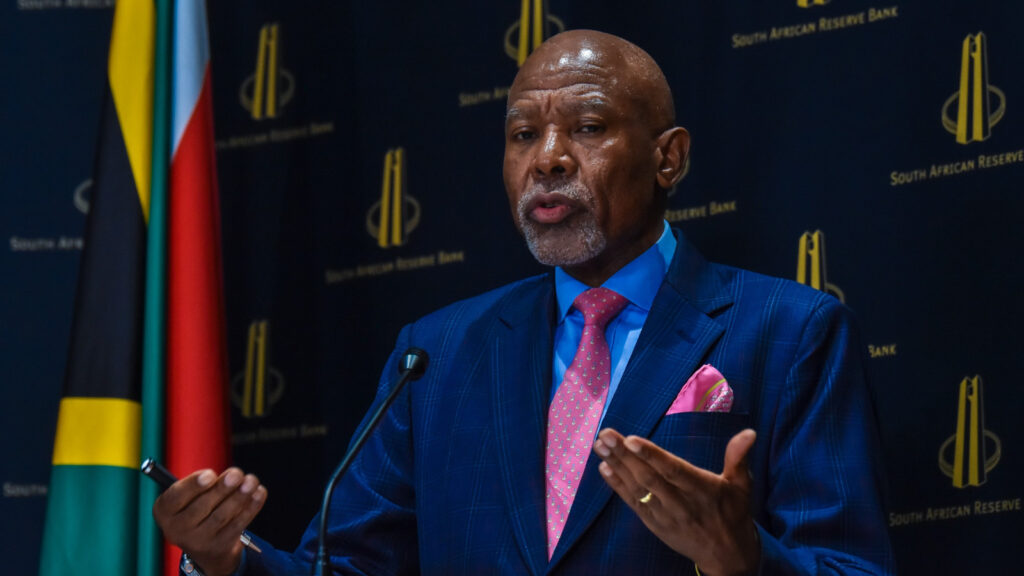
The South African Reserve Bank (SARB) may not increase interest rates in South Africa if the war in Iran is short-lived.
The SARB was widely expected to cut interest rates by a cumulative 50 basis points at the start of 2026. However, the war in Iran changed that perspective.
However, following the US and Israel’s attacks on Iran in March, the decision now rests on whether the SARB will keep the repo rate on hold at 6.75% or increase it.
The war comes at just the wrong time, with inflation in South Africa near or at the Reserve Bank’s new target of 3.0%.
The latest CPI print for March 2026 came in at 3.1%, a slight increase from the 3.0% figure in February.
Despite the slight increase, it still falls well within the SARB’s tolerance band, which allows for swings of 1 percentage point either way.
However, Dr Elna Moolman, Standard Bank Group Head of South Africa Macroeconomic Research, said that the data does not reflect the full inflationary impact of the Iran war.
The war led to a massive rise in fuel prices as global oil prices grew following the closure of the Strait of Hormuz.
At the start of the month, fuel prices in South Africa rose by R3 for petrol and R7 for diesel despite the government lowering the fuel levy by R3.
The April CPI data will thus reflect the true extent of the fuel price increases, and will likely tick up quickly.
What to expect from interest rates

Moolman said that the SARB may view rising rental inflation as indicative of a recovering housing market and consumer demand.
However, she said that the bank’s interest rate decisions for the foreseeable future will largely depend on developments in Iran and their impact on oil prices and the rand/dollar exchange rate.
“The SARB will pursue its new 3% inflation target, but if the war ends relatively soon, the bank may not have to hike interest rates,” said Moolman.
The Reserve Bank’s own baseline expectation sees inflation ticking up, but remaining below the 1 percentage point tolerance band to 4%.
In this scenario, global oil prices average higher at $78 a barrel in 2026, but start easing, reaching $68 a barrel in 2027 and falling to $65 a barrel in 2028.
Although the rand weakens against the dollar, it maintains some of its resilience, trading around R17/$ during the year.
Interest rates would then continue to drop, but be delayed until the end of 2026, with the nominal policy rate declining from 6.47% in 2026 to 5.93% in 2028.
However, the SARB also provided a scenario of a severe conflict lasting longer than a year, which would cause massive disruptions to energy supply and materially higher energy costs.
A risk premium is assumed to increase by 20% at its peak, while the rand is assumed to depreciate by around 10% relative to the first quarter of 2026.
As a result, inflation is expected to be sharply higher, and the 3% target will not be achieved within the forecast horizon.
Second-round effects are starting to hit the economy, and the risk of de-anchored inflation expectations is higher, requiring a more forceful policy response to prevent inflation from becoming entrenched.
An intermediate scenario sees a short conflict of about two months, which would result in modest tightening.
| Variable | Scenario | 2026 | 2027 | 2028 |
|---|---|---|---|---|
| Brent Crude Oil (US$) | Baseline | 78.00 | 68.00 | 65.00 |
| Intermediate | 85.00 | 72.00 | 67.00 | |
| Severe | 97.00 | 118.00 | 130.33 | |
| Headline Inflation (%) | Baseline | 3.70 | 3.33 | 3.02 |
| Intermediate | 4.05 | 3.58 | 3.01 | |
| Severe | 4.56 | 5.53 | 3.45 | |
| Nominal Policy Rate (%) | Baseline | 6.47 | 6.05 | 5.93 |
| Intermediate | 6.67 | 6.12 | 5.93 | |
| Severe | 8.17 | 7.13 | 6.19 |













 Loading ...