

Discovery Bank CEO’s message for South Africa



Discovery Bank CEO Hylton Kallner says that data from its latest SpendTrend provides confidence about how South Africans will respond to the challenges 2026 will pose.
Discovery Bank and Visa teamed up for SpendTrend26, which examines consumer spending behaviour across the nation.
The report uses 2.6 billion credit card transactions across 12 million cards between 2021 and 2025 to examine where, what, and how they spend.
The transaction analysis is then paired with the SpendTrend26 South African Consumer Survey of credit card holders earning above R100,000 per year.
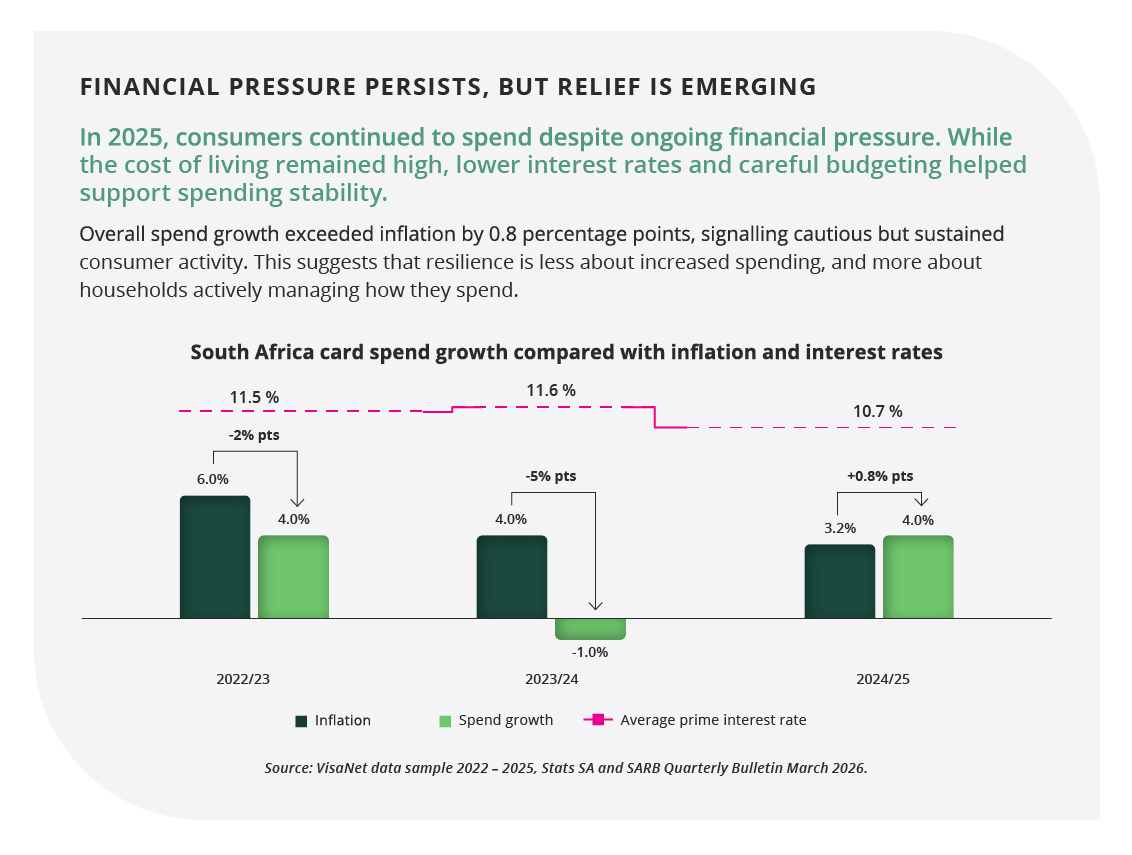
The data points to positive signs among South African consumers, with consumer spending growing ahead of inflation.
“Four rate cuts by the South African Reserve Bank in 2025 brought the prime lending rate down from 11.25% to 10.25%,” said Kallner.
“And for the first time since 2022, consumer spending grew above inflation by 0.8 percentage points.”
However, the CEO said that the more important story is behavioural. Instead of using the relief for additional discretionary spending, households are looking for value.
This includes using rewards, budgeting tools and value-seeking strategies to stretch what they already have.
“This is discipline, not distress – and it gives us cautious optimism for how South Africans will respond to the pressures 2026 brings,” said Kallner.
Financial markets in 2026 have been impacted by the US and Israel’s attacks on Iran and the blocking of the Strait of Hormuz. This has increased oil prices, weakened the rand and increased risk-off sentiment.
How South Africans are spending their money

The SpendTrend highlighted several interesting trends among South African consumers, with Discovery Bank clients making 18% more travel transactions than the average South African.
There has also been growth in the emerging role of AI in the shopping journey, as well as in how consumers are responding to fraud.
“40% of surveyed South Africans now use an AI tool weekly to decide what to buy, where to buy it, or whether to buy at all – rising to 50% among 18-to-30-year-olds,” said Kallner.
“Among those using AI, 42% found a cheaper alternative, 35% switched brand or retailer, and 35% avoided a purchase because of risk concerns.”
32% are now also using AI itself as a fraud defence, asking AI to check whether a message or link looks suspicious.
When it comes to online betting, 46% of South Africans who bet say they are spending less than they were 12 months ago, while 24% say they are betting more.
“43% set a budget and stick to it, 46% bet mostly for entertainment, 44% do so around major sporting events, and 7% have reduced other entertainment spend to fund betting,” said Kallner.
“The societal trend is concerning, but they tell us that for a large portion of those Discovery Bank clients who bet, it is happening inside a managed budget, not outside it.”
The report also noted that 14% of respondents say they or someone in their household uses a prescribed weight-management medication, which includes GLP-1 therapies like Ozempic.
Lineshree Moodley, Country Head of Visa South Africa, added that the latest SpendTrend shows a clear step change in behavioural confidence, with more consumers using digital first.
Moodley said that South Africans are turning to digital payments not because they have to, but because it better aligns with how they live, spend, and manage risk.
“Rather than spreading discretionary spend evenly, South Africans are actively planning around known moments in the calendar, concentrating spend into periods that feel familiar, expected and worth prioritising,” Moodley added.
“As a result, discount periods, long weekends, celebration days and major sports events consistently lift daily spend by an average of 13.6%, with Black Friday remaining the most significant event in the spending calendar.”


















 Loading ...