

South Africa’s ticking time bomb


South Africa’s concerningly high youth unemployment rate is a ticking time bomb that only economic growth can defuse.
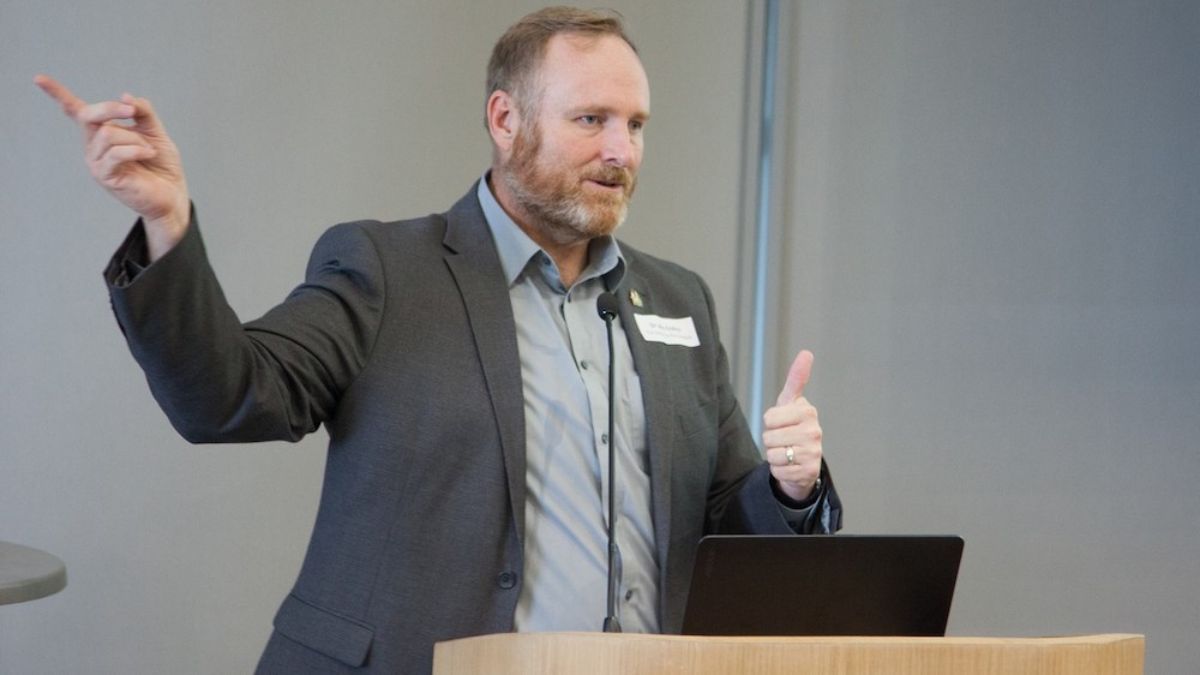
This is according to the Institute of Race Relations (IRR) CEO John Endres, who said the country’s huge youth unemployment rate could threaten the country’s social and political stability if not addressed urgently.
Endres explained that South Africa’s joblessness crisis is particularly alarming among the youth, where unemployment rates far exceed the national average.
“About three-fifths of all unemployed people in South Africa are long-term unemployed,” he said. “They’ve been without a job for longer than a year, and the longer you’ve been out of the job market, the harder it is to get back in.”
He warned that this deep and sustained exclusion of young people from the economy cannot continue indefinitely without consequences.
“It’s a huge ticking time bomb, a huge problem. And there’s no way to solve this except through fast economic growth,” Endres said.
According to Endres, almost every challenge facing South Africa—from its fiscal deficit to its rising debt burden and social instability—ultimately ties back to the same underlying issue, which is weak economic growth.
“The answers keep coming back to that. Whether it’s debt, the deficit, or unemployment; economic growth is the only way to fix it,” he said.
However, Endres argued that the policies currently being pursued by the government are actively working against this goal. “You have a tax on capital and a tax on meritocracy. The way we’re going about it at the moment is not too clever,” he said.
He cautioned that if the current trajectory continues, the consequences could be severe. With so many young South Africans locked out of the economy, disillusionment and anger could grow to a point where social unrest becomes unavoidable.
Drawing on global examples, Endres recalled hearing from Nobel Peace Prize winner Muhammad Yunus about how frustrated young people in Bangladesh helped topple their government.
He stressed that South Africa could face similar risks if its “safety valves” of democracy and free expression ever closed.
An economy with huge potential
For now, he believes that South Africa’s open political environment still provides an outlet for discontent to be expressed through voting and activism, rather than violence.
However, Endres added that this safety valve could disappear if the ruling party formed an alliance with more authoritarian forces.
“Imagine an ANC, EFF, and MK coalition. If they got together and said, ‘enough of this democratic nonsense,’ and decided to close off that valve, then the risk of violence becomes far greater,” he warned. Despite the risks, Endres remains cautiously optimistic about South Africans’ resilience.
“There’s a slightly rebellious streak that runs through South Africans, and that’s actually quite a good thing. People value their freedom and independence too much to easily give it up,” he said.
He pointed to the July 2021 unrest in KwaZulu-Natal as evidence of both the country’s fragility and its strength.
“There was real violence, real looting, and people died. Yet, despite the state being almost absent for ten days, communities organised themselves and stood up to hold it back.”
To Endres, the lesson is clear: South Africa’s people have the determination and capacity to turn things around, but only if the economy begins to grow at a much faster pace.
“This is an economy with huge potential. It just takes taking the brakes off, getting a few basics right, and it can fly,” he said.
He argued that fixing youth unemployment through strong growth would not only improve individual lives but also strengthen social cohesion and national unity.
“If you want South Africa to stick together as a country and you want race relations to improve, the way to do that is through economic growth,” Endres said.
“When people trade and work with others of all races and regions, that’s how everyone’s prosperity grows together.”

















 Loading ...