

Dawie Roodt warns of the one weapon the United States can still use against South Africa


Renowned economist Dawie Roodt says that South Africa is incredibly vulnerable to geopolitical alignments and that the United States could use the country’s bonds against it.
Speaking to Sakeliga executive director Russell Lamberti about the state of South Africa’s economy in December, Roodt noted that a significant portion of South Africa’s rand-denominated bonds are held by foreign investors.
Specifically, about 20% of these bonds are held by the United States and Europe, making the country particularly vulnerable to geopolitical tensions.
This is exacerbated by the ANC-led government’s historical ideological alignment against the “West”.
Because of this vulnerability and ideological mismatch, any adverse political event—or something more drastic, such as sanctions against the government and its officials—could see the bonds weaponised.
For example, foreign investors could be forbidden from buying South African bonds, or they could choose to sell them en masse in response to such an event.
Someone like US President Donald Trump could also potentially prohibit the purchase of bonds as part of a retaliatory salvo against the country for any number of reasons.
In this case, it would lead to a spike in long-term yields and to “a really bad financial crisis”, Roodt said.
“Remember, our local banks hold a lot of bonds as well. On their balance sheet, their yields go up, the value of their assets goes down, and now all of a sudden the banks start getting into trouble,” Roodt said.
“They may still have the bonds, but the bonds are worth less now, and that means that the banks can eventually get into trouble, and that can lead to a really bad financial crisis.”
Roodt noted that banks in South Africa are very well capitalised, so it is not an immediate or likely concern.
However, he stressed that it remains a potential scenario that could put pressure on the country’s financial system as a whole, especially if the South African government continues its current course.
Ideologically opposed
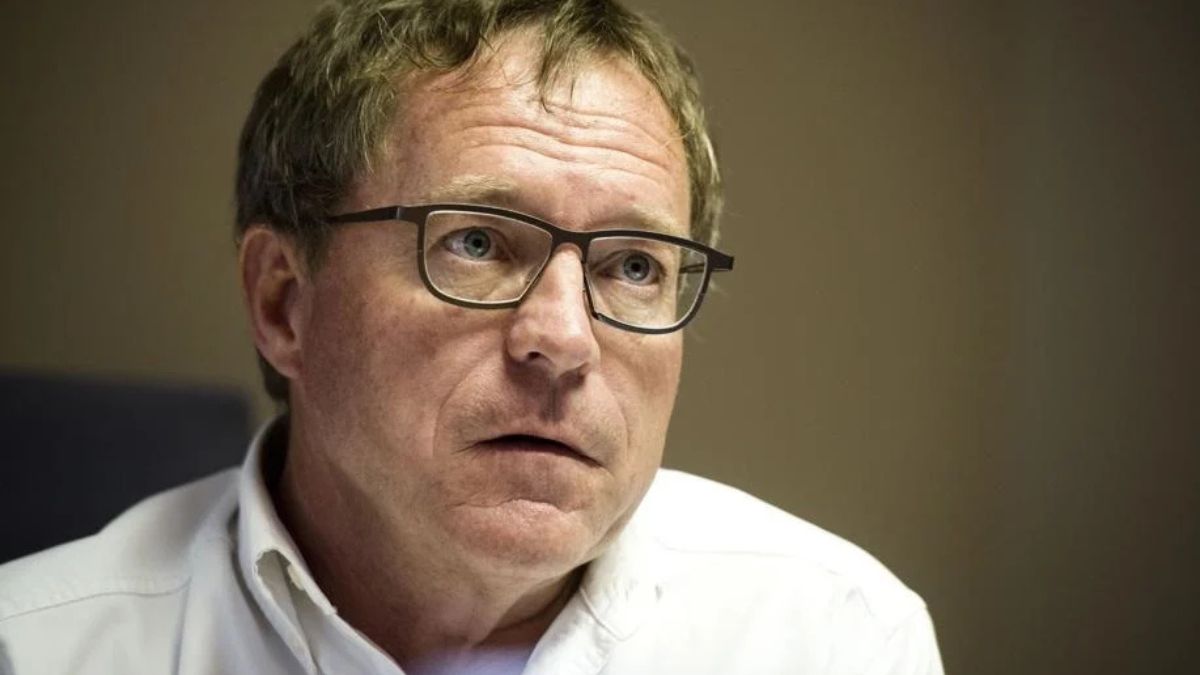
According to Roodt, South Africa’s government, led by the African National Congress (ANC), favours interventionist socialist policies, which stand opposed to the free market principles of the West.
While the Government of National Unity (GNU) comprises various parties with differing international positions and views, it’s the ANC’s ideology that is most expressed through official policy.
These policies align more broadly with the global East (Russia and China in particular), putting it in conflict with the United States and other Western nations.
While the South African government has attempted to present its foreign policy in a neutral and non-aligned tone, its actions do not reflect this.
This has not gone unnoticed by the United States and the Trump administration in particular, which spent a significant part of 2025 targeting South Africa’s policies and international relationships.
Trump allies in Congress and the Senate have also taken specific aim at the ANC and party officials, tabling and processing legislation to sanction them.
Other ways the US is punishing South Africa include imposing trade tariffs, not budging on trade negotiations, and also looking to exclude it from future AGOA renewals.
However, while the US still has tools at its disposal to tighten the screws on South Africa, Roodt said the government has managed its foreign-denominated debt (i.e., dollar) relatively well.
This debt accounts for only around 13% of total outstanding debt, he said, while the South African Reserve Bank maintains sufficient reserves to pay it off.
This gives South Africa a degree of protection from economic clashes, and also sets it apart from many other countries that find themselves in a position where they have too much foreign debt they cannot repay.
“Let’s give credit where it’s due—typically, what happens with emerging economies like South Africa is they start borrowing a lot of dollars, and then they start spending. That hasn’t happened in South Africa,” he said.
However, he stressed that the country is still vulnerable and open to an external ‘attack’ from the US through the bond market.
“That’s the real big stick that can be used against South Africa. What I’m concerned about is exactly that: One day, Donald Trump’s going to say ‘you’re not allowed to buy the South African bonds anymore’,” he said.
“That’s going to be really bad for South Africa, and we’re heading for that if we continue like this. We’re heading for a financial crisis.”









 Loading ...