

South Africa’s ‘hidden’ R190 billion retail giant


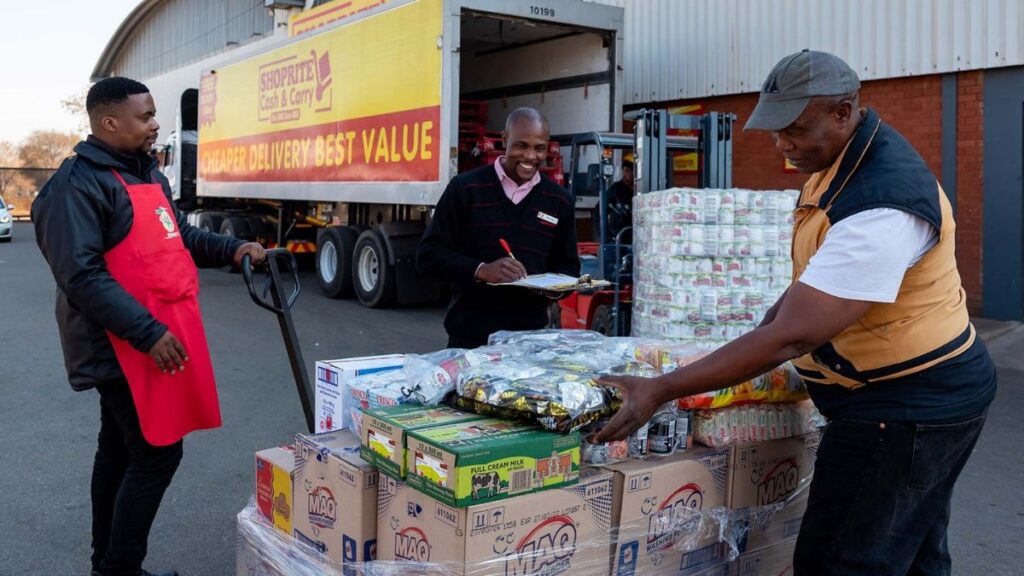
South Africa’s formal independent retail, with an estimated turnover of R190 billion, is increasingly competing with South Africa’s traditional retail giants.
The country’s informal retail economy, which is made up of spaza shops, township traders, and independent wholesalers, has an estimated turnover of around R190 billion.
Collectively, this “hidden” retail giant is increasingly challenging the dominance of traditional chains by building its model around proximity, flexibility, and deep community insight rather than scale and standardisation.
This is the feedback from Annelene Dippenaar, Chief Business Officer at Shop2Shop. She told BusinessTech that the strength of South Africa’s township economy lies in how closely it mirrors everyday life.
Dippenaar explained that South Africa’s township economy operates closely with people’s daily lives, and that spaza shops and informal traders thrive because they are embedded in the communities they serve.
As active members of those communities, traders understand exactly what their customers can afford and when. That insight shapes everything from pricing to product selection and even pack sizes.
Dippenaar noted that something as simple as being able to buy three nappies instead of an entire pack can be “life-changing” for households paid daily or weekly.
Inventory in these stores is designed around real income cycles rather than monthly purchasing power, with break-pack options, single-unit sales, and smaller quantities reducing both financial strain and waste.
This approach, she said, has underpinned the sector’s steady expansion, even as the formal economy struggles.
In 2025, formal sector employment fell by 245,000 jobs, while the informal sector added more than 17,000.
The township economy now accounts for about 5.2% of South Africa’s GDP and supports roughly 2.6 million jobs.
While growth in the informal sector is often incremental and difficult to measure precisely, Dippenaar said it is marked by highly adaptive tactics.
Most spaza shops operate within walking distance of homes or transport hubs, offering essential goods, household items, and prepared meals.
In communities where transport costs and time constraints are significant, this proximity gives small retailers a competitive edge.
Hidden advantages

Product ranges also reflect local cultural preferences, allowing traders to cater to specific tastes that large chains may overlook.
Trust is another major advantage. Dippenaar described how shop owners know their customers’ routines and financial situations.
This familiarity allows for flexible payment arrangements based on social accountability rather than formal contracts.
Local procurement also helps their model. Spaza shops and micro-businesses typically source stock from nearby independent wholesalers, who often buy from local manufacturers producing goods specifically for township markets.
Dippenaar explained that this shortens supply chains, cuts logistics costs, and keeps money circulating within communities.
She added that this creates compounded growth, supporting jobs linked to transport, delivery, and order-taking, while building internal value chains that deepen local wealth creation.
She also said the decentralised nature of the informal economy allows traders to respond rapidly to supply disruptions, pricing pressures, and shifting consumer demand.
In comparison, large retailers are constrained by systems designed for uniformity and scale.
“Stock, pricing, payments, layouts – everything is governed by uniform processes,” Dippenaar said, arguing that these structures limit responsiveness in an economy defined by constant disruption.
She suggested that big retailers could learn from the township economy by decentralising operations and opening smaller, tailored outlets within communities rather than relying on large, centralised stores.
The latest Trade Intelligence Formal Independent Channel Report showed that this channel now accounts for nearly a third of South Africa’s fast-moving consumer goods market.
Historically focused on supplying spaza shops through bulk cash-and-carry models, independent wholesalers have evolved as households turn to them to stretch tight budgets.
“Most people know the big retail chains, but a big part of FMCG is independent wholesale and retail,” said Andrea Slabber, Insights Lead at Trade Intelligence.
She explained that while these outlets remain vital for spaza shops and small businesses, everyday consumers are now shopping there too.
As a result, wholesalers have adapted, with around 90% offering separate checkouts, smaller trolleys, and single items at competitive prices.
Trade Intelligence data shows that 11% of South African households shop in this sector, matching Clicks’ reach and far exceeding Woolworths, while edging closer to Checkers.


















 Loading ...