

Gold is the new gold, not Bitcoin


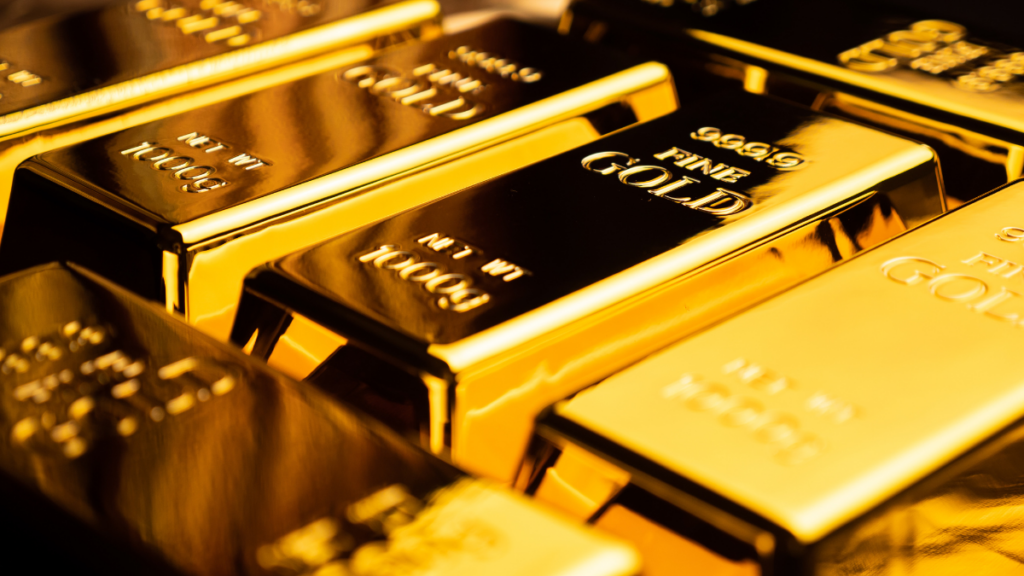
It is only mid-Feb of the new year and I have already had my mind blown. The gold price surged by more than 60% last year and continued to gain a further 20% in the first month of 2026, briefly spiking close to a record-high of $5,600 per troy ounce at the end of January. After a short-lived slump in the first week of February, it has rebounded again to around $5,000 – so high that some vault operators may be forced to leave portions of their bullion uninsured as holdings strain against insurance limits.
Most people attribute this surge in the price of gold to central banks aggressively buying the precious metal as they de-dollarise and decouple from the US, seeking safety amid the chaos created by the antics of the current administration, from its marauding fixation on Greenland, to the political and economic decapitation of Venezuela, to the unleashing of lawless, cutthroat ICE agents on the domestic front. As National Bank of Poland – the largest sovereign buyer of gold last year – has put it, gold is “the only reliable national reserve asset” in the “search for a new financial order.” That explanation, while seemingly compelling, does not stand up to the evidence.
In fact, according to the World Gold Council, central-bank gold purchases fell by around 20% last year, declining from 1,092 tonnes in 2024 to 863 tonnes in 2025. This marked a clear break from the preceding three years, which saw official-sector purchases exceed 1,000 tonnes per year. The World Gold Council itself attributed the slowdown in demand to price dynamics, noting, “Reported gold buying was somewhat modest through much of 2025 as central banks navigated a rapid rally in prices, which reached multiple record highs during the year.”
The decline in central-bank demand for gold has, however, been more than offset by a surge in investment demand, which reached 2,175 tonnes last year – a striking increase of 84% compared with the previous year – driven primarily by a record inflow of $89 billion into gold-backed exchange-traded funds (ETFs). As the gold market becomes increasingly dominated by private investors unnerved by equity-market volatility and geopolitical uncertainty, the metal has begun to behave less like a traditional safe haven and more like a meme asset, driven by the same speculative impulses that animate cryptocurrency price swings.
It seems more than merely coincidence that as the price of gold has soared, the price of Bitcoin has moved in exactly the opposite direction, sinking below $65,000 on 5 February 2026 for the first time since November 2024. So far this year, Bitcoin has lost roughly a quarter of its dollar value, and it has nearly halved its value since its all-time high of around $126,000 in October 2025. One plausible explanation for the strong negative correlation between the price of gold and the price of Bitcoin is that crypto acolytes have sold the latter and redeployed funds into gold instead, whether via gold-backed ETFs, direct purchases of physical bullion and Krugerrands, or trading gold through exchanges. It seems that the gambling instinct that so heavily beset crypto has now transmogrified itself onto gold.
But the greatest irony of this recent rally is that crypto companies such as Tether are now buying gold to back their stablecoin because of the crash of Bitcoin. With a circulating value of around $187 billion, Tether’s USDT token is the world’s most widely used stablecoin – a form of digital cash primarily employed by traders to move between sovereign currencies and crypto markets. Pegged one-for-one to the US dollar, USDT is backed by a mix of assets that includes US Treasuries, secured loans, Bitcoin and, increasingly, gold, with the company significantly increasing its reserves of the latter over the last six months.
Tether currently holds about 140 tonnes of bullion, valued at roughly $24 billion, making it the world’s largest non-sovereign gold holder. Its hoard now rivals that of smaller central banks, including those of Brazil, South Korea, Hungary and Greece. Buoyed by its strengthened position, Tether’s chief executive Paolo Ardoino recently responded to earlier scepticism over the company’s stablecoin reserves, particularly concerns about its exposure to risky crypto assets, with a pointed retort, commenting, “We wear your loathing with pride.”
Tether’s recent actions signal a profound decoupling of stablecoin as a financial concept from that of crypto, and from Bitcoin in particular. As Bitcoin’s price has weakened, maintaining USDT’s one-to-one peg with the US dollar has required Tether to increase its holdings of non-Bitcoin assets. That has meant expanding exposure to US Treasuries and secured loans and, most importantly, to gold, precisely as its price has been surging. The irony is hard to miss: a financial instrument born of the ideology of decentralised finance, explicitly created out of the desire to wrestle power away from governments and central banks, has become a significant buyer of the oldest reserve asset of them all. The HODL mentality has officially come full circle.
I feel a certain vindication at this turn of events. In my book The End of Money: The Great Erosion of Trust in Banking, China’s Minsky Moment and the Fallacy of Cryptocurrency (2021), I argued that a straight line can be drawn from the Nixon Shock of the 1970s to today’s de-dollarisation efforts, the emergence of a putative BRICS currency, and the broader geopolitical shift toward a multipolar world unmoored from any shared set of values. I have long made the case for a return to the gold standard as an anchor of trust in our monetary system. And watching the crypto bros reinforce that argument, however inadvertently, is, I confess, deeply satisfying.
This article is an opinion piece by David Buckham. The views in this article are those of Buckham, and do not represent the views of BusinessTech and its associated companies.
David Buckham is the Founder and CEO of international consultancy Monocle Solutions. He is co-author, alongside Robin Wilkinson, of the bestselling The Spell: A Story of Human Progress and How the West Lost its Soul.

















 Loading ...