

Say goodbye to shopping malls as you know them in South Africa


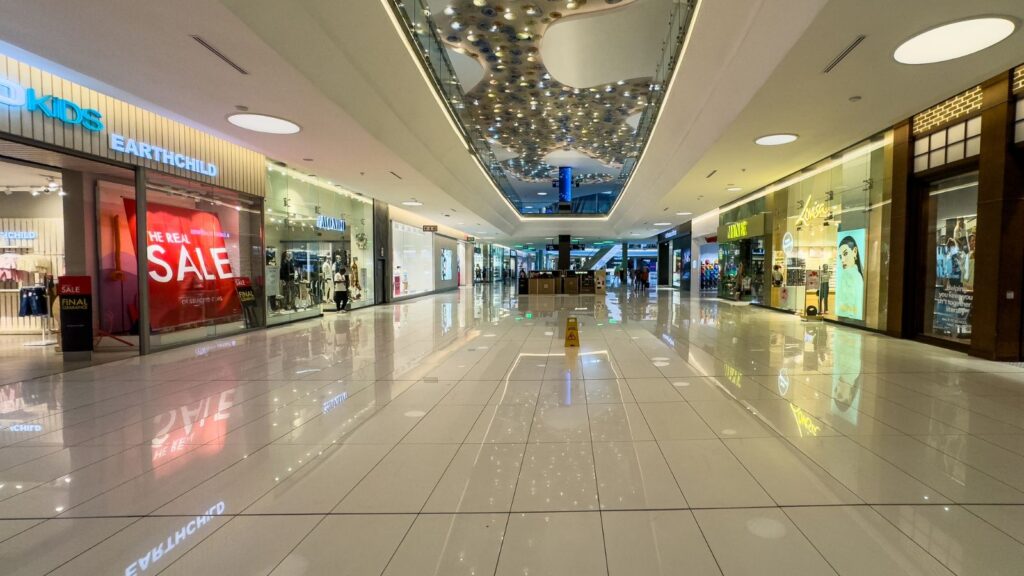
South Africans must say goodbye to traditional big shopping malls that just offer retail stores, cinemas, and food courts.
This is because changing consumer habits are forcing retail centres to change what they offer customers to experiences that can’t be replicated online.
Major shopping malls are now investing in interactive stores, entertainment attractions, distinctive dining experiences, events, pop-up shops and community activities.
New research from Lightstone Retail showed that shoppers are visiting malls less often, spending less time there, and increasingly making purposeful trips instead of leisurely outings.
Lightstone tracked shopping behaviour in February 2023 and again in February 2026 using anonymised vehicle movement data from Tracker, covering between 450,000 and 510,000 passenger vehicles each month.
Unlike surveys that rely on what consumers report, the telemetry data measured where drivers actually went and how long they stayed.
The results point to a noticeable shift in behaviour. Median dwell time declined by around 4%, falling from 45 minutes to 43 minutes, while the longest visits dropped by more than 11%.
South Africa’s biggest malls, classified as super-regional centres larger than 60,000 square metres, experienced the steepest declines, with dwell time down 17% and average visits per tracked vehicle falling by nearly 9%.
By contrast, community shopping centres between 10,000 and 20,000 square metres proved the most resilient.
They recorded the smallest decline in visits at 2.3% and an 8.1% reduction in dwell time, indicating that consumers increasingly favour convenient centres closer to home that provide essential services.
Mohit Narotam, managing director of Lightstone Retail, said the data reflects broader changes in how consumers spend both their money and their time.
“South African shoppers have not lost their appetite for the mall experience but have become more deliberate about it,” he said.
“Winning centres give shoppers multiple reasons to make a trip, whether that is value, a genuine community space, or an experience they cannot get from a screen.”
Bigger is not better
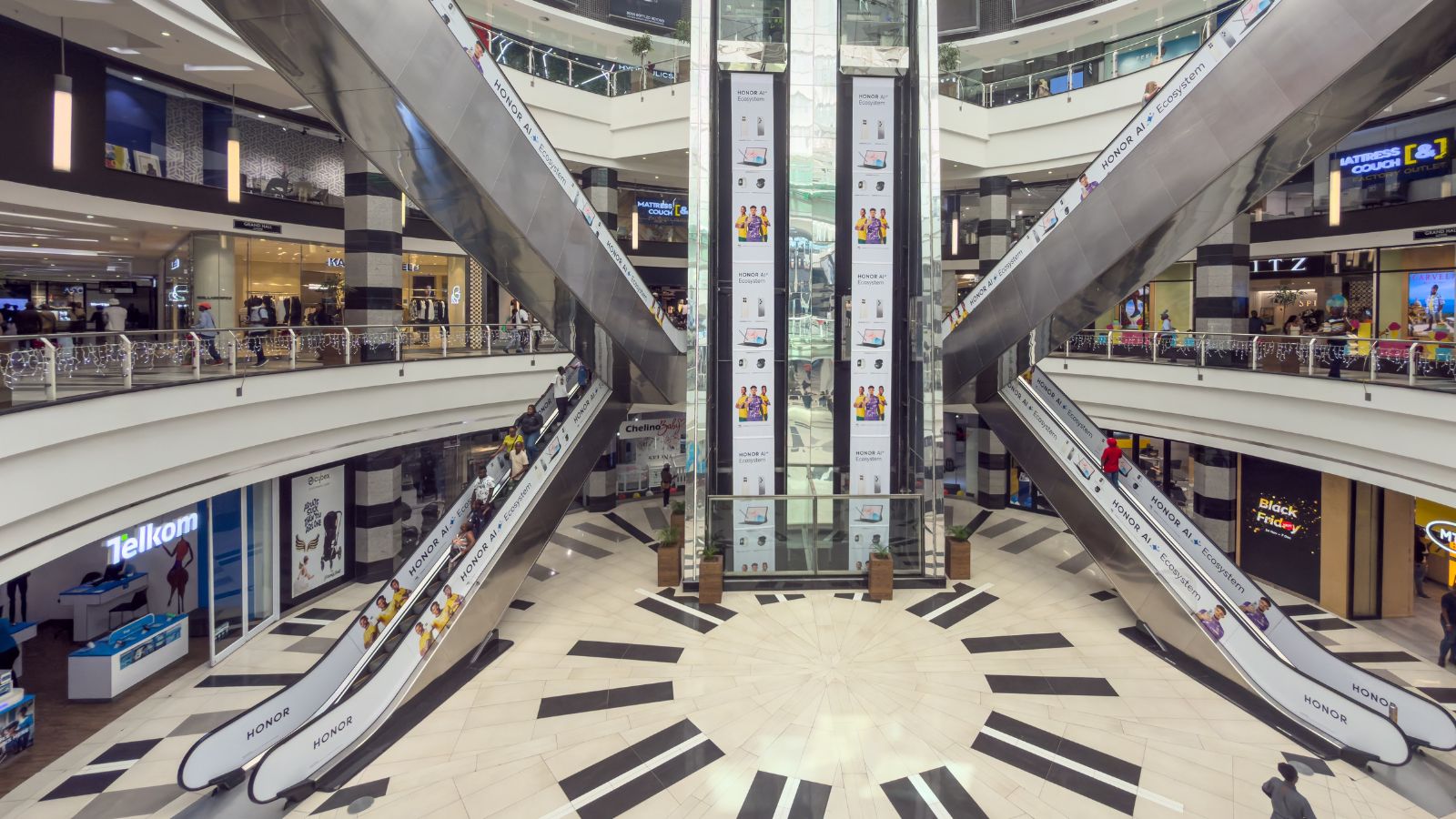
The Clur Shopping Centre Index, which measures the performance of more than 130 malls through trading densities, also noted a shift for shopping malls.
It found that rental growth and rent-to-sales ratios identified smaller shopping centres as the strongest-performing segment during 2024 and 2025.
At the same time, online shopping has continued to grow. Major grocery retailers, including Checkers, Woolworths and Pick n Pay, have all experienced significant growth in online sales.
However, malls anchored by Checkers stood out as an exception, with visits per tracked vehicle increasing by 5.3% between February 2023 and February 2026.
Fashion retail has faced even greater disruption as international online platforms gain market share.
According to a June 2025 report by the Localisation Support Fund and BMA, Temu and Shein together accounted for 3.6% of South Africa’s clothing, textiles, footwear and leather retail market in 2024, beating the combined 3.4% share held by H&M, Zara and Cotton On.
Entertainment trends have also changed dramatically. The traditional day out involving shopping, a movie and a meal has become less common as streaming services gain popularity.
Over the past decade, Ster-Kinekor reduced its footprint from 55 locations to 34, while streaming revenue reached R5.2 billion in 2023 compared with cinema revenue of R1.46 billion.
Improved broadband access and affordability have made staying at home an increasingly attractive alternative.
As a result, shopping centres are reinventing themselves as lifestyle destinations rather than purely transactional spaces.
Research from CBRE suggested that experiential retail strategies and enhanced consumer environments can boost sales by increasing engagement.
Industry data from Ray White Property indicated these initiatives can raise dwell time by around 40% and increase sales by roughly 30%.
Many malls are now investing in interactive stores, entertainment attractions, distinctive dining experiences, events, pop-up shops and community activities.
Others are integrating technology through mobile apps, personalised promotions and click-and-collect partnerships with e-commerce brands.
| Mall size tier | Feb 2023 (Visits) | Feb 2026 (Visits) | % change (Visits) | Feb 2023 (Dwell) | Feb 2026 (Dwell) | % change (Dwell) |
|---|---|---|---|---|---|---|
| Small (<10k sqm) | 1.76 | 1.66 | -5.5% | 5.15 | 4.30 | -16.6% |
| Community (10–25k sqm) | 1.63 | 1.59 | -2.3% | 5.75 | 5.28 | -8.1% |
| Regional (25–60k sqm) | 1.08 | 1.02 | -5.2% | 3.95 | 3.47 | -12.2% |
| Super-regional (60k+ sqm) | 0.71 | 0.65 | -8.7% | 3.05 | 2.53 | -17.0% |


















 Loading ...