

Top hospital boss sends skills warning to South Africa



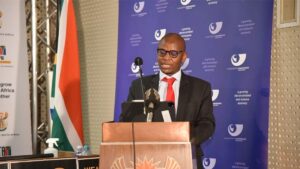
Hospital Association of South Africa chief executive Dr Dumisani Bomela has criticised the government’s latest critical skills list for its omission of a number of key medical professions – including nurses and doctors.
Commenting on the list, Bomela said that South Africa has fallen behind other countries in terms of the medical skills available, with the production of these skills stalling noticeably in recent years.
South Africa’s nurses and doctor numbers per 1,000 inhabitants currently sits at a ratio of 1.3. This is significantly behind other developing markets such as Turkey (2.1) and Russia (8.1).
The country’s ratio of 0.16 active medical schools per million inhabitants similarly lags behind countries like Libya (1.88), Brazil (1.50), and Colombia (1.15), Bomela said.
“Leaving out skills previously included on the critical skills list sends the message that we have overcome the problem we had – but that is simply not the case.
“It cannot be, as the nursing profession has already long struggled to attract new recruits, a situation that is exacerbated by the amendments to the nurse training curriculum and the accreditation of training facilities that has stalled the numbers of new nurses being trained – in a moment when a significant number of nurses in the profession are already over 50 years of age and will be retiring soon,” he said.
Bomela warned that the country faces a shortage of 34,000 nurses by 2025 if nothing is done to attract and retain falling numbers of nursing aspirants.
Growing concern
Bomela said the shortage of nurses and doctors and the slow development of medical skills pose serious questions for healthcare delivery both now, and in the future under the proposed universal healthcare service system.
“If anything, in the first two waves of Covid when medical staff were laid low through infections, we came to see very clearly how threadbare our human resources for health are and how vulnerable these shortages make the healthcare system.
“Nor, frankly, was the vaccine drive left unaffected by the shortage of medical staff – as we know, the vaccine rollout slowed to a trickle at times due to staff shortages.”
The national situation is clear, says Bomela: the country is not training enough medical skills to overcome existing dire shortages in doctors and nurses in general, and particularly among specialists and nurses with specialist skills. Already, medical facilities are struggling to fill posts, he said.
Faced with a shortage in this country, the association has had to lobby government to enable members to recruit nurses with specialist skills from overseas. Already, in various parts of the country, specialist skills are in such short supply that waiting lists are lengthening beyond months and into years, he said.
“We must continue to use the critical skills list as an immediate solution to an existing acute problem says Bomela, while we work to overcome our longer term human resources for health crisis.
“The Hospital Association of South Africa and its members call on the government, in particular the Department of Home Affairs, to amend the critical skills list to include medical skills required not only to facilitate critical care, but also to pave the way for the efficient operation of the public health system which is the bedrock for the proposed universal healthcare system,” said Bomela.
Read: Here is the list of critical skills needed in South Africa
















 Loading ...