

The hidden cost of load shedding – where rich South Africans win


Researchers from the University of Stellenbosch have attempted to pin down some of the hidden costs of load shedding on the economy and found that there are instances where wealthier South Africans come off better at the expense of the rest of the country.
These instances relate directly to what the researchers call “discretionary” use of electricity during times of load shedding, where available power is used on certain “non-essential” things, undermining the intention of the outages while the economy continues to suffer.
“Although load shedding achieves the goal of severing demand and thereby stabilising the grid, it remains a blunt tool. Consider the electrical loads on the grid. Much of it will be essential and/or could contribute to GDP, but a large part will be non-essential.
“Separately, much of it will be inefficient, for example, the use of inefficient lighting, the uncontrolled scheduling of water heaters, or the poor thermal insulation of buildings. It therefore stands to reason that a substantial part of the load on the grid, which contributes to the need for load shedding, is discretionary, non-essential or wasteful,” they said.
Using electricity on these non-essential or inefficient loads during load shedding could be considered a type of “cross-subsidisation”, where the economy effectively subsidises the activities in question – because if these activities could be stopped, or better yet, moved off-grid, the need for load shedding would be reduced significantly.
Where the rich benefit
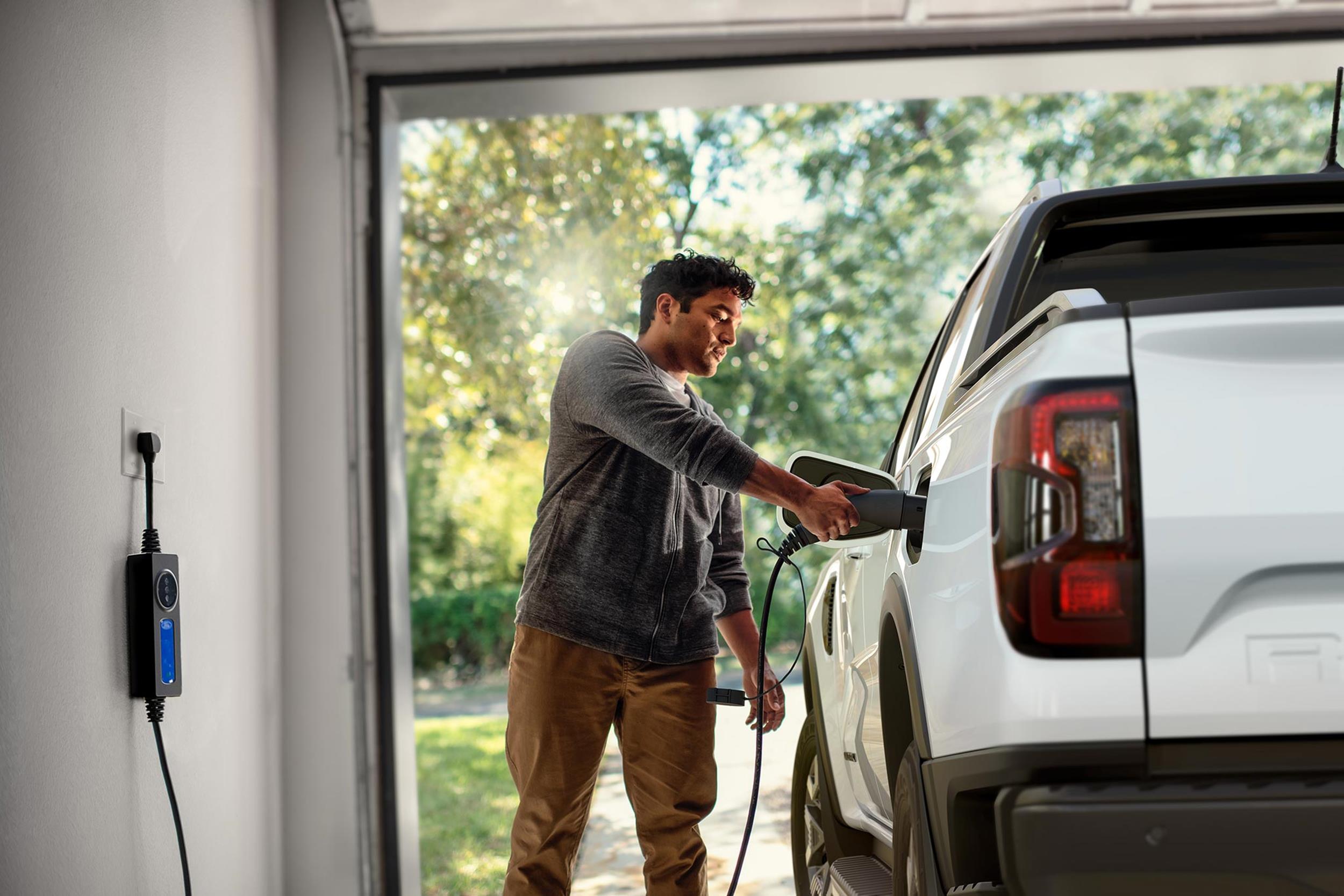
According to the researchers, one of these cross-subsidies is happening with electric vehicles, where wealthy South Africans benefit disproportionately from charging their vehicles using grid-tied power during load shedding.
To outline this, the researchers used the South African Reserve Bank’s estimates of the cost to the economy due to load shedding, at R899 million a day at stage 6.
Stage 6 requires 6 gigawatts (GW) to be pulled from the grid; for a 24-hour cycle, this is the equivalent of 144 GWh (gigawatt-hours) or 144 million kWh of energy shed per day. On a cost basis, this equates to R6 per kWh shed.
“Drivers of electric vehicles claim to save a lot of money, because the cost per kilometre of fuel could be four times as much as that of electricity,” the researchers noted.
“Although this is beneficial to the owner – a realistic gain of approximately ZAR1.50/km – the economy will effectively be subsidising those with electric vehicles at approximately ZAR6/kWh, if they charge
from the grid when Eskom must shed load.”
Given a nominal efficiency of 0.2 kWh/km, that is a subsidy of ZAR1.20/km.
“In effect, those who can afford to buy electric vehicles and charge from the grid may unwittingly be undermining the economy for their own financial gain.”
The researchers noted that the cost of electric vehicles in South Africa puts them out of reach of most consumers, and owners of such vehicles tend to be wealthy.
To avoid the cross-subsidy and the wider impact on demand, they said those who can afford to buy electric vehicles should be encouraged to install their own distributed generation.
Another hidden cost
But electric vehicles are not the only cross-subsidisation taking place, the researchers said.
Water heating is another big issue.
“Most usages of hot water, especially those involving large volumes, are discretionary. To heat 80 litres of water (the volume for a typical bath) during winter requires 5 kWh. This means that the economy subsidises each discretionary bath by R30 if the water is heated from the grid in a period of load shedding,” they said.
More importantly, the researchers noted that there are more than 5 million electric water heaters in South Africa, and each one consumes an estimated 10 kWh per day, and adds an average of 1 kW to the national evening peak load.
“Therefore, water heating contributes approximately 50 GWh to the daily demand (~10% of the daily grid supply) and 5 GW to peak-time demand.”
They said that smart, centralised, schedule-control and energy-conscious plumbing could reduce this by up to 22%.
“An option that can substantially reduce energy required for water heating is heat pumps, but they are expensive, require servicing, and are prone to breakdowns. More importantly, in our abundantly sunny climate, solar thermal and solar photovoltaic (PV) solutions exist that can heat water with limited or no dependence on the grid.”
The research was conducted by the Departments of Electrical and Electronic Engineering; Industrial Engineering; and Economics at Stellenbosch University. The papers were published in the South African Journal of Science.
















 Loading ...