

Bad news about petrol prices next week


Month-end data from the Central Energy Fund shows that South African motorists are in for price pain at the pumps next week, with petrol and diesel hikes on the cards.
According to the CEF, the under-recoveries in petrol and diesel prices throughout November have stuck, with the stronger rand not being enough to counter movements in global oil.
Petrol prices are showing an under-recovery of between 20 and 26 cents per litre, and diesel prices are showing a much steeper under-recovery of between 76 and 93 cents per litre.
While the dial has not shifted much for petrol price recoveries over the past week, diesel recoveries have improved by around 15 cents per litre.
These are the projected levels at the end of the month:
- Petrol 93: increase of 20 cents per litre
- Petrol 95: increase of 26 cents per litre
- Diesel 0.05% (wholesale): increase of 60 cents per litre
- Diesel 0.005% (wholesale): increase of 77 cents per litre
- Illuminating paraffin: increase of 68 cents per litre
Despite the rand averaging much stronger than in October, rising global fuel prices have undercut the gains on the exchange rate.
Specifically, the rand/dollar exchange is contributing to a positive over-recovery of about 4 cents per litre, while the movement in international product prices is undercutting this with a 24-81 cents per litre under-recovery.
The rand has maintained its resilience following the medium-term budget review, though it has retreated from sub-R17/$ levels.
The unit briefly traded around R16.97 to the dollar following the mini budget and a ratings upgrade from S&P Global, aided by a weaker dollar.
However, it retreated to pre-budget levels soon after as markets pulled out of riskier assets as delayed US economic data filtered through.
Since the budget review, the rand has been fluctuating in a narrow range, sticking around R17.15-R17.35 to the dollar.
This is relatively flat compared to October’s average, hence the small over-recovery in the data.
That said, sentiment and prospects for South Africa remain better than expected, given global uncertainties and deteriorating relations with the United States.
Eyes on Russia
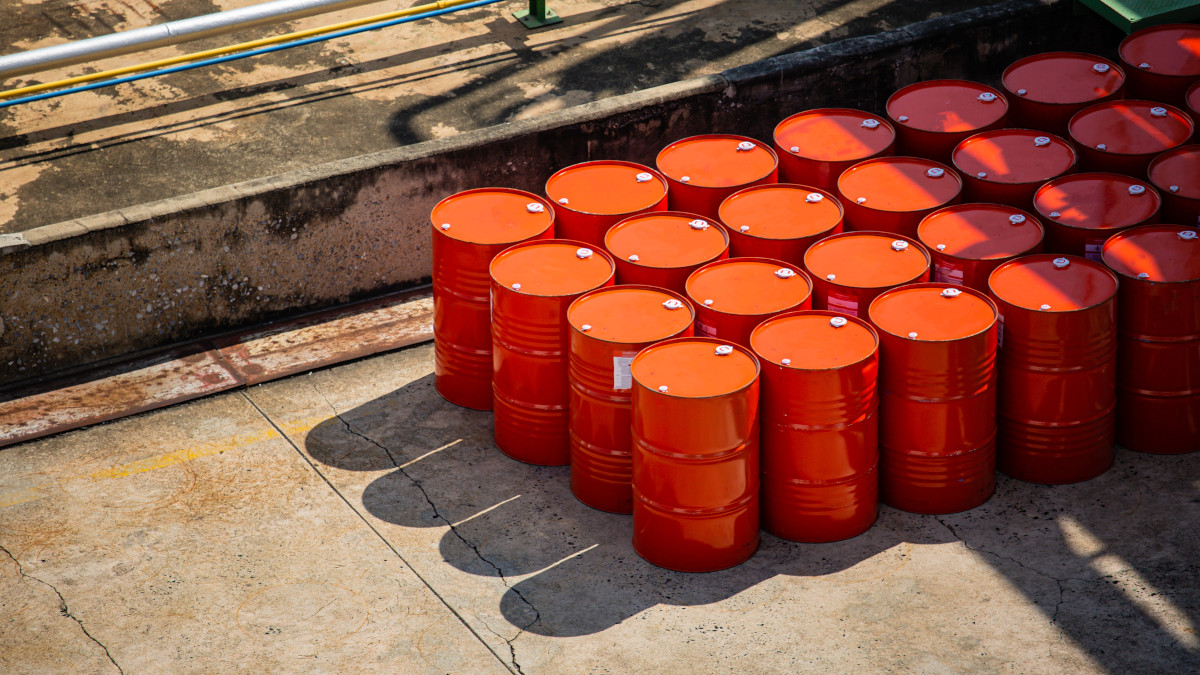
Global oil prices have been fluctuating more wildly throughout November as markets grappled with supply and demand shifts as well as wider geopolitical tensions, particularly between the US and Russia.
Oil is currently trading at around $63 a barrel, higher than the average in October.
On supply and demand, traders are crunching numbers and tempering expectations around oil producers (OPEC+), as well as demand from consumers like China.
Brent oil has fallen 15% this year, with prices hurt by expectations for a global glut after OPEC+ restarted capacity, while drillers outside the alliance also added supplies.
The market is facing a daily surplus of 2.8 million barrels next year, and 2.7 million in 2027, according to JPMorgan Chase & Co.
However, with US pressure on Russia to end its war in Ukraine, the market could face a flood of even more oil if sanctions on the federation are loosened.
According to Bloomberg analysis, an end to the conflict would have significant ramifications for the oil market.
In a sign that US sanctions are stressing Russian producers, the amount of crude stored at the nation’s oil fields has jumped to more than 16 million barrels, a level seen only twice since the invasion of Ukraine in 2022.
“Russia is one of the world’s leading producers, and its flows are subject to heavy Western sanctions. Any easing of curbs following a deal could unleash restricted supplies to buyers such as China, India and Turkey,” it said.
However, analysts have noted that any peace deal would take time to go through, and there is no certainty about what would happen with Russia’s stockpiles in that event.
Nevertheless, the impact on international petroleum prices has been negative for November compared to October, resulting in under-recoveries in local pricing.
The Department of Petroleum and Mineral Resources will announce the official changes before they take effect on Wednesday, 3 December 2025.

















 Loading ...