

Big petrol price cut coming next month


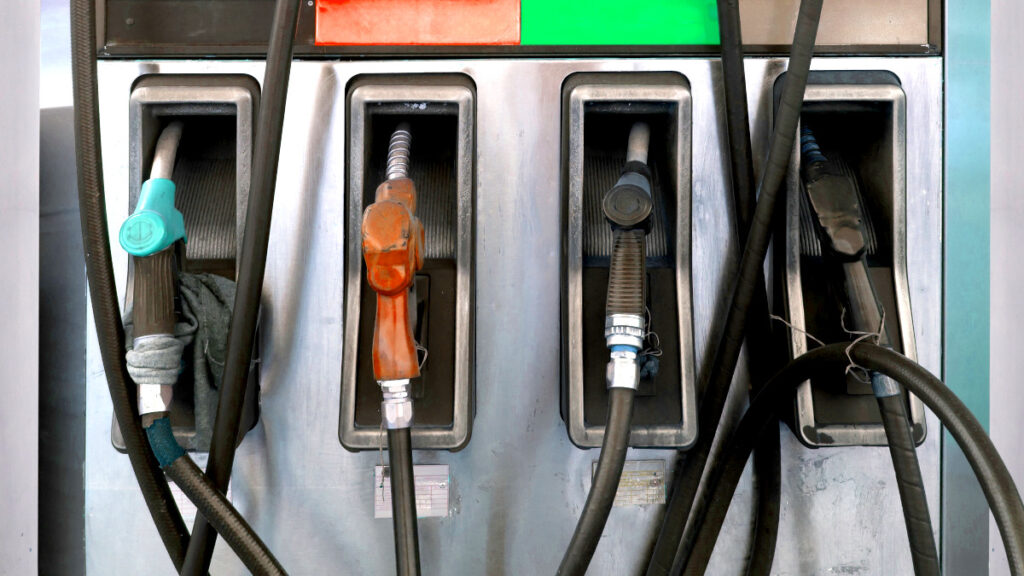
The latest data from the Central Energy Fund (CEF) shows that petrol and diesel users are in for another sizeable price cut at the pumps in February.
The data, reflecting spot recoveries for the end of the third week in January, shows an over-recovery of between 66 and 69 cents per litre for petrol.
For diesel, there is a similar over-recovery of between 63 and 71 cents per litre.
The over-recoveries are weaker than they were at mid-month, reflecting global geopolitical volatility and its impact on oil.
However, both the oil price and the ZAR/USD exchange rate are still contributing positively to recoveries, keeping motorists in line for cuts next month.
These are the projected levels at the end of week three:
- Petrol 93: decrease of 66 cents per litre
- Petrol 95: decrease of 69 cents per litre
- Diesel 0.05% (wholesale): decrease of 63 cents per litre
- Diesel 0.005% (wholesale): decrease of 71 cents per litre
- Illuminating paraffin: decrease of 60 cents per litre
One of the key drivers of lower recoveries is the rising oil price, which gained this week as the dollar weakened and markets adopted a risk-on mood following easing tensions between the US and EU.
This offset wider concerns about higher oil supplies.
Markets were tense in recent weeks after US President Donald Trump continued to threaten action to take control of Greenland ‘one way or another’.
One tactic was to threaten higher tariffs on EU countries that did not support the United States’ plans.
This brought market anxiety about escalating the 2025 tariff war, retaliation, and a further breakdown in trade.
However, tensions cooled this week following meetings at the World Economic Forum in Davos, where the Trump administration appeared to back off threats.
This spurred risk-on sentiment, weakening the dollar, and pushing oil prices higher to over $65 a barrel from around $62 a barrel before.
Generally, oil prices have been trading lower amid forecasts of a supply glut in 2026.
Earlier this week, the International Energy Agency reiterated its outlook that output would run ahead of demand this year by a wide margin, boosting stockpiles.
Rand on a winning streak

While recoveries from oil prices and global petroleum costs have dimmed slightly this week, the rand has moved in the opposite direction, going from strength to strength.
After freezing at the R16.30/$ resistance level at the start of the month, the local unit has broken through.
In early trade on Friday, the rand hit a three-and-a-half-year low of R16.09 against the dollar, before pulling back slightly to around R16.15 by 11h00.
The rand has been on a winning streak over the last year amid massive shifts in global sentiment following Trump’s return.
The rand gained against the greenback throughout last year, primarily due to fears over the US’s fiscal policy and the Federal Reserve’s expansionary monetary policy.
South Africa’s market in 2026 was muted and riding on the tailwind of 2025. Still, global markets were thrown into a volatile environment following the US’s attack on Venezuela and its stance on Greenland.
Heightened global volatility negatively affects the rand, as investors become risk-averse and seek developed, safe-haven assets for guaranteed returns.
However, much like the oil price, Trump’s apparent easing of threats over Greenland has increased risk-on sentiment.
The rand is now hovering around the R16.00/$, which aligns with Investec’s purchasing-power-parity (PPP) valuation.
Outside of the global environment, South Africa is also making progress amid domestic reforms and strong markets.
South Africa was recently removed from the FATF’s grey list, it tabled a credible mid-term budget in November and experienced its first ratings upgrade in 20 years.
Growth is also expected to rise to 1.3% for 2025, an improvement from 2024’s 0.6. While 2026 and 2027 growth is expected to remain around 1.5% in 2026 and 2027, estimates point to growth reaching 3.0% by 2030.
Despite the rand’s improvement, PPP measures, such as the Big Mac Index, indicate it is undervalued and should be between R11.30 and R14.30 to the dollar on a PPP basis.

















 Loading ...