

War brewing over South Africa’s coastline


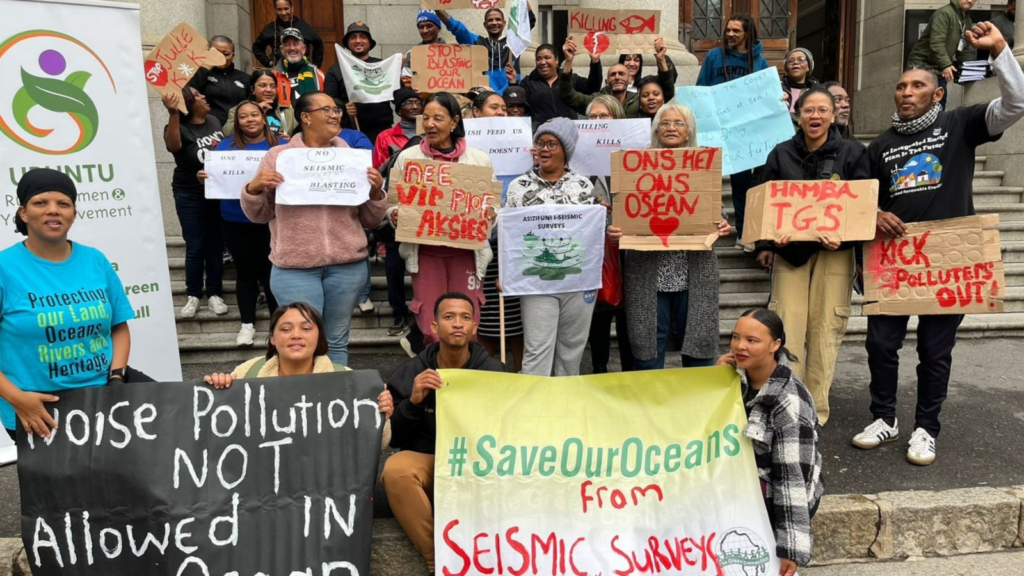
The government recently authorised a seismic survey off the West Coast for oil and gas exploration, prompting small-scale fishers and environmental groups to file legal action against the decision.
The South African government, through the Department of Mineral and Petroleum Resources, has granted permission to a British company, TGS Geophysical Company, to conduct a large offshore 3D seismic survey along the West Coast in search of oil and gas.
A coalition of small-scale fishers, represented by the Aukotowa Fisheries Primary Co-operative, along with environmental groups such as the Green Connection and Natural Justice, has taken legal action to challenge and overturn this decision.
To understand the community’s outrage, it’s important to know how seismic surveying works.
This process uses powerful underwater airguns that emit high-intensity sound pulses directed at the seabed. The echo of sound waves helps create a map of what lies beneath the ocean floor.
“A key issue was whether decision-makers had access to, and properly considered, all relevant information before approving the project,” said Green Connection Outreach Ambassador, Neville van Rooy.
“Given its potential consequences for marine ecosystems and coastal livelihoods, this case is not only about compliance, it is about transparent and lawful decisions that genuinely serve the public interest,” he said.
The coalition of fishers and environmentalists argues that the government official who approved the project did so without having access to the actual environmental specialist reports.
They contend that the project’s risk assessment focused solely on the theoretical economic benefits of oil and gas, neglecting local economic “costs,” such as exclusion zones that could push small-scale fishers out of their traditional fishing areas and harm marine life.
Additionally, they highlighted the contradiction between South Africa’s commitment to reducing carbon emissions under the Paris Agreement and its decision to lease approximately 90% of its ocean territory for oil and gas exploration.
“We therefore hope the court, just like in the Searcher Geodata case, recognises that important environmental and social impacts were not adequately considered before authorisation was granted,” said van Rooy.
In response, the government and TGS maintain that seismic blasting is a common, highly regulated, and “non-invasive” method of data collection that has been used for decades without any drilling.
TGS further argued in court that the planned testing area is located too far offshore to significantly affect local small-scale nearshore fishing.
The two-day court hearing concluded on June 2, 2026. Judge Judith Cloete has reserved her judgment.
This means that she will take time to review the extensive legal arguments and evidence presented by both sides before issuing a written final decision in the coming weeks or months.
If the fishers win their case, it could set a precedent similar to the previous Searcher Geodata case, effectively halting TGS’s exploration plans on the West Coast.
Previous seismic survey attempts failed
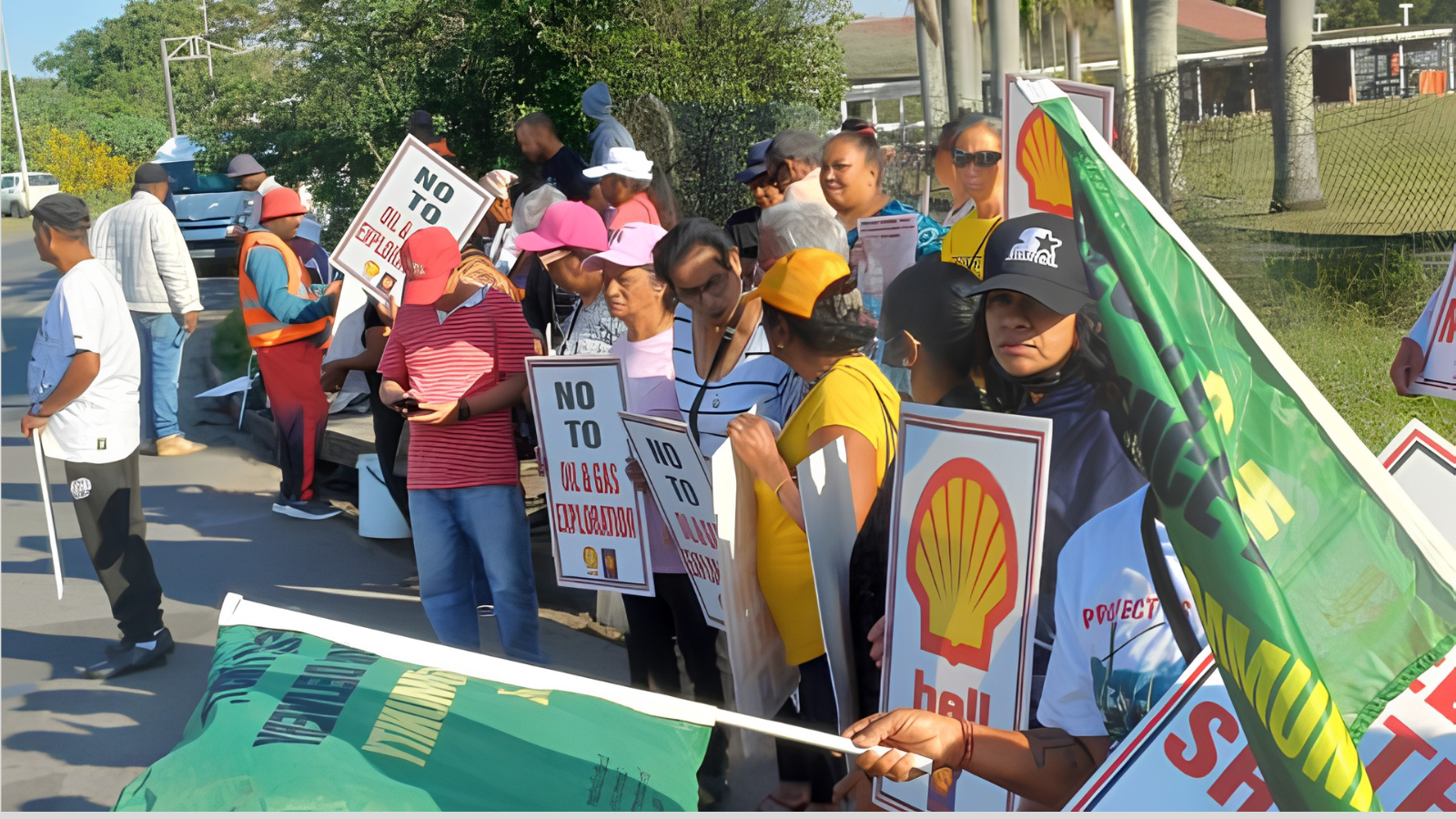
In late 2021, the energy multinational Shell, in collaboration with Impact Africa, announced that its seismic vessel, the Amazon Warrior, would commence a large-scale 3D seismic survey off the Eastern Cape coastline of South Africa, known as the Wild Coast.
This process involves firing high-powered airguns at the seabed every few seconds, with the returning sound waves mapped to identify potential oil and gas reserves.
Local fishing communities, residents, and environmental organisations—including Sustaining the Wild Coast, Natural Justice, and Greenpeace—sought an urgent intervention from the Makhanda High Court to stop the operation.
They presented two main arguments:
- The applicants provided extensive expert evidence indicating that the loud, continuous acoustic pulses from the airguns could severely harm marine life by disrupting the communication and migration patterns of whales, dolphins, fish, and smaller organisms like plankton.
- Local small-scale fishers contended that the blasting would threaten their livelihoods. Additionally, Indigenous communities emphasised their deep spiritual and cultural connection to the ocean, which would be violated by the disruption.
The exploration rights were originally granted by the Department of Mineral Resources and Energy (DMRE) in 2014 and renewed in 2021.
However, the High Court determined that the initial consultation process was fundamentally flawed.
Shell’s independent practitioners had primarily published notices in English and Afrikaans newspapers, neglecting to adequately consult the isiXhosa-speaking coastal communities most affected by the decision.
In December 2021, Judge Gerald Bloem granted an interim interdict, ordering Shell to immediately halt all seismic operations.
In September 2022, the High Court officially deemed the DMRE’s decision to grant the exploration rights unlawful and set it aside.
The Supreme Court of Appeal later upheld the invalidity finding, establishing a significant legal precedent in South Africa.
This case reinforced that corporate financial interests cannot supersede the constitutional rights and cultural heritage of local communities.
It highlighted the necessity for meaningful, culturally sensitive consultations in extractive industries.
















 Loading ...