

Major South African company tied to 1,000 deaths per year


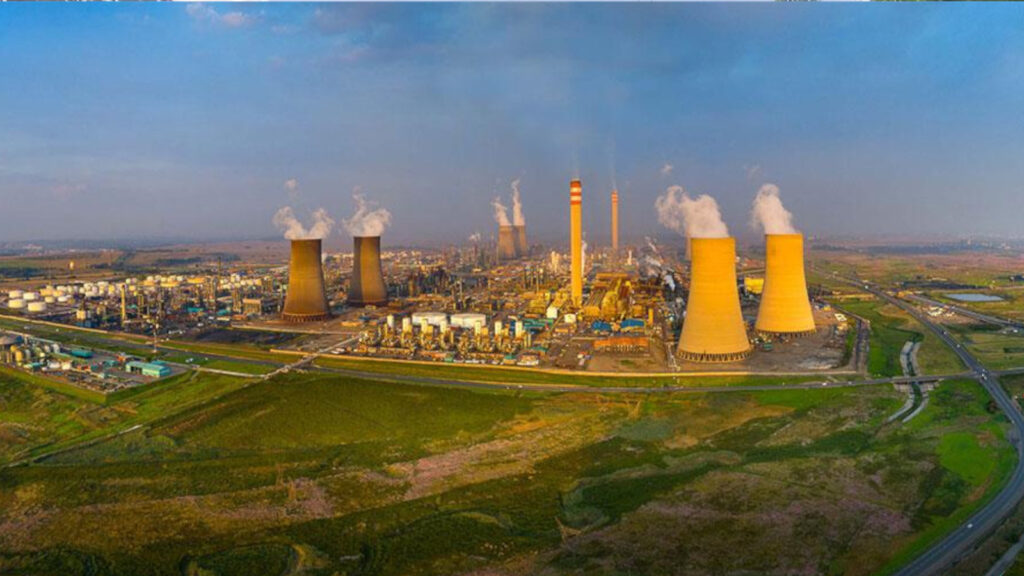
Pollution from Sasol Ltd.’s flagship Secunda plant has been tied to about 1,000 deaths a year, a study by the Centre for Research on Energy and Clean Air shows.
The vast coal-to-fuels and chemicals complex, which lies 140 kilometres east of Johannesburg, is the world’s biggest single-site emitter of climate-warming gases.
It also pumps out pollutants, including sulfur dioxide and nitrogen dioxide, and particulate matter.
“Air pollutant emissions from Sasol Secunda are associated with a substantial public health burden” Crea said in its study titled The Hidden Costs of Coal-to-Liquids in South Africa.
“The burden includes mortality, acute respiratory illness, chronic disease, adverse birth outcomes, child health impacts and productivity losses.”
The findings published Monday were based on Johannesburg-based Sasol’s last financial year and are the latest indication of the impact of air pollution in South Africa, which has the most carbon-intensive economy of any of the Group of 20 large economies.
“We will study the report and comment in due course.” Sasol spokesman Alex Anderson said.
While the government faces pressure to tighten emission rules, it’s said it also has to consider the impact of stricter legislation.
The two biggest polluters — Eskom and Sasol — are integral to the economy. State-owned Eskom provides most of the country’s electricity, while Sasol produces about a third of its motor fuel.
Studies ordered by South Africa’s government have found that pollution from the two companies harmed children’s health.
In 2022, a High Court ruled that the authorities’ failure to stem emissions breached the public’s constitutional right to clean air. Eskom has conceded that its pollution causes deaths.
Secunda produced 112,000 tons of sulfur dioxide and 77,000 tons of nitrogen dioxides in its most recent year, as well as thousands of tons of particulate matter, its own figures show.
Sasol has won exemptions from South Africa’s pollution laws, which are already much more lax than those in Europe and China.
“Sasol Secunda’s emissions are particularly high, in part because it has been granted alternative sulfur dioxide emission limits that are less stringent than South Africa’s minimum emission standards,” Crea said.
Secunda’s stacks, or chimneys, are permitted to emit between 1,400 and 1,700 milligrams of sulfur dioxide per normal cubic meter, compared with South Africa’s general limit of 1,000 milligrams.
By contrast, China’s limit is 35 milligrams while the European Union’s limits range up to 165 milligrams, according to Crea.
The research organisation estimated that the plant’s operations cause health-related economic damage of about R16.1 billion annually.
The pollution causes thousands of cases of asthma and, in some cases, results in children being born with low birth weights before full term, it said.
















 Loading ...