

South Africa’s most powerful corporation and its BEE drive


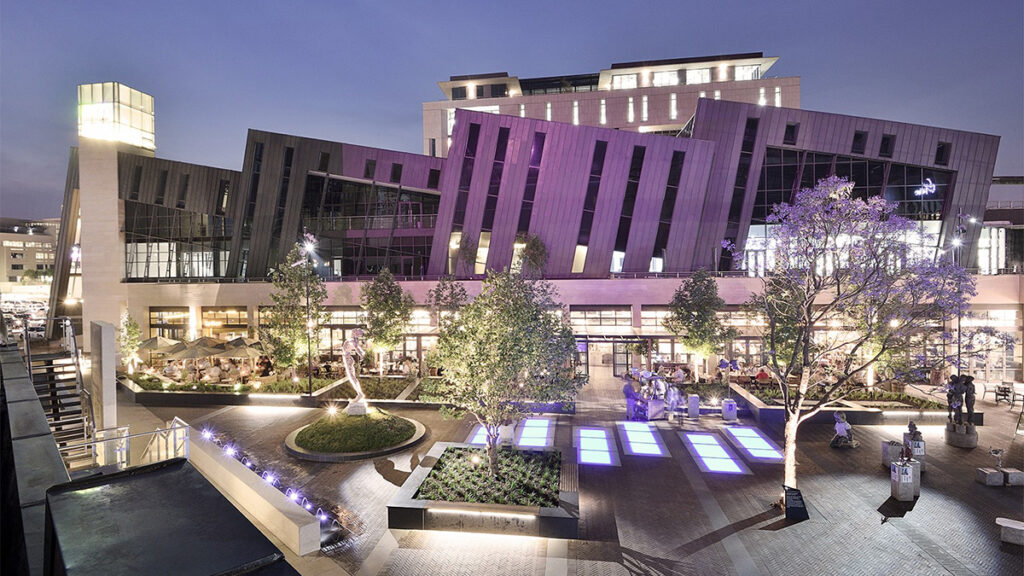
The Public Investment Corporation (PIC) owns large stakes in most big South African companies, making it the country’s most powerful organisation.
The PIC is wholly owned by the South African Government, with the Minister of Finance as shareholder representative.
Its history starts in 1911 when the Public Debt Commissioners were founded to manage government debt and invest the government and SA Railways and Harbours’ trust funds.
By 1924, it had taken on the provincial administrators’ funds and managed loans to local governments in the country.
The pension funds managed by the government would allow the government to borrow against those funds.
In 1984, the organisation was transformed into the Public Investment Commissioners, moving its focus from debt to investment management.
On 1 April 2005, following the promulgation of the Public Investment Corporation Act, 2004, the PIC transformed into a modern asset manager.
The PIC also changed from a government department under the Treasury to a state-owned corporate entity.
The PIC’s role is to grow and safeguard the assets entrusted to its care and explore avenues through which its investment interventions can benefit South Africa.
The entities on behalf of which the PIC invests funds include pension, provident, social security, and guardian funds.
The most significant are the Government Employees Pension Fund (GEPF), the Unemployment Insurance Fund (UIF), and the Associated Institutions Pension Fund (AIPF).
It also serves the Compensation Commissioner Pension Fund and the Compensation Commissioner Fund.
As part of its mandate, it financed 64,935 houses, it funded 41 farms, and invested R4.1 billion in the transport and logistics sector.
It further supported 3,353 small and medium-sized enterprises and funded 2,420 MW of renewable energy.
It is the largest asset manager in South Africa, with R2.693 trillion in assets under management (AUM).
The Government Employee Pension Fund accounts for 88% of the assets under management, and the UIF accounts for 6%.
The rest is split between the Compensation Commissioner Fund, the Compensation Commissioner Pension Fund, the Associated Institutions Pension Fund, and other clients.
The PIC is very powerful and influential
The PIC is a large shareholder in most big companies in South Africa, which makes it very influential in the local business arena.
For example, the government can use the PIC to enforce its black economic empowerment (BEE) policies.
The PIC stated that a minimum of 98% of its total brokerage fees were allocated to firms with a B-BBEE rating of levels one to three.
It further said that 70% of its brokerage fees were allocated to firms that are 51% black-owned or 30% management-controlled by previously disadvantaged groups.
It said that it drives racial and gender transformation within its investee companies by way of proxy voting.
This means that the PIC can vote on behalf of its beneficiaries as shareholders of the different companies it invests in.
The PIC’s beneficiaries, the government employees, give their vote to the PIC, by way of a proxy, to vote on their behalf within the companies the PIC invests in.
The PIC stated that it uses its voting power to appoint executive management that is racially and gender diverse within the companies it invests in.
The PIC implements this strategy by appointing board members in the various companies it invests in.
These board members represent the PIC’s beneficiaries and have voting rights equal to its investment in the company.
The larger the PIC’s shareholding within the business, the more voting power the PIC-appointed directors have on various business issues.
The PIC is incredibly influential within corporate South Africa and has the power to implement B-BBEE policies within the private sector.
The PIC is the largest shareholder in most companies listed on the Johannesburg Stock Exchange (JSE), with a listed SA equities holding of over R900 billion.
This means that the PIC has the greatest voting power within the largest companies in South Africa, and it uses this influence to implement its transformation goals.
The table below shows some companies in which the PIC and, by extension, the South African government has immense influence.
| Company | PIC/Government % Shareholding | PIC Rank |
| Vodacom | 11.94% | 2nd Largest Shareholder |
| MTN | 19.44% | Largest Shareholder |
| Telkom | 50.46% | Largest Shareholder |
| Naspers | 16.04% | Largest Shareholder |
| Firstrand | 16.10% | Largest Shareholder |
| Standard Bank | 14.50% | 2nd Largest Shareholder |
| Capitec Bank | 15.56% | Largest Shareholder |
| Gold Fields | 20.01% | Largest Shareholder |
| AngloGold Ashanti | 14.89% | Largest Shareholder |
| Sanlam | 14.80% | Largest Shareholder |
| Harmony Gold | 12.34% | Largest Shareholder |
| Bid Corp | 19.96% | Largest Shareholder |
| Shoprite | 16.84% | Largest Shareholder |
| Discovery | 12.87% | Largest Shareholder |
| Nedbank | 15.88% | Largest Shareholder |
| Impala Platinum | 17.56% | Largest Shareholder |
| Pepkor | 15.15% | Largest Shareholder |
| Remgro | 17.31% | Largest Shareholder |
| Bidvest Group | 21.55% | Largest Shareholder |
| Clicks | 20.14% | Largest Shareholder |
| Aspen | 18.07% | Largest Shareholder |
| Mr Price | 17.33% | Largest Shareholder |
| Sibanye Stillwater | 15.05% | Largest Shareholder |
| Woolworths | 15.05% | Largest Shareholder |
| Exxaro | 15.05% | Largest Shareholder |
| ABSA | 5.14% | Largest Shareholder |
| Growthpoint Properties | 32.72% | Largest Shareholder |
| Dis-Chem | 18.04% | 2nd Largest Shareholder |
| Multichoice | 11.83% | Largest Shareholder |
| Sasol | 17.13% | Largest Shareholder |
| Investec | 15.54% | Largest Shareholder |
| Mondi | 9.94% | Largest Shareholder |
| Coronation | 12.79% | Largest Shareholder |


















 Loading ...