

Big VAT changes coming in South Africa


South Africa is heading for a value-added tax (VAT) increase because other taxes are at their maximum, and cutting spending is politically suicidal for the ANC, leaving VAT as the only viable option.
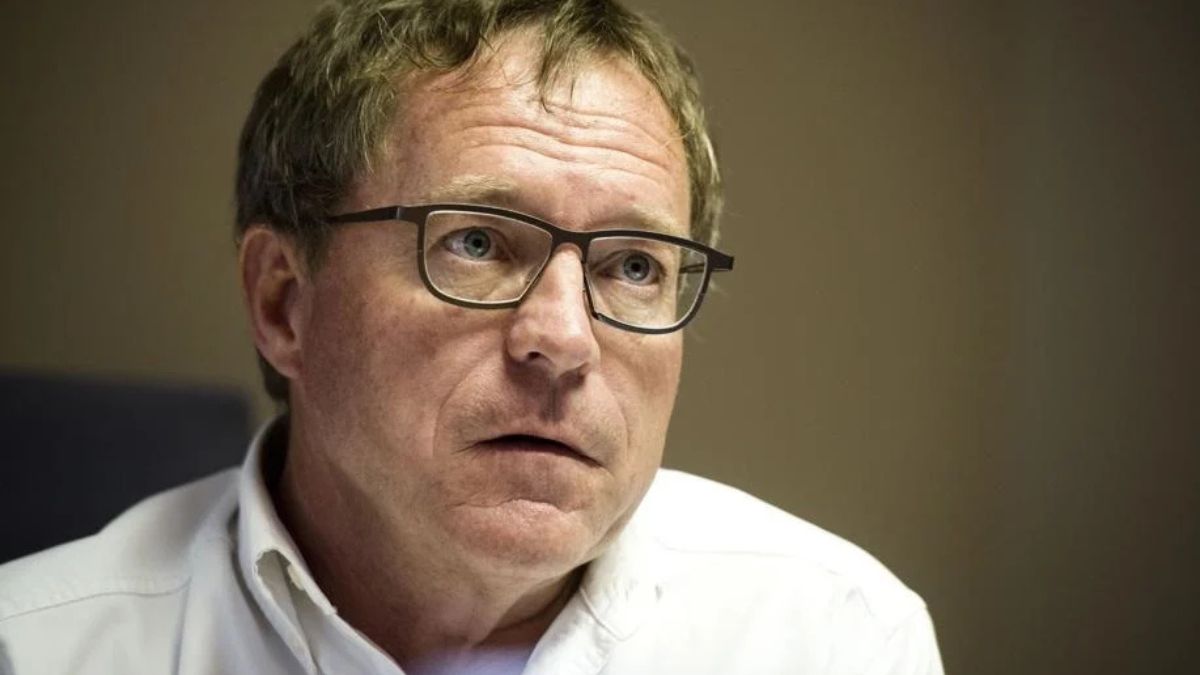
This is according to Efficient Wealth chief economist Dawie Roodt, who explained why a VAT increase is only a matter of time.
Looking back at the country’s tax history, Roodt noted that VAT was first introduced in 1978 at 4%. “Owen Horwood, who was the finance minister at the time, said it’s never going higher than 4%—never, ever, ever,” he said.
“Well, we know that whenever a politician says taxes are not going to increase, we must understand what they’re telling us—and it’s not the truth.”
Roodt said VAT has steadily risen over the years, and history shows that nothing is as permanent as a temporary tax.
Given the state’s deteriorating finances, he expects further increases sooner or later. “I won’t be surprised if we see further increases in value-added tax,” he said.
“That’s the only remaining tax that can be increased to bring in significant amounts of money. The other taxes have been pretty much exhausted.”
According to Roodt, South Africa’s corporate and personal income taxes have reached their limits.
“We’re overdoing it on some of the other taxes already. Company tax at around 27% is just too high—we actually need to reduce it,” he said.
“And we can’t increase income taxes anymore, because very few people pay almost all the personal income tax in South Africa. We are already over the so-called Laffer Curve.”
The Laffer Curve shows that once taxes reach a certain point, further increases actually reduce revenue because people stop working, find ways to avoid taxes, or leave the country.
Somewhere between 0% and 100% there’s a point where, if you increase tax rates more, you collect less. When it comes to personal income tax, South Africa is over that curve and simply cannot squeeze more out of the rich.
Roodt explained that this leaves VAT. “VAT is the second most important source of revenue after personal income tax, contributing roughly 30% of total tax,” Roodt said.
“It’s an indirect tax and relatively easy to collect, but it’s regressive—poorer people end up paying a greater proportion of their income on it.”
It’s not a question of if, it’s a question of when
The government almost implemented a VAT hike earlier this year. The current rate of 15% was almost 17% before it was reduced to 16%, then to 15.5%, and ultimately abandoned.
Many political parties actually voted for an increase in VAT, and then afterwards they all claimed victory and said they had stopped it—even the ANC, which proposed it in the first place.
Roodt said this contradiction highlights a political dilemma. “Politicians never say they’re going to increase taxes, but they all promise to spend more money,” he said.
“It’s always left to the Minister of Finance to find the money somewhere—and the only place left to find it is VAT.”
South Africa’s debt, he added, has reached unsustainable levels. The state’s finances have become unstable as debt levels keep going up as a percentage of GDP.
South Africa is spending an increasing amount on interest, and we need to reduce this ratio. However, because the economy isn’t growing fast enough, we can’t rely on growth to solve it.
If we continue like this, Roodt warned that the country is heading for a financial crisis. Roodt said the ideal solution is to cut spending. However, he explained that this is politically “suicidal”.
“Politicians just won’t do that. So the only alternative is higher taxes, and VAT is the only one left.”
He also added that the South African Revenue Service (SARS) has become more aggressive in collecting taxes to compensate for the lack of new revenue measures.
“SARS is very efficient—one of the few institutions still working well. They’re under huge pressure to collect as much as possible because the state finances are in trouble,” he said.
However, every rand they take from the productive economy and give to the state is spent less efficiently.”
Roodt warned that if spending continues to outpace revenue, the government will eventually turn to inflation as a hidden tax.
“Inflation erodes the value of money, and therefore debt. That’s why politicians like inflation; it reduces their debt burden. But it’s a tax on all of us.”
Roodt believes that without faster economic growth, South Africa will be forced into a corner. We can’t keep borrowing forever.
“If politicians don’t cut spending (and they won’t), the only option left is to increase VAT. Maybe not this year, but eventually. It’s not a question of if, it’s a question of when,” he said.












 Loading ...