

ANC wants future projects to use the ‘user-pays’ funding model


The ANC hopes to deal with the issue of financing e-tolls quickly, and is committed to using the ‘user-pays’ funding model for future infrastructure developments.
This is according to ANC secretary-general, Ace Magashule, who was briefing media on the party’s latest National Executive Committee (NEC) meeting on Tuesday (30 July).
“The NEC noted and supported the process by government to deal with the matter of e-tolls so that it is resolved amicably and expeditiously,” he said.
“The NEC re-affirms the user-pay principle in dealing with the financing of major infrastructure,” he added.
User pays
The user-pays principle is a funding model in which the beneficiaries of a development or system ultimately pay the full cost of it.
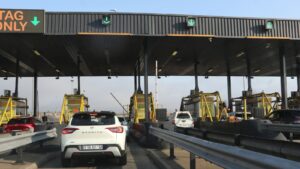
While not exclusive to the controversial e-tolling system, it is epitomised by it in South Africa, where Gauteng road users were to pay for the upgrades and maintenance of the province’s roads through electronic tolling as they traveled the roads.
The more a motorist travelled, the more fees they would pay. Unlike national tolls, which feed directly into the fiscus, the e-tolling system is supposed to finance only the roads tied to the network, as well as the collection costs and debt.
However, while e-tolling is a prime example of the user pays principle in South Africa, it also highlights its pitfalls.
Gauteng motorists have rejected the system in their numbers, which has caused it to fail. Recent numbers shows that while road agency Sanral needs R240 million a month to finance just the debt on the Gauteng road network, it is only drawing in around R60 million.
This has created a massive liability on Sanral’s books, where funds have dried up for road maintenance and expansion, even forcing the group to move money from other road projects to cover the debt, and pay for the costs of its expensive e-toll collection methods.
A system similar to Gauteng’s e-tolls was to be introduced in the Western Cape, but these plans were scuppered by backlash in the province.
Notably, e-tolling opponents don’t reject the user-pays principle, but question the chosen methods of implementing the concept (ie, e-tolls).
Impasse
At the start of July, President Cyril Ramaphosa instructed minister of Transport Fikile Mbalula to work alongside finance minister Tito Mboweni and Gauteng premier David Makhura to find a solution to e-tolls.
Makhura pledged to scrap e-tolls in his state of the province address, however, Mboweni has voiced his support for the tolls and believes they should continue to operate under the ‘user-pays’ model.
“The president has noted and finds extremely unfortunate and deeply regrettable recent public exchanges between finance minister Tito Mboweni and the Gauteng Provincial Government on this matter,” the presidency said.
“Such exchanges on social media are unbecoming of their high offices and fail to provide the leadership required in this instance.”
Ramaphosa said that the cabinet proposal should be tabled by the end of August 2019.
STATEMENT OF THE ANC NATIONAL EXECUTIVE COMMITTEE HELD ON FROM 26-29 JULY 2019#ANCBriefing pic.twitter.com/KBoMY9kIfq
— African National Congress (@MYANC) July 30, 2019
Read: Pay back motorists who have forked out for e-tolls, says AA

















 Loading ...