

5 important things happening in South Africa today
·26 Aug 2019


Here’s what is happening in and affecting South Africa today:
- National Treasury is drafting a new financing paper for the National Health Insurance, which will determine how much money the country will need to launch the scheme in its initial stages. Based on an assumption of covering 15 basic benefits, it is already being speculated that the country might hit a R30 billion per year shortfall by 2025. [Business Day]
- Government says that it will publish the detailed restructure plan for Eskom within the next few weeks, which will show how it plans to bring the power utility on a path to long-term stability. Eskom has been hurt by a steep rise in salary, fuel and debt-servicing costs over the past decade, and most recently posted a R21 billion loss. Government’s vague plan so far is to split the group into three. [Reuters]
- South Africa has spent at least R82 million keeping the lifestyles of former presidents going – and that’s just over the last 5 years. The DA noted this figure only covers 60% of available data, and thus not the full extent of the ex-president bill, which could be as high as R115 million. One of the benefits former president Zuma gets is a R3 million salary for life, and access to a VIP security detail, which includes blue light convoys and security guards. [TimesLive]
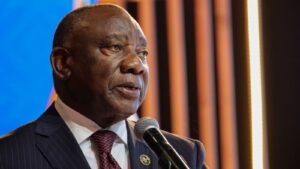
- President Cyril Ramaphosa has suggested the country start discussions around tapping into the country’s vast government retirement savings to fund state projects – and predictably, the people paying for those pensions are not happy about it at all. The Association of Monitoring and Advocacy of Government Pensions says none of these investments would yield positive returns, and such a plan would only be viable if the government could be trusted – which it can’t be. [Bloomberg]
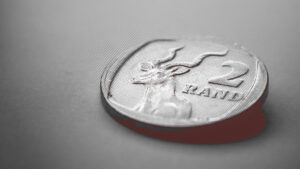
- China and the US are at it again, playing the tit-for-tat game as the trade war escalates once more. A few hours after China announced a tariff on $75 billion worth of US goods, the US declared an additional 5% tariff on $550 billion worth of Chinese goods. The escalation sent markets back to risk-off territory, hitting the rand. On Monday the rand was at R15.34 to the dollar, R18.82 to the pound and R17.10 to the euro.














 Loading ...