

New laws coming for R44 billion industry in South Africa


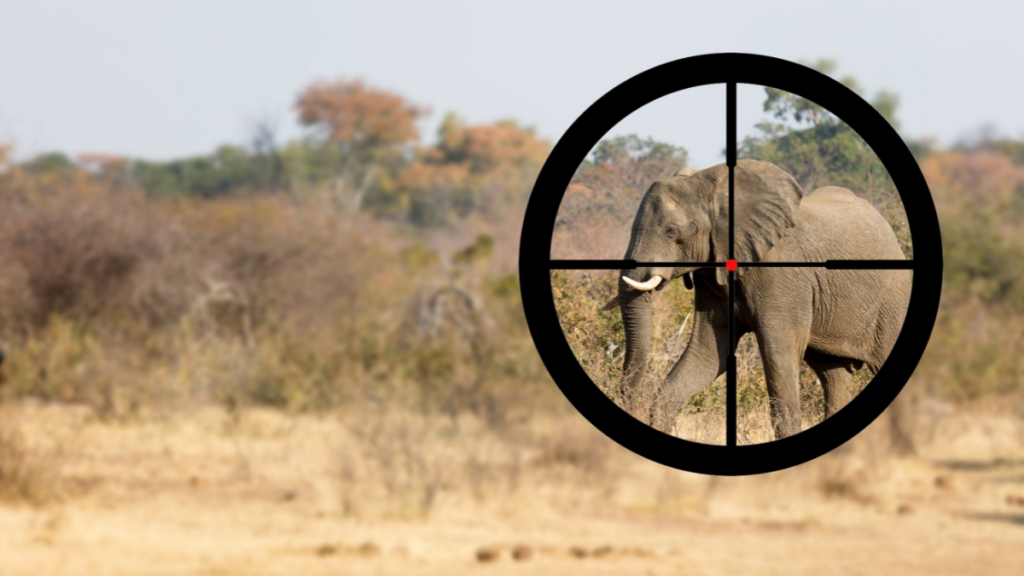
For the first time since 2021, newly elected Environmental Minister Willie Aucamp announced draft export quotas for hunting trophies of elephants, black rhinos, and leopards, three of South Africa’s high-value big-game animals.
Big game hunters and guides have been urging the department to re-establish export quotas for these three high-value species, claiming that the local hunting industry has suffered a loss of up to R2.25 billion in direct revenue over the past five years.
Conversely, some animal rights organisations supported the suspension of the quota, arguing that trophy hunting jeopardises endangered species and damages South Africa’s reputation.
The draft quotas have not yet been implemented and will require a public participation process, with 30 days for comments.
This period for public participation will be crucial, especially given the 2025 research by North-West University (NWU) showing that hunting tourism adds approximately R44.03 billion to South Africa’s economy, highlighting its importance as a key economic driver.
The industry, however, faces significant challenges, as the organisation Wildlife Ranching South Africa estimates that losses range from R350 million to R450 million annually since 2021, noting that international hunters have turned to other African nations.
The draft quotas announced by Aucamp proposed a new trophy-hunting limit for elephants: 300 elephant tusks, derived from no more than 150 individual animals.
Aucamp announced in the Government Gazette on Friday that South Africa’s elephant population has grown by 41% since 2006, now estimated at over 43,500 wild elephants.
He stated there are currently no concerns about elephant hunting in South Africa, with offtakes ranging from 0.35% to 0.7% of the population to ensure large trophies remain sustainable.
The proposed export quotas also include 12 hunting trophies for black rhinos, which are critically endangered, with about 2,000 remaining in South Africa and approximately 6,700 worldwide.
CITES regulations specify that only 0.5% of the three South African subspecies can be exported for hunting trophies, which currently allows for 10 animals.
Aucamp’s proposed new quotas, however, do not clarify why the export quota is set at 12 rather than 10.
Leopards, while not considered endangered, are vulnerable and are subject to a quota of 11 hunting trophies, sourced from 11 “designated and eligible hunting zones,” with one animal per zone.
Leopard hunting is permitted only where their populations are stable or increasing, as identified by a monitoring project that has been ongoing for a decade.
These proposals are planned to be repeated in 2027.
Economic impact of hunting tourism
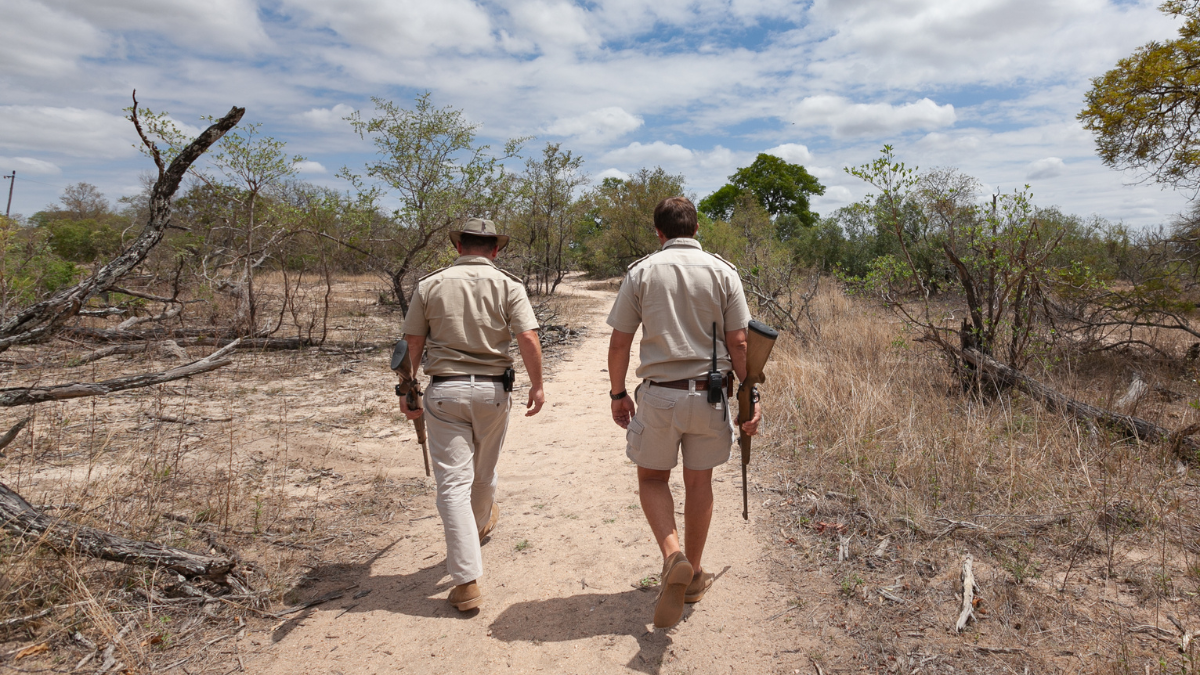
NWU’s research suggests that local hunters, mainly middle-aged men from provinces like Gauteng, are the backbone of this economic activity.
Their research suggests that on average, each local hunter spends about R57,012 (USD 3,594) per season, which adds up to a total of nearly R11.4 billion (over USD 718 million) annually.
On the other hand, international hunters, often affluent retirees from the United States, spend significantly more per trip—around R518,585 (USD 32,663)—mainly on game, trophies, accommodation, and daily rates.
Although there are fewer international hunters, their contributions add another R2.7 billion (USD 169 million) to overall spending.
Researchers used a Social Accounting Matrix (SAM) to find that for every USD 1 spent, an additional USD 1.97 in economic activity is generated, due to a production multiplier of 2.97.
The researchers indicated that this effect ripples through sectors such as agriculture, trade, accommodation, transport, and personal services, and, most notably, employment, with approximately 95,000 jobs in South Africa linked to hunting tourism.
Additionally, the research shows that many of these roles, such as trackers, farm hands, and cleaners, require little formal education, suggesting that hunting tourism, if properly monitored and regulated, is a vital source of income in a country with high unemployment rates.


















 Loading ...