

New state-owned entity coming to South Africa


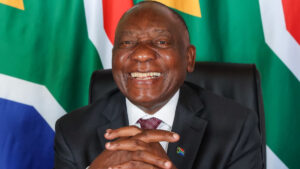
Amid South Africa’s extreme water supply challenges, President Cyril Ramaphosa has announced that a new state-owned entity will soon be established to tackle the issue.
People across the nation, notably in Johannesburg and Knysna, have been experiencing prolonged water shortages.
Ramaphosa himself has deemed the increasing infrastructure challenges linked to water to be potentially far worse than load shedding.
Speaking at the 2026 State of the Nation Address (SONA), Ramaphosa said the challenges stem from the neglect of critical infrastructure across municipalities nationwide.
Although he admitted that there is no silver bullet to address the problem, Ramaphosa said that the government had committed R156 billion to water infrastructure over the next three years.
The President also said that the government is in the final stages of establishing the National Water Resource Infrastructure Agency.
The new state-owned institution will monitor the nation’s water infrastructure and mobilise funding for the infrastructure.
In March 2024, Parliament passed the National Water Resources Infrastructure SOC Bill, which was then assented to in August of the same year.
Ramaphosa and Minister of Water and Sanitation, Pemmy Majodina, have said that the existing system, marked by fragmented responsibilities, has failed to attract the investment needed to tackle water issues.
Reports vary, but the cost of revenue loss from unaccounted-for water is estimated at more than R16 billion annually.
Greater accountability

During SONA, the President noted that the real challenge facing South Africa is not a lack of water, but the struggle to get water from dams to people’s taps.
He said that the Water Services Amendment Bill will allow the government to hold water boards accountable for their performance.
For those who do not meet their targets, the government will be able to withdraw the licences of these water boards.
He said that if a municipality cannot deliver water to its residents, another entity must assume this responsibility.
While these legal changes and increased investment will address the issue in the long term, the President acknowledged that short-term solutions are important.
Drawing on the National Energy Crisis Committee established three years ago, Ramaphosa will now create a new National Water Crisis Committee that he will chair.
The structure of the committee will bring together all existing efforts to address the issue into a single coordinating body.
It will deploy technicians and resources from the national government to municipalities facing water challenges, which will ensure that action is taken swiftly.
He warned local government authorities that the national government will intervene when necessary, and hold to account those who fail to supply.
He noted that the national government has laid criminal charges against 56 municipalities that have failed to meet its obligations.
Municipal managers could even face criminal charges for violating the National Water Act.
The President said that water revenue is being used for “other purposes” that are not aligned with upgrading water infrastructure.
There is now a R54 billion incentive for municipalities to improve their water, sanitation and electricity services, aimed at ensuring that revenue is used to fix reservoirs, pumps and other pieces of infrastructure.











 Loading ...