

The one province in South Africa where only 19% of Grade 3s can read at grade level


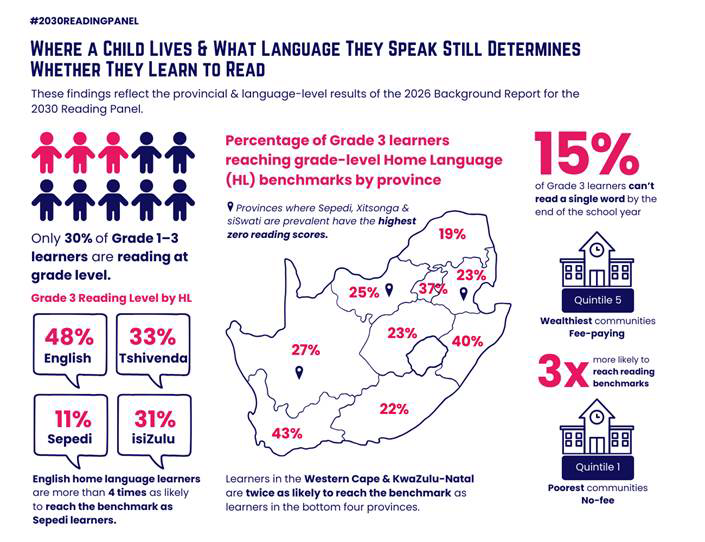
A new report from The 2030 Reading Panel shows that only 30% of learners in Grades 1 to 3 are reading at grade level in their home language, with Limpopo the worst-performing province.
The 2030 Reading Panel is an independent group of South African leaders from civil society, business and government looking to address South Africa’s reading crisis.
The panel aims to ensure that all South African children can read for meaning in their home language and in English by the age of 10.
A new 2026 report, which draws on data from the Department of Basic Education’s Funda Uphumelele National Survey (FUNS), highlights the challenges facing literacy in South Africa.
Only 30% of learners in Grades 1 to 3 are reading at grade level in their home language. In some cases, up to 25% of Grade 3 learners cannot read a single word.
Across the entire system, 15% of Grade 3 learners scored zero on reading assessments, meaning they cannot decode a single word by the end of their third year of formal schooling.
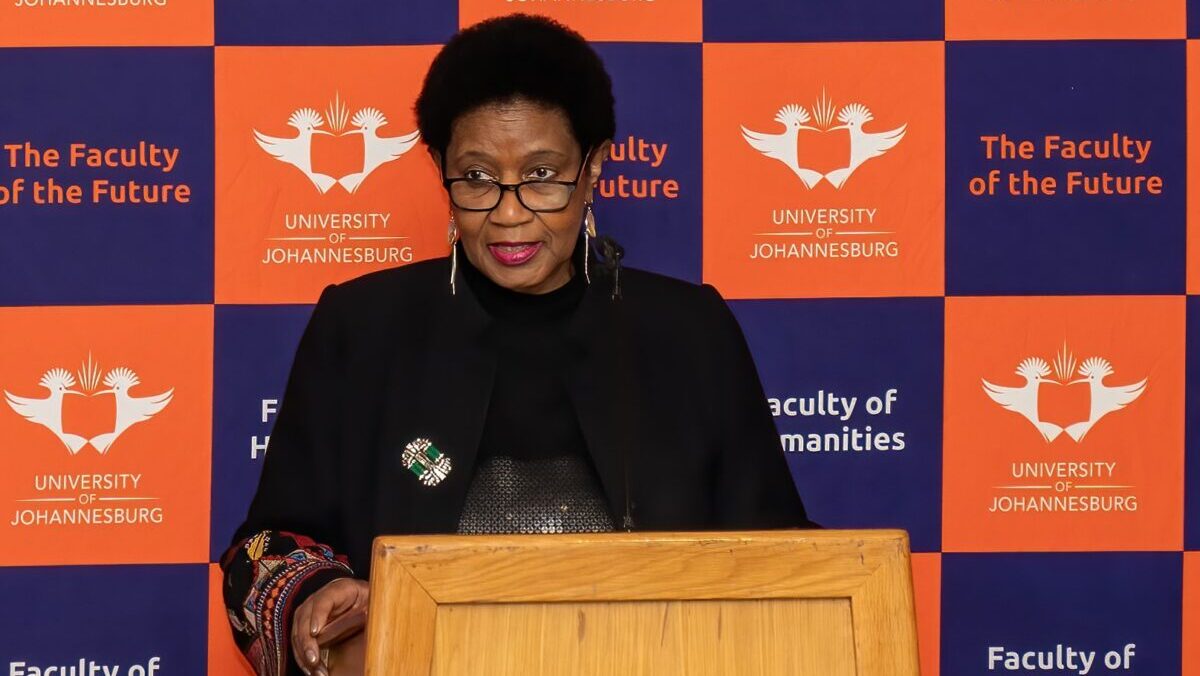
“We can see the full picture of where South African children stand in the earliest, most critical years of learning,” said former Deputy President Dr Phumzile Mlambo-Ngcuka, who chairs the Panel.
“The data shows us the scale of the challenge and exactly where intervention is most urgent. Importantly, it also shows us where success is being achieved.”
The report also shows differences among provinces, languages and socio-economic contexts, with learners in higher-income schools more likely to reach grade-level benchmarks.
In Limpopo, the percentage of Grade 3 learners meeting grade-level benchmarks is a mere 19%.
The report noted that learners who learn Sepedi are more likely to struggle to reach the benchmark reading level by Grade 3, with only 11% hitting the target.
Other provinces that struggle to reach their required level by Grade 3 include the Eastern Cape (22%), Mpumalanga (23%), and Free State (23%).
The best-performing province, the Western Cape, only scores 43%, highlighting the challenges facing South Africa’s literacy programmes.
Some interventions are in place
While the statistics paint a grim picture, the panel noted that several provinces are looking into large-scale interventions.
“Change and improvements are happening. There has been significant progress since 2022, when no provinces were implementing large-scale, evidence-based reading interventions,” said the panel.
“Today, six of the nine provinces – the Eastern Cape, Free State, Gauteng, Mpumalanga, KwaZulu-Natal and the Western Cape – are rolling out structured literacy programmes that reach 100,000s of learners.”
These interventions share standard features, including structured lesson plans and aligned classroom materials, high-dosage teacher training, and systematic measurement of learner outcomes.
While the Western Cape is already the best-performing province for literacy, it is also introducing two additional hours of home language instruction per week to the foundation phase timetable.
The province is also introducing standardised baseline assessments within the first 10 days of each school year.
Of concern, the worst-performing province, Limpopo, is not one of the six provinces rolling out structured literacy programmes.
“Provincial implementation of evidence-based reading programmes is expanding, but progress remains uneven and vulnerable without national policy alignment and sustained funding,” said Dr Mlambo-Ngcuka.
“We know what works. What is needed now is a sustained national commitment to scale it.”












 Loading ...