

New laws coming after Afrikaner towns in South Africa


The Umkhonto we Sizwe (MK) Party has gazetted its intention to table a Private Members’ Bill in Parliament, seeking to repeal Section 235 of the Constitution and remove the explicit right to self-determination.
Section 235 of the Constitution gives South Africans the explicit right to self-determination, allowing communities to form around a shared common language or heritage within the country.
Section 235 reads:
The right of the South African people as a whole to self-determination, as manifested in this Constitution, does not preclude, within the framework of this right, recognition of the notion of the right of self-determination of any community sharing a common cultural and language heritage, within a territorial entity in the Republic or in any other way, determined by national legislation.
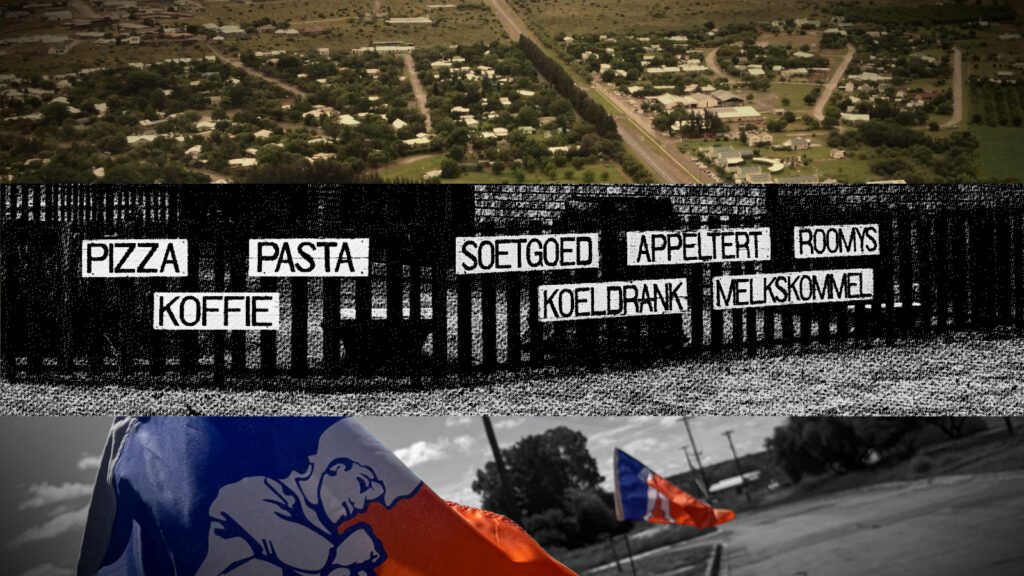
Section 235 has long been cited by supporters of Afrikaner towns and enclaves such as Orania and Kleinfontein to justify their existence and self-governance.
In Orania’s case, the town functions as its own local government, a status achieved through a complex history involving a settlement with the state.
Orania’s unique municipal status stems partly from the fact that it independently delivered its own services for nine years before the formalisation of the new municipal system in South Africa in 2000.
This autonomy is a cornerstone of Orania’s approach to self-governance, which has helped it to become a self-sustaining community.
Orania was founded on the principles of “Afrikaner self-governance, cultural preservation, and self-determination”.
Similarly, Kleinfontein—a privately established settlement near Rayton, about 30 km east of Pretoria—operates as an Afrikaner enclave based on the same principles.
The Kleinfontein farm was bought in 1992 by the Boer Freedom Movement and developed as an enclave to preserve Afrikaner culture and heritage.
It was initially a cooperative with houses on the farm. In 2018, it was converted from a cooperative into a share-block scheme.
Residents adhere to specific cultural and religious beliefs as part of the town’s aim to preserve their Afrikaner heritage.
However, the existence of these communities has become an increasingly contentious issue in the country, particularly among political parties that view them as exclusionary.
The existence of these communities is also seen as contrary to the Constitution’s establishment of South Africa as “one, sovereign, democratic state”.
Move to remove the explicit right to self-determination

According to the MK Party, it plans to table the Constitution Twenty-Fourth Amendment Bill, 2026, in Parliament to repeal Section 235 of the country’s supreme law.
The party argues that the country’s Bill of Rights already safeguards the rights contained in the section, and that its inclusion in the Constitution creates “confusion, contradictions and ambiguity”.
It said that the Bill of Rights gives everyone the right to freely use the language of their choice and to participate in the cultural life of their choice.
It also gives everyone the right to enjoy their culture, practise their religion, use their language and form, join and maintain cultural, religious and linguistic associations and other organs of civil society.
The party argues that Section 235 introduces confusion, contradictions and ambiguity into the constitutional framework by providing a theoretical basis for “self-determination” of communities.
“Despite this notion that a right to self-determination of a community must be determined by legislation…it is used to create the false impression that the Constitution allows cultural enclaves or semi-autonomous entities,” it said.
It added that Section 235 also gives the impression that the Constitution allows these enclaves or entities to operate in a manner inconsistent with the Bill of Rights.
The MK Party recently took aim at the section, as well as the existence of Orania and other Afrikaner enclaves, in a response to celebrations of 30 years of the South African Constitution.
Responding to an address by Justice Minister Mmamoloko Kubayi, the party said the section has been “misappropriated to justify the existence of Orania, an exclusionist, racist enclave.”
Kubayi herself has expressed antagonistic views towards the town, stating in 2025 that it is a “racially exclusive” group, adding that it does not meet the legal requirement for self-determination.
“This is a small part of a broader population that lives freely and is under no threat,” she said.
“The use of cultural self-determination is therefore legally inaccurate, perpetuates racial segregation, reinforces social fragmentation and social inequalities.”
On Section 235, she said that it does not, per se, give any community the right to territorially self-exclude from the entire nation, for the purpose of maintaining racially exclusive enclaves.
“This would effectively result in the segregation of other persons based on race, reminiscent of the apartheid-era Group Areas Act, promulgated in 1950,” she said.
This was the Act that provided for dividing the country into areas based on racial categories determined by the government.
Kubayi’s comments were slammed by the Freedom Front Plus, a GNU member, who said the minister was attempting to strip section 235 of the South African Constitution of its meaning.
The MK Party’s intention to table the bill can be seen below:
Interested parties and institutions are invited to submit written representations on the proposed content of the Bill to the Speaker of the National Assembly within 30 days.
Representations can be delivered to the Speaker, Africa House Building, Cape Town; mailed to the Speaker, PO Box 15, Cape Town, 8000; or emailed to [email protected].














 Loading ...