

South Africa’s richest city in danger of falling further into junk


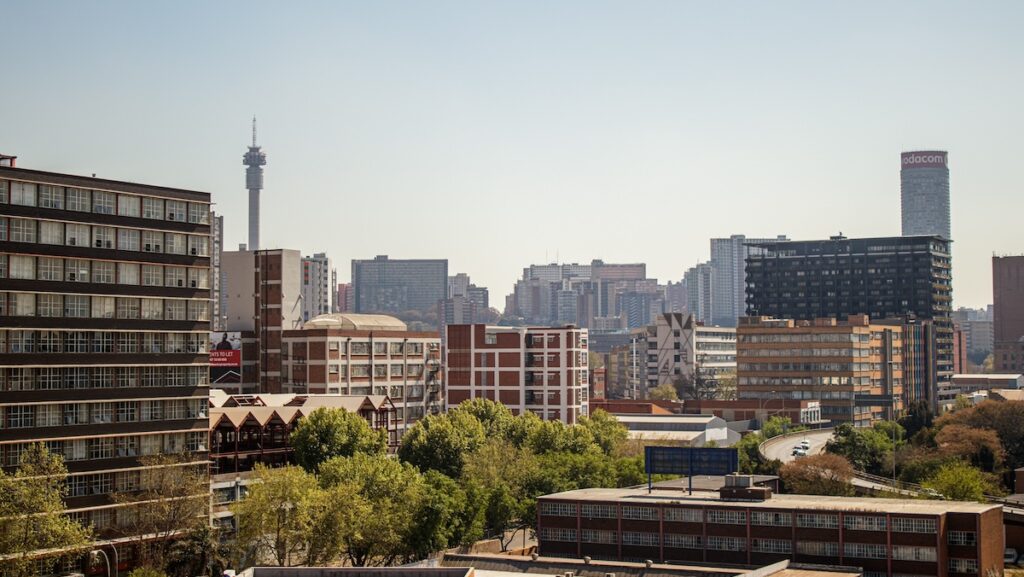
South Africa’s richest metro, the City of Johannesburg, is facing a downgrade in its credit rating from Moody’s.
Moody’s has placed the city on review for a downgrade, which will impact several of the metro’s ratings.
A downgrade would push these ratings from their current Ba3 level deeper into junk/non-investment status. Ba3 is the third strata of non-investment/junk status.
For context, South Africa’s current Moody’s rating is Ba2, the second strata of non-investment grade. It is highly uncommon for a metro to have a higher investment-grade rating than the country’s sovereign.
The City of Cape Town is the only metro with a Ba2 rating, on par with South Africa’s sovereign.
The rating action by Moody’s followed the decision by the JSE to suspend the registration of the city’s programme memorandum and the listing of its listed debt securities.
This was due to the city failing to publish its annual financial statements for the year ended 30 June 2025 within the timeframe stated by the bourse.
Moody’s said that the suspension reflects a deterioration in its assessment of the city’s governance, especially regarding transparency and the timelines for financial reporting.
While the suspension does not constitute a default under the debt instruments, Moody’s said that it should reduce the tradability and liquidity of the city’s outstanding securities.
The current issue ratings at risk of downgrading include:
- long-term issuer rating (domestic currency) of Ba3;
- senior unsecured rating (domestic currency) of Ba3;
- senior unsecured medium term note (‘MTN’) programme rating (domestic currency) of (P)Ba3;
- national scale rating (‘NSR’) long-term issuer rating (domestic currency) of A1.za;
- NSR senior unsecured rating (domestic currency) of A1.za;
- NSR senior unsecured MTN programme rating (domestic currency) of A1.za; and
- NSR short-term issuer rating (domestic currency) of P-1.za.
Moody’s also said that the city’s short-term issuer rating (domestic currency) of Not Prime (NP) was affirmed.
The city’s Baseline Credit Assessment (BCA), which excludes national government support, of Ba3 has also been placed on review for possible downgrade.
Chance to turn things around

Moody’s said it will consider affirming the ratings at their current levels if the city submits its outstanding financial statements by 31 May 2026, which would lift the JSE’s suspension.
The group said that, during its review period, it will assess the subsequent actions of Johannesburg and the JSE to address the delinquent financial statements.
It will also review Johannesburg’s ease of access to financing and capacity to meet upcoming financial obligations, and the city’s governance capacity with respect to the timeliness and transparency of financial information.
“The audit delay reflects unresolved disagreements between the city and the Auditor General, mainly related to the accounting treatment of certain infrastructure assets and conclusions from asset condition assessments, including the sufficiency of the evidence provided,” Moody’s said.
The city indicated that it has submitted the required information and met the 31 August 2025 deadline for providing financial statements to the Auditor General, and it expects to finalise the audited statements by 31 May 2026.
“Despite the suspension on the JSE, the city continues to service its debt, and no acceleration or covenant breach has been disclosed,” Moody’s noted.
“However, reduced market access can increase refinancing and liquidity risk by limiting the city’s ability to raise new debt or refinance maturities on predictable terms, particularly in a stress scenario.”
Johannesburg’s low liquidity (6.4% of operating revenue as of 30 June 2025) provides a very thin cushion should market access be interrupted.
“Even if market access is restored, the episode could weigh on investor sentiment and risk premia,” the group said.

















 Loading ...