

Nearly four million South Africans have given up looking for work


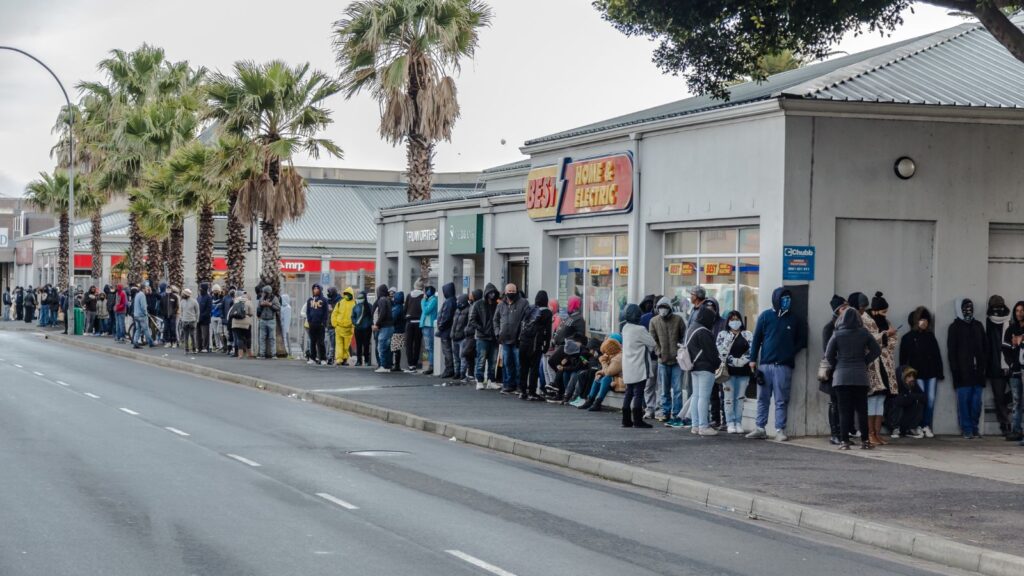
In the first quarter of 2026, South Africa’s unemployment crisis has deepened, with the official unemployment rate rising to 32.7%, according to the latest Quarterly Labour Force Survey (QLFS).
According to Stats SA, the number of discouraged job seekers rose by 178,000 to 3.9 million. Additionally, the number of available job seekers increased by 55,000, bringing the total to 910,000.
Meanwhile, the number of unavailable job seekers grew by 6,000, bringing the total to 49,000.
On the other hand, the number of individuals outside the labour force for other reasons decreased by 75,000, bringing the total to 12.4 million.
The data reveals a concerning situation in the labour market, with 345,000 fewer South Africans employed, bringing total employment down to 16.8 million.
These statistics indicate that more households are now facing the uncertainty of lost income, rising living costs, and the ongoing challenge of making ends meet. For many South Africans, these numbers represent real challenges.
Behind these statistics are families confronting tough financial decisions every day—whether to put food on the table, pay for transportation to work or school, keep up with debt repayments, or cover basic household expenses.
This situation is particularly difficult given recent increases in food and fuel prices, which add extra pressure to already stretched household budgets.
In light of this, Budget Insurance Senior Manager Tando Ngibe encourages South Africans to focus on safeguarding their financial well-being by actively budgeting, paying down high-interest debt, and prioritising essential expenses.
While this may be challenging amid rising costs, Ngibe said even small changes can have a significant impact.
“The key message here is that financial resilience and generational or family-related wealth building have become more important than ever,” said 1Life’s Truth About Money Coach Hayley Parry.
“This is because in many South African households, one income often supports multiple dependents,” she said.
Job losses, income instability, and financial shocks can undo years of financial progress if families are not adequately prepared.
Financial pressures on the rise

The financial experts are encouraging South Africans to adopt practical money habits that will benefit both current and future generations.
This involves understanding how to budget, recognising the importance of making a profit from your salary, reducing unnecessary debt, and, crucially, building an emergency savings fund.
This fund should not only support you but also your family and the broader network you care for. This approach is essential for ensuring appropriate financial protection.
“As tough as it is, financial resilience and generational wealth are not only built during times of economic prosperity but also protected through financial discipline, planning, and resilience during difficult periods,” said Parry.
In addition to the unemployment rate, other indicators of labour underutilisation were also considered.
The combined rate of unemployment and time-related underemployment rose by 1.6 percentage points, reaching 35.9%.
The combined unemployment rate and the potential labour force (previously referred to as the expanded unemployment rate) also increased by 1.6 percentage points to 43.7% in the first quarter.
The composite measure of labour underutilisation, which includes time-related underemployment, unemployment, and the potential labour force as a proportion of the extended labour force, stood at 46.3%.
Stats SA noted that these measures of labour underutilisation reflect individuals in various situations and with different levels of attachment to the labour market.
Additionally, the number of employed persons decreased in seven out of ten industries. The largest decrease in employment was observed in the Community and Social Services sector, which lost 206,000 jobs.
This was followed by the Construction industry, which experienced a reduction of 110,000 jobs, the Transport sector, which lost 30,000 jobs, and Private Households, which saw a decrease of 28,000 jobs.


















 Loading ...