

New state-owned company to deal with rising fuel prices in South Africa


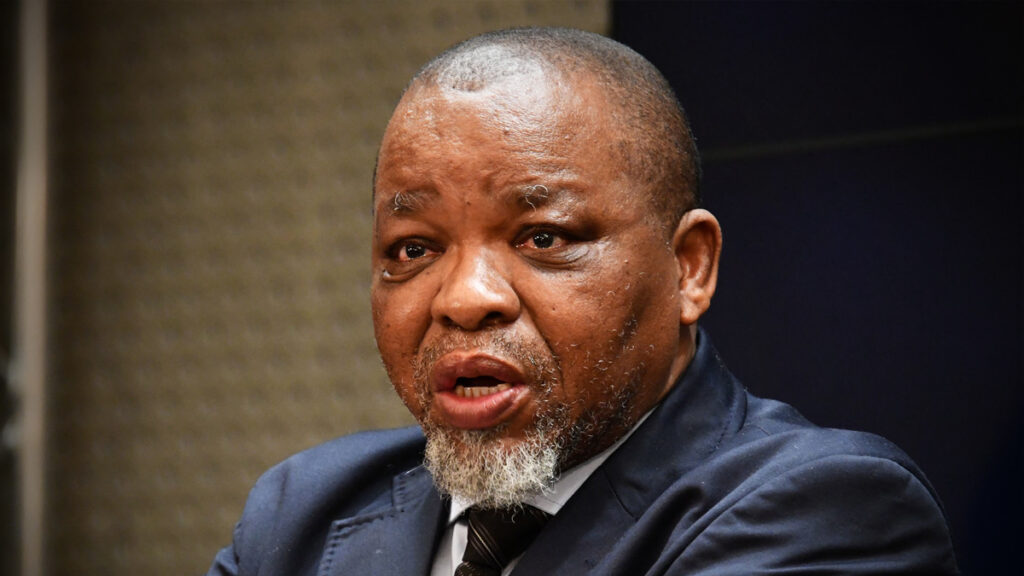
Minister of Mineral and Petroleum Resources, Gwede Mantashe, says South Africa needs to fast-track the establishment of a new state-owned company to address rising fuel prices.
South African consumers and industries have suffered massive price shocks, with petrol and diesel prices rising by a staggering R6.29/litre and R12.60/litre, respectively, over the past two months.
The steep climb in pump prices has been driven by chaos in global oil markets as a result of the United States’ war against Iran.
The war, which erupted on 28 February 2026, led to the closure of the Strait of Hormuz. When open, the strait carries 20% of the world’s oil, mainly to China and Asian nations.
With the war entering its third month, global oil supplies are under strain, with many countries drawing on reserves.
Oil prices, meanwhile, have sustained over $100 a barrel, reaching $125, and economists are now starting to factor in these higher prices for the rest of the year.
Delivering his budget vote speech for the department on Tuesday (19 May), Mantashe said that the government’s response to the crisis has been to deliver fuel tax relief in the short-term.
Along with National Treasury, his department announced a R3.00 per litre cut to petrol taxes and a R3.93 per litre cut to taxes for diesel.
However, this relief is only temporary, with at least half the taxes being added back into prices from July.
Mantashe stressed that South Africa needs a longer-term solution to shocks like this. While a review of the fuel price structure is in the works, the minister said a bigger shift is needed at a foundational level.
According to the minister, one of the key reasons South Africa’s fuel prices suffer during global oil-price turmoil is its over-reliance on imports.
“The reality confronting us is that South Africa remains overly dependent on imported refined petroleum products,” he said.
“It is neither sustainable nor just for a country with significant mineral and petroleum potential, such as ours, to remain exposed to external supply shocks in this manner.”
South Africa needs a new state company

The solution, he said, is to lean into the department’s focus on building an upstream petroleum industry and expanding refining capacity to address this.
“For this reason, it is imperative that we accelerate processing of the South African National Petroleum Company (SANPC) Bill.”
The Bill will establish and enable the full operationalisation of the SANPC as a strategic state-owned entity, enabling the state to participate in the oil and gas sectors.
This would run counter to the slow shutdown of South Africa’s refinery capacity over the past decade and lead to what the state characterises as industrial renewal in the country.
However, the plan has drawn backlash from environmental groups opposed to the reawakening of a polluting industry.
This would not only exacerbate concerns over climate change but also wider-reaching health risks associated with refineries.
Regardless, Mantashe said these plans need to be fast-tracked despite “persistent pressure from certain environmental lobby groups”.
“The fact remains that petroleum security is not a theoretical debate, but an economic necessity and a national imperative,” he said.
He also stressed that, while the government works to address the issues raised by the ongoing global crisis, South Africa’s fuel supply is not under threat.
“We have sufficient fuel supply to meet demand, and our fuel supply remains stable,” he said.
“Working closely with industry stakeholders, we continue to monitor the supply situation and will ensure ongoing transparency in this regard.”











 Loading ...