

Technology’s dead and dying


At a time when technology continues to develop and evolve at an exponential rate, BusinessTech handpicks past technologies which have either died, on their last legs, or are barely breathing.
Whether it’s Apple’s progress in bringing streaming radio to smartphones, Amazon’s move into digital video, or Google’s push to dominate the online space – big tech today is making these gadget dinosaurs a distant memory.

Pager
Pager
It’s been said that the only people who have pagers these days are doctors and drug dealers, and even then, only one of those is probably true.
Pagers are wireless communication devices with small displays that notify users of messages, numbers or other basic information.
According to Popular Science magazine, the first pager was built in 1950, and the technology continued to evolve over many decades.
Pagers took on many forms, with one-way and two-way communication and the ability to notify and share various forms of information – until cellular technology came into the picture around the mid-90s, and made it pretty redundant.
While cellphones and smartphones have all but killed the need for them, pagers aren’t completely dead.
They’re still useful to doctors who work in low-signal hospitals where cellphones don’t work very well, but more importantly, some restaurants have adapted the technology to notify customers when their orders are ready.
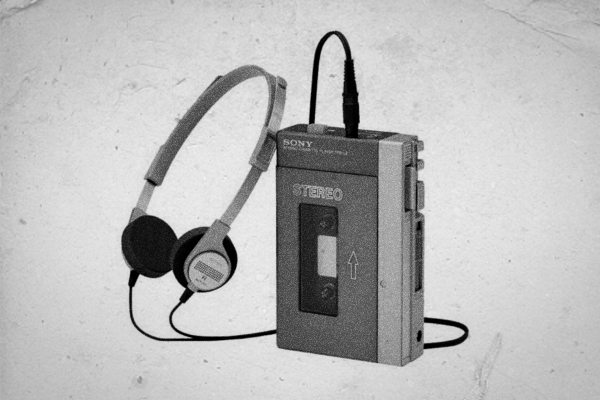
Walkman
Walkman
With its Walkman brand, Sony dominated the portable music player market from the 80s into the new millenium. Unfortunately, its dependence on physical media to play music means that when Apple’s iPod popped up in the 2000s – with mp3 support out of the box – Sony started losing the war.
Portable music players using cassette or CD technology (we’ll get to that one later) is simply no longer a thing.
Thanks to the advent of digital techonology and the mp3 format, one doesn’t need to carry their music around on a bulky gadget using storage techonology with severely limited capacity.
The iPod effectively killed Sony’s Walkman – and while you may feel truly retro hitting the road with your old-school cassette Walkman in tow, you’ll undoubtedly feel the burn of a hundred eyes on you, wondering which decade you crawled out of.
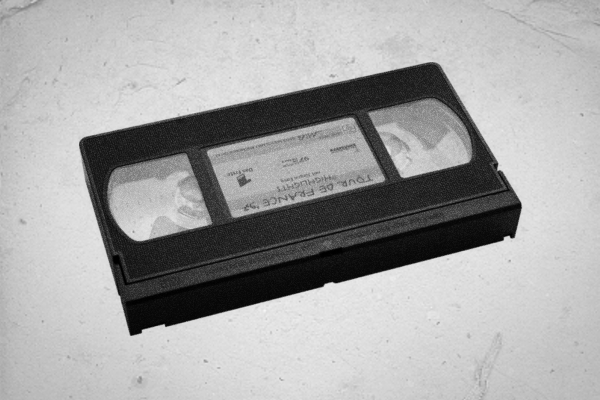
VHS
VHS
VHS technology – much like what happened most recently with Blu-ray with DVDHD – beat out Sony’s Betamax in the battle of the formats in the late 70s and early 80s, and became the most prolific storage medium for home video across the globe.
Then when DVD came around, it choked. Then, when DVDs got cheaper and more prolific, it sputtered and died.
Hollywood ditched the VHS in 2006 when A History of Violence became the last big movie to be released on the technology, and the format officially died when the last major supplier of VHS tapes stopped producing them in 2008.
While it’s tempting to chalk up the death of VHS to DVD – it’s just another in a long line of battles in the format wars. Indeed, even the DVD format stuttered with the release of Blu-ray technology, and currently Blu-ray is caught up in the shift to a new master – digital streaming.
According to projections from PwC, revenue from digital rentals and sales are set to outpace those of physical disc sales by 2016.
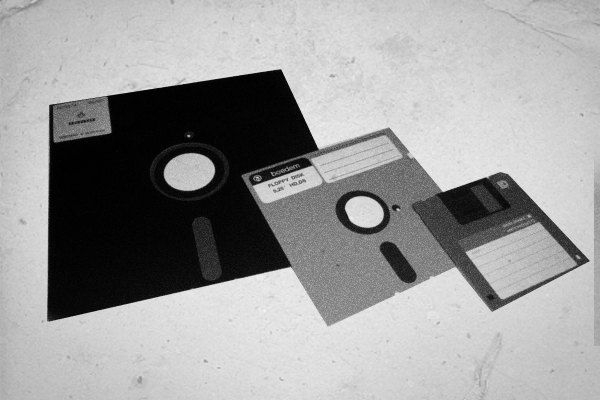
Floppies
Floppies
In a time when giving someone a stiffy or a floppy wasn’t nearly as dirty as it sounds, computers used a different form of disk storage to share and store files.
The floppy disk was a storage medium composed of a thin, flexible magentic disk (hence the name) encased in a plastic rectangle.
The disks came in various sizes – starting at 8-inches, eventually down-scaling to 3.5-inches or even 2.5-inches – and across its lifetime could hold anything from 1.5 megabits (1972) to 200 Megabytes (1999).
Today, flash memory can hold anywhere between 1GB and 256GB of data (and growing), making the storage and transfer of large files a breeze through USB ports, which are found in great number on even the most basic of computers.
While Sony only officially killed its floppies in 2010 – and you’ll unlikely find a modern computer with drives to support it – floppies still live on as the save symbol on various software products. For now.
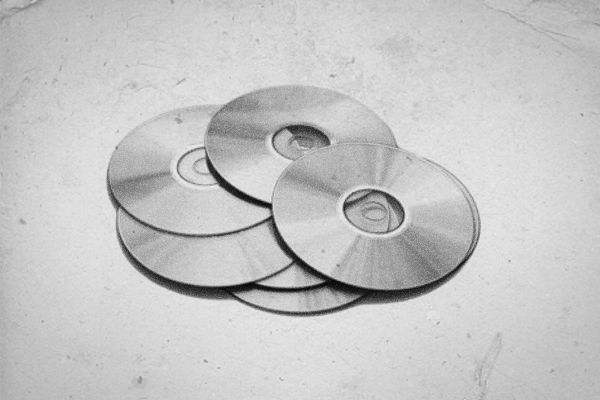
CDs
CDs (in the music sense)
While CDs are not a dead technology (yet) and can still be found pretty much anywhere, recent NPD stats show that, thanks to iTunes, things are not going well for the old format.
According to CNNMoney, when music sales reached their peak in 2000 – before digital music sales were a thing – 943 million CD albums were sold in USA.
In 2012, Billboard and Nielsen’s Music Industry Report revealed that 1.4 billion digital units were sold (as well as 117.7 million full albums) – compared to the 198 million physical units moved in the year (CDs, Cassettes, LPs – all included).
No points for guessing who dominates the digital music sales, either.
According to the NPD, iTunes currently makes up 63% of all digital music sales – dwarfing sales from Amazon or Google, or streaming services like Spotify.
More list articles
The most unnecessarily expensive gadgets


















 Loading ...