

The party balloon and the MRI scanner have more in common than you think


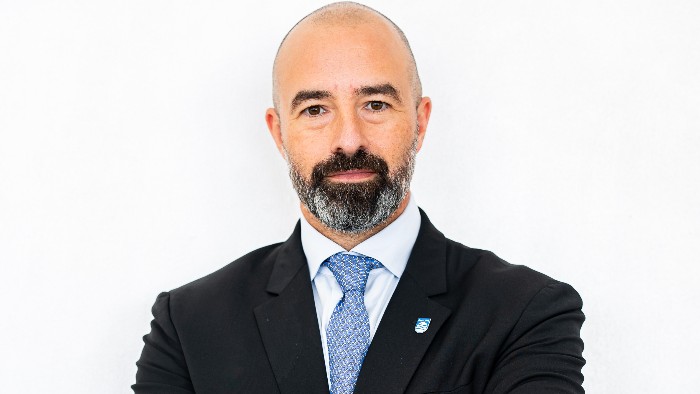
Marc Zora, Chief Executive Officer, Philips Middle East, Türkiye & Africa
Helium fills balloons. It also keeps most MRI scanners in the world running.
That connection surprises most people, because helium has always been managed quietly, in the background. A scheduled refill here, a contingency plan there. The kind of operational reality you learn to manage rather than question.
Dependency at scale
A single conventional MRI system requires approximately 1,500 litres of helium to operate and needs replenishing throughout its lifetime. This adds up to 32% of total global helium consumption, more than any other industry.
For most of MRI’s history, that dependency sat quietly beneath the surface, visible mainly to those who had lived through a quench; the rapid, unplanned discharge of a superconducting magnet, releasing a system’s entire helium supply in minutes.
The direct financial cost of a quench, even before the recent period of helium price volatility, could reach approximately €100,000, while nearly 30% of facilities that experience a quench report that their MRI system is still not operational after three days.
Three days, for a department managing a full patient schedule, is not an operational footnote. It is a gap in care.
Why now is the right moment to rethink this
The structural pressures on helium supply have been building for years. Helium prices have risen steeply, driven by a fragile and geographically concentrated supply chain.
Growing demand from the semiconductor sector, fuelled in part by AI and quantum computing, is adding further pressure to a resource that was already constrained.
These are not short-term fluctuations. They are structural signals that make now the right moment for healthcare leaders to ask a question that has not always had a viable answer: does this dependency need to exist at all?
For healthcare systems in META, that question is particularly relevant. Longer refill lead times, more complex logistics, and the pressure of managing supply uncertainty in a high-demand environment mean that the financial, operational, and clinical burdens of helium dependency are no longer easy to absorb.
The design response to helium dependency has followed two paths. The first is efficiency: reducing boil-off rates, extending refill intervals, and managing the exposure more carefully.
The second is more fundamental: designing systems so that dependence on helium is no longer a factor. Philips BlueSeal was developed along this second path.
Seven litres of liquid helium, less than 0.5% of the helium used in a conventional MRI system, are sealed permanently during production. Removing the need for refills simplifies siting, eliminates quench pipes, reduces installation complexity and long-term service risks, and shields MRI operations from supply fluctuations.
Over 2,222 installations now operate globally, from urban centres to remote settings where helium delivery is challenging. Together, those installations represent more than 6 million litres of helium that were never consumed.
What it means for healthcare and sustainability
For a radiology manager, the operational benefits are tangible: no refill scheduling, no contingency planning for supply delays, and no revenue loss from helium-related downtime.
In the event of a minor incident, EasySwitch technology allows discharge and recharge without helium loss, with the system operational again within six hours.
For a hospital CFO, it represents the permanent removal of an uncontrolled budget variable.
For a sustainability lead, it delivers a 99.5% reduction in helium consumption per system [4] – a material contribution to resource-stewardship commitments, with no offset required and no footnote needed.
Most simply, for patients, it means continuity of care. And for those who run MRI services, fewer variables to manage and more time to focus on what matters most: delivering better care for more people.
The question is no longer whether helium-free MRI is possible, but whether the systems we invest in today provide the resilience patients deserve.
Helium may still have its place in party balloons. In healthcare, we now have the opportunity to rely on it far, far less.


















 Loading ...