

5 technologies that changed the game


Technologies come and go – and are not always met with success or a healthy life cycle – but every now and then, we’re met with something that makes its presence felt in a big way.
Be it from an unexpected source, years of evolution, a company trying something new, or a down-right surprising success story that silenced all the critics, these technologies played a big part in changing the tech landscape.
The technologies listed below are not the be-all and end-all of game changers in technology, but they are technologies which fundamentally changed the way their field was seen or used – or even created an entirely new field in their wake.
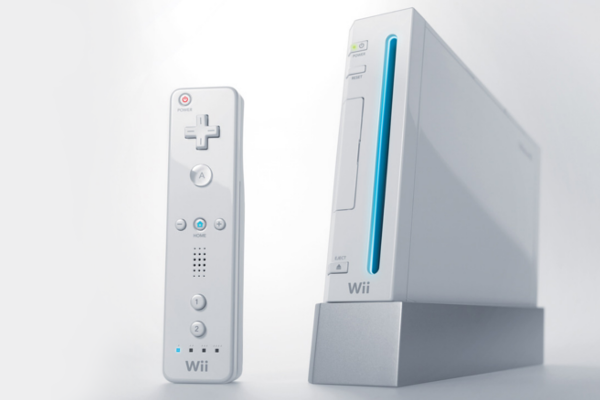
Nintendo Wii
Nintendo Wii – taking gaming to the everyman
The Wii is a 7th generation gaming console released by Nintendo. When the console launched in 2006, it gained a significant head start on competitors – Microsoft’s Xbox 360 and Sony’s Playstation 3.
While Nintendo’s console could not match the processing power of its competition – and had to face the sniggers and “wee” jokes made at its expense – Nintendo’s console had one very appealing draw: its price.
Retailing for US$50 – US$150 cheaper than the next cheapest console (Xbox 360 at US$300 – US$400) and mass-appeal family-friendly games, the Wii went after a different market to Microsoft and Sony – casual gamers.
The Wii’s positioning worked perfectly for the company, with people of all ages – from children to the elderly – playing games on the system.
By March 2013, Nintedo had shipped just under 100 million Wii consoles across the world – surpassing both the Xbox 360 (77.2 million units) and the PlayStation 3 (75 million units) despite its lack of technical horsepower.
While Nintendo’s Wii may not have been the best or most powerful console available – it certainly became the most accessible, and moved gaming away from the field of the “hardcore” and into the living rooms of the everyman.

iPad Mini
iPad – birthing a new market
In 2010, CNN reported that “as Apple’s iPad is released in nine overseas markets…industry watchers wonder if they are seeing the birth of a new market or a geek niche product”.
While the launch of the iPad created the question – a retrospective look at the sales which followed certainly answered it.
Since the launch of the iPad in 2010, Apple has shifted over 120 million iPads world wide – 19.5 million sold in the last quarter, alone.
Beyond Apple’s sales, the tablet market has exploded, opening the way for manufacturers like Acer, Samsung, HP, Lenovo – pretty much anyone in the industry – to launch and sell their own tablets.
According to research firm IDC, tablet sales globally are expected to grow 58.7% in 2013 to 229.3 million units.
Further, the IDC expects tablet shipments to outpace the entire PC market by 2015.
It wasn’t the first tablet ever launched, but the iPad is definitely the tablet that made having a tablet a thing – and everyone took notice.

Twitter – it caught on
It’s difficult to imagine a day going by when someone isn’t sub-tweeting or hash-tagging or saying something idiotically racist on Twitter – but there was a time when the world just didn’t quite get it.
Back in more innocent times (2006), a company called Odea released a service called Twttr, an online short message service (SMS) that delivered quick messages of networked people straight to your phone.
While functionally different at launch, Twttr would eventually evolve into the Twitter as we know it today – an online service that allows you to follow short messages posted by other people you choose to include in your network.
What did people think of the service when it launched?
“This is never going to catch on.”
Seven years later, however, over 270 million users across the globe would beg to differ.
While there’s no official number at which to peg Twitter’s true value, in 2011 the company was priced at over US$8.4 billion – a number which would be far greater now.
Available on pretty much every platform out there, catering to the stalkers, narcissists, news-hounds, trolls and the all-sorts of the world, Twitter has very much “caught on” – and with hundreds of thousands of sign-ups happening every month, it doesn’t look like it’s going to slow down any time soon.

Tesla Model S
Tesla Motors – making electric cars sexy
Whether you’re aesthetically inclined or not, it’s undeniable that Elon Musk’s Tesla Motors has definitely made electric cars sexy – but it’s faced a tough time making them financially viable. Until now, that is.
For the first time the company’s 10 year history, in Q1 2013 Tesla recorded a profit of $11 million – with a 83% increase in sales and growing demand for its vehicles.
It has been a tough road to profitability for Tesla, as the company builds its own cars and has to expand its costly “Supercharger network” of “filling stations” across its markets (at US$500,000 a pop) to make sure they can actually run.
The company’s flagship car, the Tesla Roadster (which has since stopped production), was sold at US$109,000 as a base price, and sold 2,400 units of the vehicle by September 2012.
In contrast to the relatively meagre sales numbers of the Roadster, the company’s follow-up – the Tesla Model S sedan, which sells for a minimum of US$95,400 – has become the star child to push the brand.
It may be too soon to call Tesla’s Model S a roaring success that will change the motor industry, but with 15,000 “pre-orders” currently in, and 30,000 expected in 2014, Tesla is certainly changing the face of electric cars in the USA – and showing that it can be done profitably.
Tesla has a new version of the Roadster as well as the Model X in line for 2014, and other vehicles also planned.

MP3 audio
MP3 encoding – down-sizing your tunes
It would be easy to add Apple’s iPod to this list of technologies, as the music player changed the way we consume music – and eventually other media – every day.
However, giving credit where credit is due, it’s arguably MP3 encoding which fundamentally changed the way music is shared and stored, even though it took a long time to get there.
MP3s use data compression based on perceptual limitations of human hearing – that is, our ears can’t hear the full spectrum of audio waves present in recorded music, so there is a lot of extra, inaudible baggage being dragged along with digital sound.
The concept of cancelling out those sounds – called auditory masking – was reported as early as 1894, but it took decades of understanding and evolution in compression technology before the MP3 format got standardized in 1995.
While storage today isn’t much of an issue, when disk space was more limited, MP3s were a god-send, shrinking audio files to a fraction of the size.
This means that consumers finally had the means to access thousands of songs on platforms like iTunes, and could store them on their portable media players like iPods.
Smaller file sizes also opened up the way for easier music sharing online – which paved the way for Napster and other file-sharing sites to blossom.


















 Loading ...