

Massive win for households with rooftop solar in South Africa


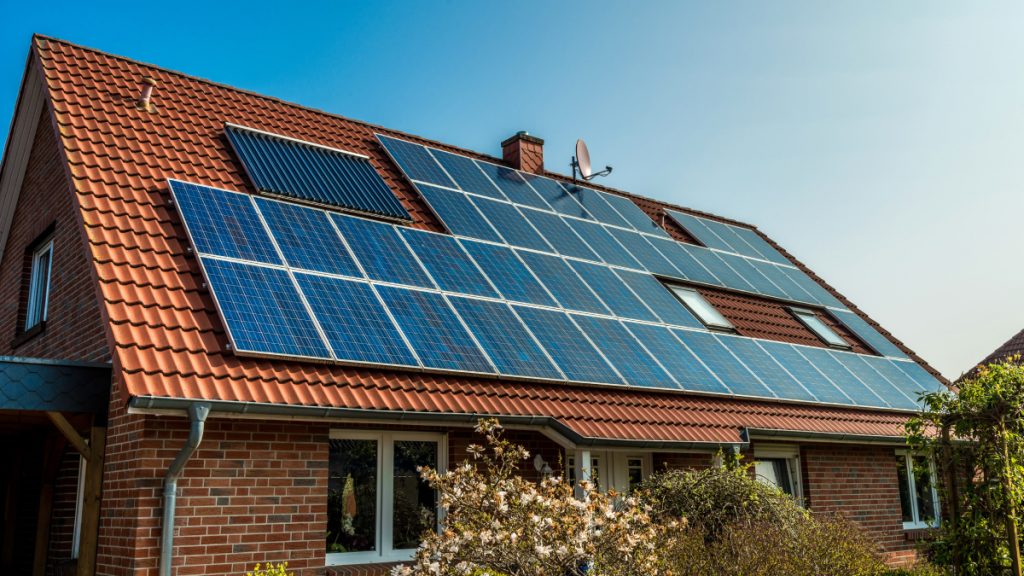
Power utility Eskom has scrapped the requirement for residential customers with rooftop solar panels to have their systems signed off by an engineer.
Rooftop solar users now only have to have their systems approved by professionals registered with the Department of Labour.
These include Installation Electricians and Master Installation Electricians, but exclude single-phase testers.
While these systems still need to be registered with Eskom, this skips the controversial and costly step of having to pay thousands of rands for professional certification from someone registered with the Engineering Council of South Africa.
Eskom said that this greatly simplifies the registration and compliance process for customers who generate their own electricity through Small-Scale Embedded Generation (SSEG).
However, the utility stressed that the registration process must still be followed to ensure that households and small businesses are legally connected to the national grid as required by the National Energy Regulator of South Africa (NERSA).
In line with NERSA regulations, all businesses and households with embedded generation systems of less than 100kVA, including solar PV systems, are required to register with Eskom (or electricity licensee), even if they do not export electricity to the grid.
However, customers who are fully off-grid and not connected to Eskom’s network are not required to register, provided they can demonstrate that their systems operate independently of Eskom’s supply.
“Eskom recognises that many South Africans are eager to participate in the clean energy transition. Our goal is to make it as simple, safe, and cost-effective as possible for customers to connect legally, while ensuring the stability and safety of the national grid.
“We have been working hard with our industry stakeholders to remain at the leading edge of safety requirements,” said Eskom Acting Group Executive, Distribution, Agnes Mlambo.
“We encourage customers to come forward and register their systems to meet NERSA’s legal requirements. Registration not only ensures compliance and safety but also positions customers to benefit from future programmes that reward clean energy generation,” she said.
Huge benefit to solar users

As a licensed electricity distributor, Eskom ensures that all customer connections, whether for energy use or generation, comply with the technical codes, standards, and safety conditions as required by NERSA.
Before 2019, only medium-voltage customers (above 1000V) were permitted to operate embedded generators in parallel with Eskom’s/licensee’s network.
In April 2020, Eskom expanded this to include low-voltage customers, allowing residential and small business users to install SSEG systems.
In the absence of formal low-voltage regulations, the distribution industry has relied on the NRS097 standards to ensure safe and compliant installations.
Initially, Eskom required systems to be signed off by an ECSA-registered professional.
However, this process could be costly for some homeowners, as fees for professional sign-off vary across providers and are outside Eskom’s control.
Estimates put the costs in thousands if not tens of thousands of rands.
With the latest changes, rooftop solar users can now benefit from a streamlined and more cost-effective process:
- There are no registration or connection fees for households with solar systems up to 50kVA, until
March 2026. - Residential systems can now be certified by a Department of Labour registered person (Installation Electricians and Master Installation Electricians), excluding single-phase testers.
- A valid Certificate of Compliance and a basic EGI test report (to be signed off by a registered person).
This means customers can save over R9,000 on connection costs for a typical 16kVA rooftop solar system, Eskom said.
Households with solar PV systems up to 50kVA continue to be exempt from registration fees and installation of smart meter fees.
Non-residential SSEG customers will continue to benefit from the previous year’s connection charges.
“Eskom continues to urge all SSEG customers to register their systems to ensure safety, regulatory compliance, and access,” the group said.









 Loading ...