

Major 80-year-old South African industry could disappear by the end of the year


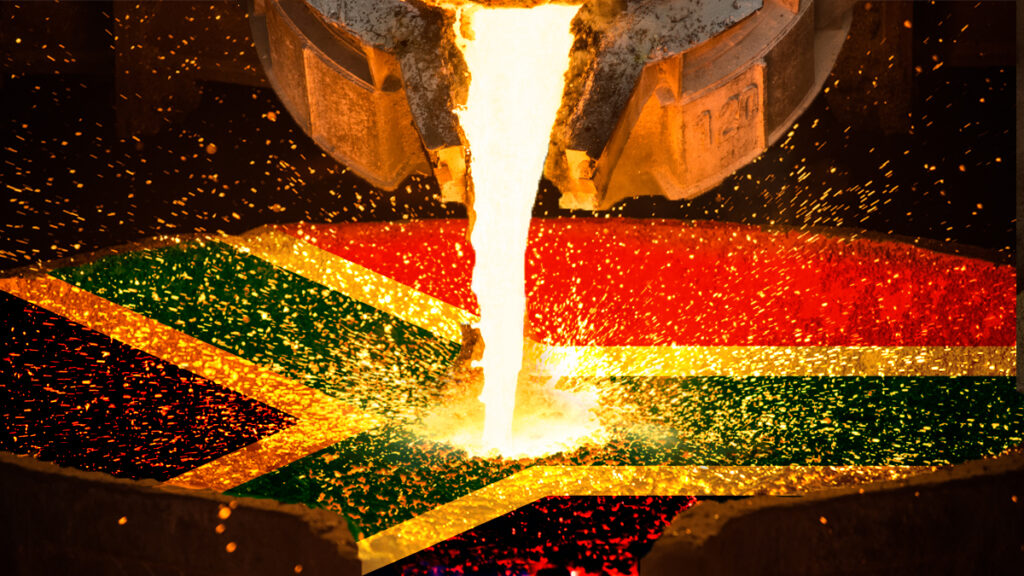
South Africa’s smelting industry, which has operated for more than 80 years, is facing widespread shutdowns if the government does not take urgent steps to reduce electricity costs.
Companies across the sector have stressed that they can no longer afford to operate under current power tariffs and are preparing for retrenchments and closures if no solutions are announced soon.
This is according to the Glencore-Merafe Chrome Venture, which noted last week that retrenchments at its ferrochrome smelters will commence in the coming weeks if the government presents no viable solutions.
The company started a Section 189 retrenchment process on 1 September and has spent the last three months trying to limit job losses by reviewing its operations and holding discussions with government, unions, and employees.
Despite these efforts, the company noted that no workable proposal has been offered to address rising electricity costs, the most significant pressure point for its ferrochrome smelters.
As a result, it plans to begin retrenchments in the coming weeks and will place its Wonderkop and Boshoek smelters in North West on care and maintenance.
This would lead to significant job losses and affect surrounding communities that depend on the operations.
The government indicated earlier this year that it would introduce a package of industrial electricity pricing measures.
Cabinet approved the intervention plan in June, and an announcement was initially expected in September.
Electricity and Energy Minister Kgosientsho Ramokgopa has also said on several occasions that the government intends to offer a discounted tariff to smelters to help keep them operating.
However, no finalised plan has been released. Industry experts have noted that any tariff support will have to be competitive with countries like China, where industrial electricity is roughly half the cost of South Africa’s.
Samancor Chrome, another major player in the sector, has issued a similar warning. It informed employees that its discussions with the government have not produced concrete assistance and that its operational costs— particularly electricity—are no longer sustainable.
The company stressed that it may have to consider shutting down its remaining furnaces if conditions do not improve.
Electricity prices are crippling industries

South Africa’s ferrochrome industry has a long history, with the first industrial-scale production taking place in 1942 in small electric furnaces in Vereeniging.
For decades, the sector played a strong role in the country’s industrial development. Today, however, the combination of rising energy costs, load shedding, and policy uncertainty has placed the entire industry under strain.
Donald MacKay, CEO of XA Global Trade Advisors, said the difficulties facing Glencore and Samancor are part of a broader challenge across all energy-intensive sectors.
He explained that while households can find alternative power solutions, heavy industrial users cannot easily switch away from the grid. As a result, many manufacturing operations face similar risks.
For some large businesses, electricity now accounts for up to 40% of production costs. The Energy Intensive Users Group of Southern Africa (EIUG) noted that continued tariff increases and uncertainty have already forced some operations to close and deterred new investment.
Between 2007 and 2024, Eskom’s tariffs increased by 937%, far outpacing inflation of 155% over the same period.
Government data show that around 14 smelters have shut down in recent years, resulting in significant job losses.
The effects of these closures extend beyond the smelting sector itself. Industries that supply smelters, such as anthracite mining, have been heavily affected.
In KwaZulu-Natal, more than 30 anthracite mining operations have stopped production because demand from smelters has collapsed.
Ruan Nothnagel, chief commercial officer at Menar, said all of these companies have issued Section 189 notices.
He estimated that more than 30,000 jobs have been affected. Over one million tonnes of anthracite are now sitting in stockpiles, unable to be sold.
Anthracite is commonly used as a reductant in smelting and steelmaking and typically moves in step with smelting activity.
With smelters slowing or shutting down, the material has nowhere to go, and stockpiles are growing.
Without a competitive power tariff or clear support measures, companies have warned that they cannot continue to operate.














 Loading ...