

High-speed bullet train still coming for South Africa, Ramaphosa promises


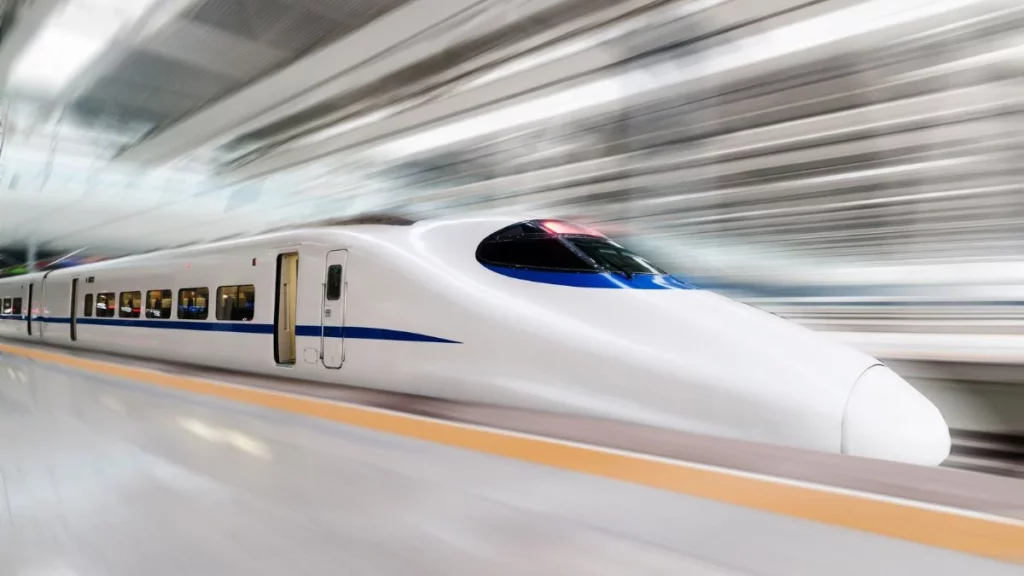
President Cyril Ramaphosa says the government is pressing ahead with plans to introduce high-speed rail in South Africa, with initial routes expected to link some of the country’s major provinces.
Delivering his State of the Nation Address (SONA) on Thursday evening, Ramaphosa said the government will continue preparations for the introduction of high-speed rail in South Africa.
The president indicated that the first phase of the project would focus on strategic corridors connecting Gauteng, KwaZulu-Natal and Limpopo.
“Now this I’ve been saying that we would like this to cover routes such as Johannesburg and Musina, and eThekwini to Johannesburg,” he said.
Ramaphosa argued that South Africa cannot afford to lag behind global trends and pointed out that high-speed rail has become standard in many parts of the world.
“High-speed trains are happening in many parts of the world,” he said, and added that they dramatically cut down the time of travel.
He criticised the current long-distance travel times between major cities and said they are no longer acceptable in a modern economy.
“In my book, it should no longer take five to six hours to travel from eThekwini or Durban to Johannesburg,” Ramaphosa said.
He also highlighted the journey north from Gauteng, noting that it currently takes “4.5 hours from Johannesburg to Musina, when it can be done in a much shorter space of time”.
According to the president, there is strong public support for the project. “Our people want it, and progress is now being made,” he said.
The government has already tested market appetite for the ambitious infrastructure drive.
Ramaphosa revealed that nearly 30 companies indicated their willingness to participate in high-speed rail corridors in response to a request for information last year.
The next step, he said, will be to move from early-stage engagement to formal procurement. “We are preparing to send out a request for proposals, which will introduce a new era of long-distance rail travel in South Africa at a faster pace.”
Plans struggle to leave the drawing board

Framing the project as part of a broader economic strategy, Ramaphosa said the country must modernise its infrastructure to remain competitive.
“We are determined to compete in a rapidly changing global economy,” he said, positioning high-speed rail as a key pillar in that effort.
Ramaphosa’s comments come after it was reported last year that South Africa’s plans to build its first bullet train had taken a major step forward, with the expected launch in 2030.
The Limpopo-Gauteng Speed Train Project, which aims to connect Pretoria to Polokwane, is gradually moving forward.
First announced in 2023, the project has now entered a critical stage, with feasibility studies and environmental impact assessments underway as of mid-2025.
These studies are necessary to ensure the project is safe, economically viable, and environmentally sound.
Led by the national Department of Transport, along with the Gauteng and Limpopo provincial governments and private investors, the project’s development is focused on securing funding and finalising the technical groundwork.
Construction was reported to begin in late 2026, with the first trains running by 2030.
However, despite these plans, South Africans have seen multiple promises around rail and public transport development over the years, with many plans struggling to leave the drawing board.
The high-speed rail framework, for instance, was first discussed as far back as 2010 under former transport minister Sibusiso Ndebele.
President Ramaphosa reiterated the idea in his 2019 State of the Nation Address, imagining bullet trains running from Johannesburg to Musina, with further connections to cities like Buffalo City and eThekwini.
In 2022, then-transport minister Fikile Mbalula gazetted a National Rail Policy White Paper that formally introduced high-speed rail corridors as a key development objective.
This policy was approved by Cabinet in November 2023, and in his 2024 State of the Nation Address, Ramaphosa confirmed the government would now prioritise feasibility studies.















 Loading ...