

South Africa’s most important city heading for disaster


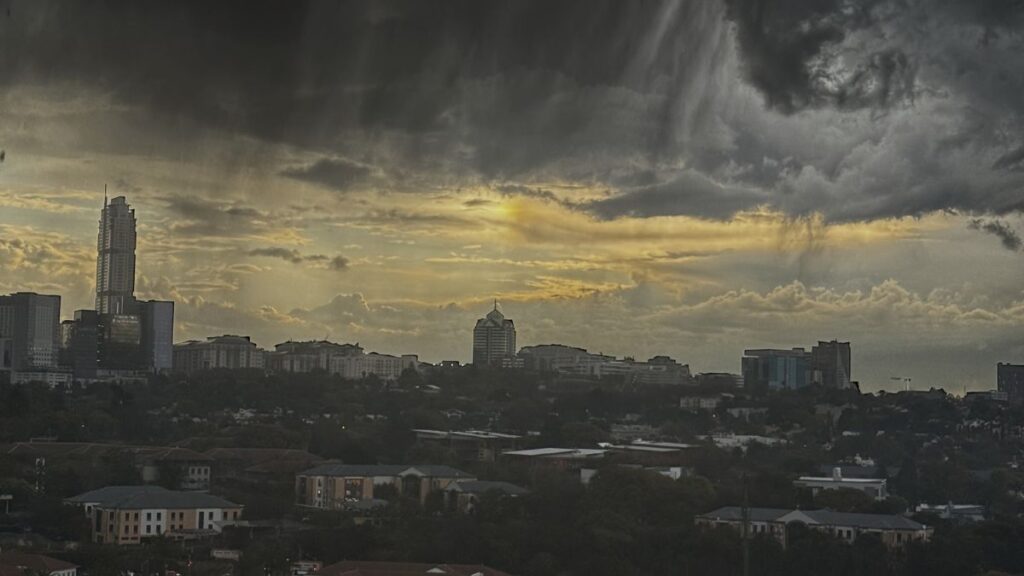
Experts are warning that the City of Johannesburg (CoJ) is heading for a national disaster over its worsening water outages.
This could result in a major drag on economic growth, as working infrastructure is critical to company operations, and the city is home to some of the country’s biggest firms.
In 2008, Dr Anthony Turton warned that South Africa was facing a critical water crisis characterised by a growing ingenuity gap.
Turton urged the government to avert the water crisis before it happens. The alternative was to deal with the fallout, as was the case with load-shedding.
Fast forward 18 years, and his warnings are now playing out in real time. Municipal infrastructure losses are up to 50%, which leads to reservoir depletion.
Turton further highlighted that Johannesburg Water loses roughly 44% to 50% of its water to leaks and theft before it reaches customers.
Turton’s warnings regarding Gauteng have intensified significantly between 2024 and 2026 as the crisis started to unfold.
He described the province as the epicentre of a national crisis, frequently using the term water-shedding to describe what he called the new normal.
In a recent interview, Dr Ferrial Adam, executive director of WaterCAN, now says Johannesburg’s worsening water outages have reached the point where a national disaster should be declared.
She explained that the city’s system is under extreme pressure, with many residents already living through conditions normally associated with “Day Zero”.
“Now Johannesburg’s water system is under growing and severe strain. Residents in many suburbs now endure prolonged outages and infrastructure failure,” she said.
After attending a briefing by the mayor, Adam said there was little new information and expressed concern about the city’s framing of the crisis.
She found it alarming that officials suggested the situation was largely under control. “There’s this kind of sense that things are okay,” she said.
However, she questioned how the city can say that when there are areas like Melville, Emmarentia, and Kensington, which have not had water for about 22 days.
Day Zero already here

According to Adam, this already qualifies as a Day Zero scenario. Because of this, she believes a formal disaster declaration is necessary.
“We are effectively living under day zero conditions, so there needs to be a national disaster declared in the city of Joburg,” Adam said.
“And it’s not a climate national disaster, it’s an infrastructural disaster.” She warned that the city cannot continue repeating outages year after year while communication remains poor.
Adam said urgent intervention could stabilise the system within a few years—but failure to act could push recovery far into the future.
She called on the national government to act decisively rather than make promises. “The president must not give empty promises—he must give actual things that can happen on the ground.”
Among the key steps she listed were ring-fencing water funding and increasing Johannesburg Water’s budget.
She added that several specific infrastructure repairs could quickly stabilise supply, including finishing the Brixton reservoir and repairing major pump stations.
Adam explained that one of the biggest problems is financial control. “Joburg Water does not have control over its budget,” she said.
Allocations may exist on paper, but the entity often lacks the cash to pay contractors, leading to stoppages and delays.
At the end of October, Joburg Water owed R1 billion to 203 contractors, and payment disputes have stalled critical projects.
Labour disputes and slowdowns have also worsened outages. “It’s completely impacting repairs,” Adam said.
“Any burst pipes or leakages anywhere else in the city—you don’t have a team to fix it. So it just creates chaos.”
She added that poorer communities suffer the most. Many rely on tankers that arrive at unpredictable times and sometimes run dry.
For Adam, the crisis has already escalated beyond municipal capacity and now requires national intervention. “We need national attention,” she said, warning that without decisive action, the city risks years of deepening water instability.
The City of Johannesburg is considered South Africa’s most important city because it is the nation’s economic, financial, and industrial powerhouse, generating approximately 16% of South Africa’s GDP.
As the provincial capital of Gauteng and a central business hub for sub-Saharan Africa, it serves as the headquarters for 70% of South African corporations and drives significant employment and investment.
It its also home to the Johannesburg Stock Exchange (JSE), the largest in Africa and top 20 globally, along with major banks and insurance companies.















 Loading ...