

South Africa’s rand catches a small break


The rand weakened against the US dollar following the decision by the United States Federal Reserve to hike rates last week.
However, following the initial reaction—which sent the rand over R16.40/$—markets have pulled back, focusing on the next wave of data.
Specifically, after the Fed hike, markets have pushed back their expectations of another rate hike.
According to Investec Chief Economist Annabel Bishop, US interest rate expectations have eased, with the implied Fed funds futures now ascribing only a 50% chance of an interest rate hike in the US in October.
This is down from over a 100% before.
“The US is not expected to hike at every meeting,” Bishop said, adding that the next 25bp hike in the US is seen in December.
For South Africa, this has calmed the rand, the economist said, allowing for some respite for financial markets.
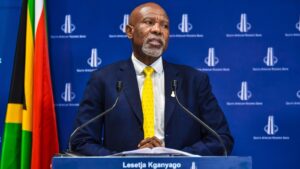
However, the rand remains on the back foot, trading around R16.20/$, with the Reserve Bank’s Monetary Policy Committee (MPC) expected to hike local rates by 25 basis points this week.
This has also been more broadly reflected among forecasters, where even those who were previously banking on the SARB holding rates are now flipping their view to a 25bp hike.
The driving force behind the flip is the global oil price, which has been rising amid escalations in the Middle East and the United States’ war in Iran.
The war has driven oil prices above $100 a barrel, almost hitting $110, and put global fuel supplies under immense pressure.
As a result, South Africa—like many other economies—now faces escalating fuel prices, with petrol 95 threatening to pass the R30/litre mark in October.
Economists and analysts expect the knock-on effects on inflation to be more pronounced and to linger, prompting the SARB to hike rates at its meeting this week.
Some hope

According to Bishop, there are some positive turns in the current situation.
While oil prices remain above $100 a barrel, they have eased from the $109/barrel level just a week ago, as Saudi exports recover, and flows of oil from the Middle East have improved.
Because of this, while fuel prices are still expected to rise in October, this should be less than feared, as concerns over a supply crisis for oil have eased and extra barrels are being routed through the Strait of Hormuz.
On the political side, US President Trump has also said he is now in a “declining mode” on attacks on Iran, while hopes of talks between the US and Iran have increased at this week’s UN meeting, she said.
The rub to these positive signs is that nothing is certain or guaranteed with the war or the Trump Administration.
A move towards peace in June after a memorandum of understanding was signed by the US and Iran completely collapsed just weeks after.
This time, after talking about a “declining mode” on attacks, Trump followed this up immediately by threatening to “blow the entire nation up” after Iran warned of further severe strikes.
Bishop said the situation remains volatile, but markets are focusing on oil flow, and so inflation and interest rate effects for markets.
“Extreme statements are the norm from the US president, and while they should always be taken very seriously, there have also been pull backs on threats and warnings, which has resulted in markets becoming less sensitive to US statements,” she said.
For the rand, the economist said the currency has gained and has momentum to gain further. But it, too, will remain volatile, dependent on factors directly impacting fuel prices globally.
This, she warned, can change quickly.

















 Loading ...