

United States shooting itself in the foot with tariffs hitting unique South African sector


US tariffs on South African industries have harmed local businesses and jobs, but they might inadvertently affect a key industry back home in the US.
South Africa’s ostrich leather is a major contributor to the USA’s cowboy boot industry, and the tariffs on the local product could cost US jobs.
This is the warning from Arno Albertyn, Executive Director for Leather at Klein Karoo International, in Oudtshoorn.
He said the US tariffs on South African ostrich leather exports are hitting not only South African producers but also American industries that rely heavily on this material.
This 30% tariff on South African exports could hit the ostrich processing industry in the US hard.
Only 20% of South Africa’s ostrich leather exports go to the United States, but for the US ostrich industry, 70% of their products come from South Africa.
Albertyn stressed that ostrich farming is a significant sector locally. “It’s a R1.2 billion industry in this country. It’s the meat and it’s the leather industry,” he said.
He explained that the tariffs would significantly increase local prices and, therefore, hit the cowboy boot industry.
Albertyn said his company has already been engaging with its US partners to find ways to manage the fallout.
“We’ve been talking with our agents in the USA to see what other plans we can make. We’re very lucky to have about four to six months’ worth of stock already in the USA that we got in before the tariffs hit,” he said.
“That gives us the opportunity for a little bit of planning. Unfortunately, if nothing changes, we will probably have to increase our prices after this period.”
The concern, Albertyn explained, is how price hikes filter down to the consumer. “It’s not a straight $1 extra per skin. It’s a multiplier.
So, it suddenly becomes much more expensive on the shelf, and the question becomes whether the consumer can afford that new price.
A double-edged sword
However, Albertyn noted that the implications are serious on both sides of the Atlantic.
“This tariff regimen has consequences not just for the farmers and producers here in South Africa, but for the manufacturers and the retailers, particularly of ostrich products in the US,” he said.
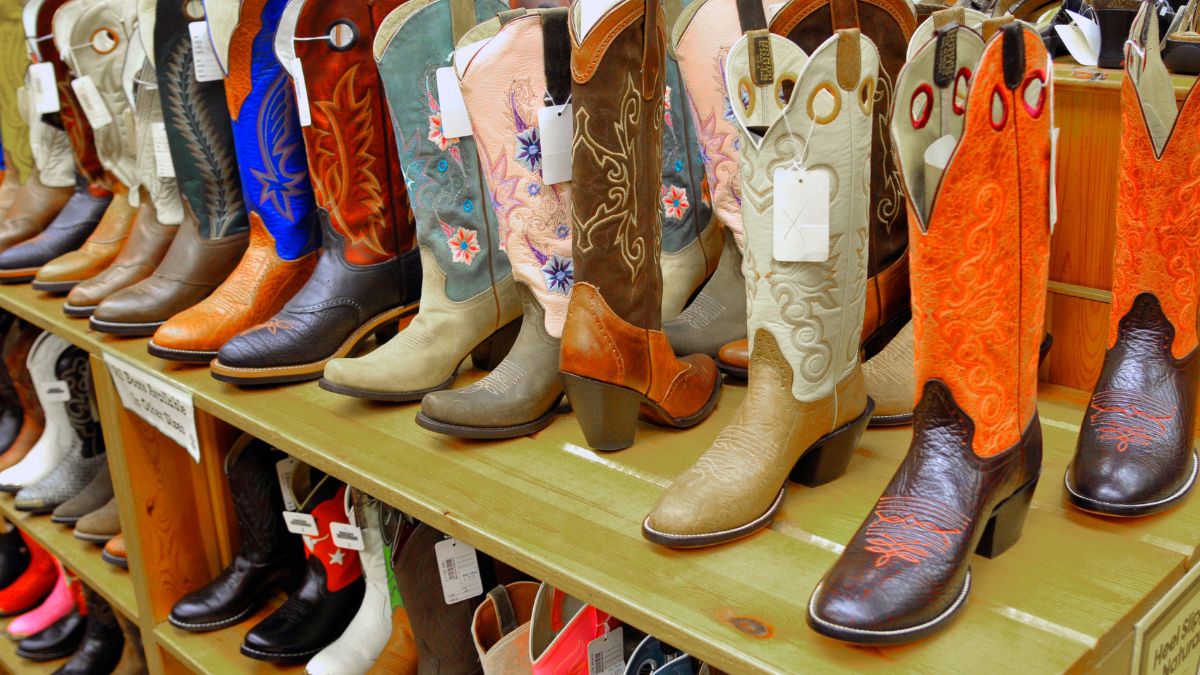
He highlighted just how labour-intensive cowboy boot production is. It takes about 200 hands to make one pair of cowboy boots. It’s a huge industry.
“It’s a huge job market for them. And the irony of it all is we are only supplying one part of the raw material of the boot,” he said.
“That doesn’t mean we are taking jobs away from the United States. We’re actually giving them jobs because it’s just like supplying a part for a car that they assemble in the US.”
For Albertyn, the irony is that tariffs framed as protecting US industries may in fact damage them.
“Now they will probably lose jobs and have to pay more for the product on the shelf,” he said. He explained why ostrich leather remains so sought after in the US despite its premium cost.
The boots themselves are not cheap. A cowboy boot pair can cost you anything from $400 to $500 (R7,000 to R8,900) for ostrich, up to $5,000 (R88,300) per pair.
Americans wear cowboy boots not only for dress codes but also for work. They use them in the kraal with the cows and horses; it’s everyday workwear. It’s comfortable, soft, durable, and can last forever.
“The Americans have the money and are willing to spend on quality, and that is what ostrich leather gives them,” he said.
Albertyn believes the higher-end boot market can absorb the higher prices, but like everything, most of the volume is in the lower end.
“We will get punished on the $400 to $500 per pair type of ostrich boots. That’s where the risk lies, because those consumers are not willing to pay 30%.”
He warned that the tariffs are therefore a double-edged sword, affecting both South African farmers and American workers.
















 Loading ...