

Major carmaker cutting back operations in South Africa


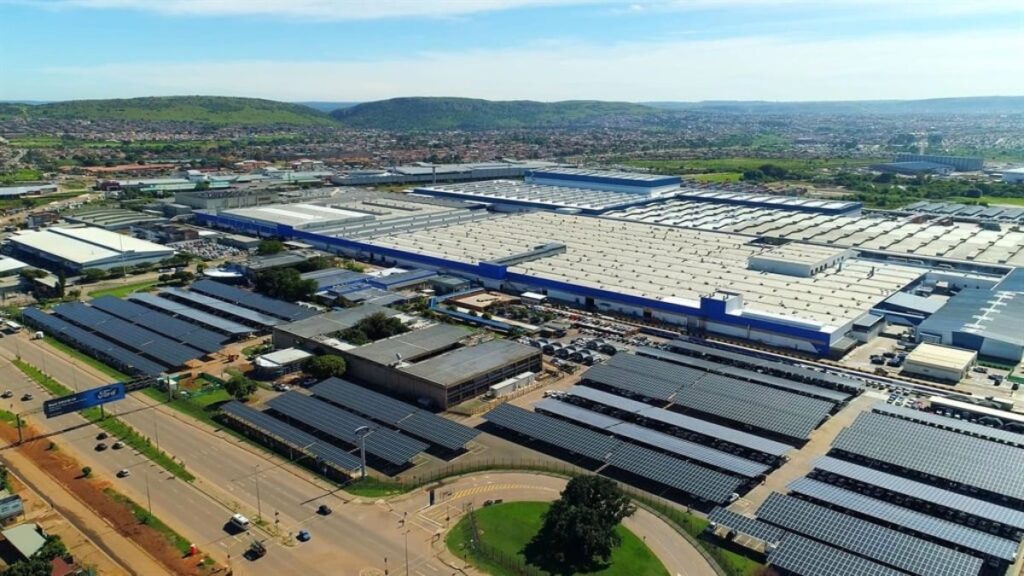
Ford Motors has scaled back its South African operations, confirming the retrenchment of nearly 500 workers across its plants in Pretoria and Gqeberha.
The move follows a decline in European demand for its vehicles, particularly the Ranger pickup, as well as changes in international tax policy that have disrupted the automaker’s export strategy.
In August, the company issued a formal notice to unions, outlining its intention to lay off 474 employees. This comprised 391 operator roles at its Silverton assembly plant in Pretoria, 73 positions at its Struandale engine facility in Gqeberha, and 10 administrative jobs.
The company said the cuts form part of a “realignment” of its production capacity to reflect current and anticipated market conditions.
While the announcement coincided with new US tariffs on automotive imports, Ford South Africa clarified that its operations are unaffected by those measures, as the local arm does not export vehicles to the United States.
Instead, the group said the retrenchments are a result of a necessary adjustment to optimise production.
“We regret that these essential plant adjustments will result in a reduction of positions across both facilities,” Ford said.
“We understand the impact this has on our valued employees, and we are committed to supporting those affected. As part of this process, we will be offering voluntary separation options.”
Trade union Solidarity, which represents many of the affected workers, has warned that Ford’s retrenchments could be the start of a broader crisis for South Africa’s automotive sector.
“We see this announcement as possibly the beginning of greater job losses facing the entire automotive industry in South Africa,” said Willie Venter, deputy general secretary of Solidarity.
He added that economic pressures, international uncertainty, and unfavourable local policies are undermining the industry’s competitiveness.
The union said it would use the consultation process with Ford to better understand the reasons for what it called a “drastic reduction” in vehicle sales.
Reasons for the cut backs

Ford has since confirmed to Reuters that its South African operations have been hit by reduced European orders for the Ranger pickup, following recent tax changes in the UK, and disappointing demand for its plug-in hybrid Ranger model.
The company produces both the internal combustion engine version of the Ranger for local and export markets, as well as the plug-in hybrid exclusively for global exports.
However, the hybrid has not achieved the sales volumes the company anticipated, adding further strain on production levels.
Neale Hill, President of Ford Motor Company Africa, explained that the business has been forced to reduce its operations from three shifts to two.
“In the UK, from the start of April 2025, double-cab pickups with a payload of one tonne or more have been reclassified as passenger cars rather than commercial vans for tax purposes, making them more expensive to own,” he said.
“As a consequence of that, people have unfortunately reduced their volume. So that’s had a big impact in terms of our European orders.”Hill noted that the plug-in hybrid Ranger has also underperformed.
“We haven’t seen the plug-in hybrid Ranger hit the volumes that we’ve been looking for. It’s an expensive vehicle, plus we are not getting to the European originating content, which then makes it able to go into Europe duty-free.”
Despite the setback in export markets, Hill pointed out that South African demand remains stable and is even showing slight growth.
Ford’s plant has the capacity to produce 200,000 vehicles annually, but utilisation remains below that threshold.
“Currently, this year will be about 100,000, and the installed capacity at capable volume is 140,000. That’s what we’ll keep going forward,” he said.
















 Loading ...