

Another severe weather warning for South Africa


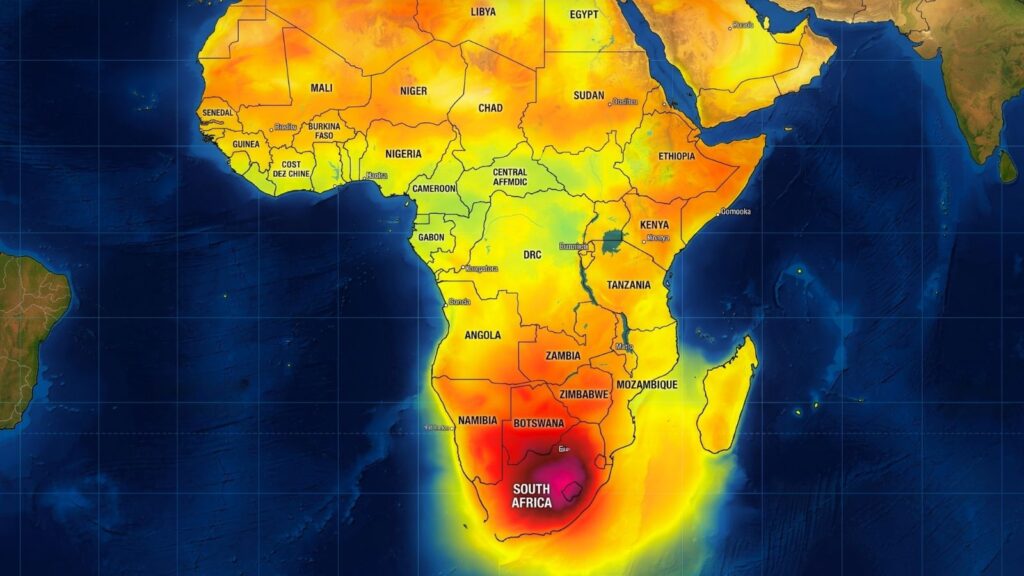
FNB senior agricultural economist Paul Makube says South Africa will likely be hit by the Super El Niño this year, but added that South Africa is in a good position to weather the downside risks.
However, risk experts have warned that drier conditions could create the perfect conditions for devastating wildfires across South Africa, which the country should prepare for.
Severe weather is predicted in South Africa this summer, potentially driving up food prices. However, some experts remain hopeful that the country can avoid significant increases.
Experts have predicted that an El Niño weather pattern will hit South Africa at the end of 2026, climate conditions which often lead to drought conditions in the country.
Past El Niño events have had devastating consequences for the country’s agricultural sector, which requires consistent rainfall to function.
Between 2014 and 2016, drought conditions plagued many parts of the country and led to decreased food production.
Maize farming was severely affected, with only 8.9 million tonnes of the crop produced to meet an annual demand of roughly 12 million tonnes.
Maize was not the only crop affected during this period, and most farming operations saw significant declines in production.
“We are heading for an El Niño weather pattern or cycle for the next agricultural season, and expectations are that we’re likely to see a drier year,” Makube said in an interview with BusinessDayTV.
“That is going to be a concern on the producer side in terms of how much to plant. If we experience dryness, we are likely to see a contraction, especially in the grain industry or the summer crop industry.”
However, he stressed that South Africa is entering the season in a much stronger position than during previous drought cycles after two consecutive La Niña seasons brought widespread rainfall.
“It is actually a significant buffer if you look at what has happened in the last two years,” Makube said.
“We’re sitting with wetness across the country, with dam levels very full heading into the new season. The build-up of soil moisture, as well as the replenishment of water tables, provides a buffer for production going into the new season.”
Makube added that South Africa’s agricultural exports are also relatively well-positioned because the country’s largest export sector, horticulture, relies largely on irrigation.
“If we look at our export profile, we are more skewed towards the horticulture sector, mainly fruits, which are mostly produced under irrigation. We’re unlikely to see a situation where we have a downturn in production,” he said.
While grain production could decline if dry conditions develop, he said the country is entering the season with exceptionally strong stock levels following a record harvest.
South Africa is in a good position

According to Riskonet Africa, the devastating wildfires sweeping through France and Spain should serve as a warning for South Africa as the country prepares for another El Niño cycle.
Volker von Widdern, Head of Strategic Risk at Riskonet Africa, said wildfires should no longer be viewed as isolated seasonal events.
They should be viewed as major risks capable of disrupting communities, agriculture, infrastructure, water supplies, insurance, and supply chains simultaneously.
“Europe is showing us what happens when abnormal heat meets dense, dry vegetation and intense winds,” he said.
“The result is not simply a larger fire. It is a systemic event that can overwhelm response capacity and cause losses across an entire region.”
According to the World Bank’s Climate Risk Country Profile, around half of South Africa is classified as arid or semi-arid, while average temperatures have risen by about 1.5°C since the 1960s.
The report identifies droughts, floods and wildfires as the country’s biggest climate-related disaster risks, with climate events causing an estimated R3 billion in damage each year.
Von Widdern warned that climate change and shifts in rainfall patterns are creating conditions for more intense fires.
Wetter seasons can encourage vegetation growth, providing more fuel when heatwaves arrive. He also noted that South Africa’s familiar El Niño cycle, historically occurring every five to seven years, may now be becoming “shorter and sharper”.
He stressed that organisations should prepare for credible worst-case scenarios rather than relying on historical trends.
“The question for risk leaders is not whether every climate mechanism can be forecast perfectly,” he said.
“It is whether organisations have considered credible cause-and-effect scenarios and tested what those scenarios would do to their people, assets, suppliers, and operating regions.”
Von Widdern added that businesses and municipalities should strengthen fire preparedness before emergencies occur.
He stressed that fire risk cannot remain a once-a-year compliance exercise, but should form part of continuous strategic risk management.
He warned that South Africa must decide “whether to prepare while there is still time or wait until an uncontrollable event exposes the cost of inaction.”

















 Loading ...