

Tax relief for homeowners living in Cape Town


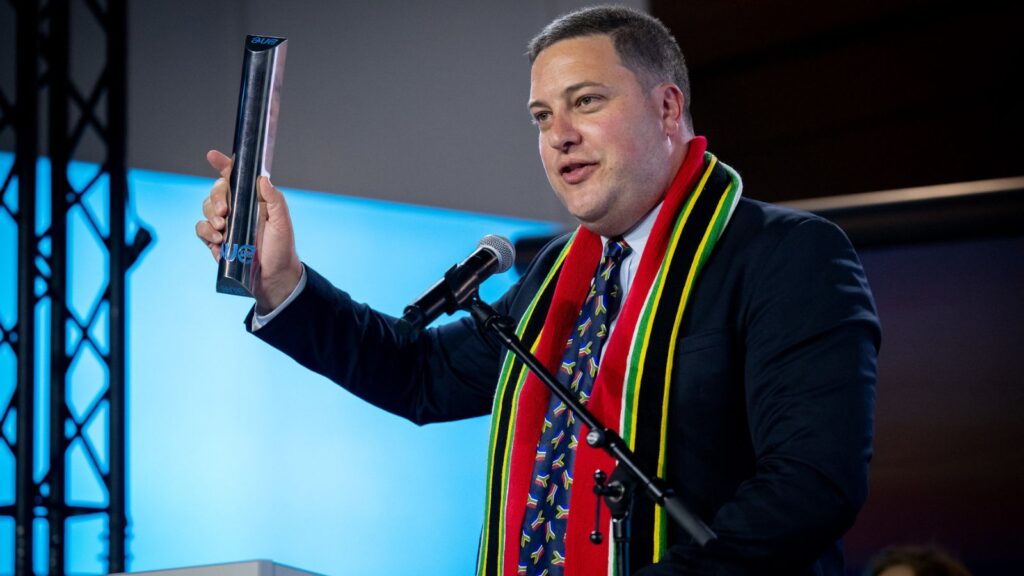
In an address to the Council in May 2026, Cape Town’s Mayor Geordin Hill-Lewis announced a proposed expansion of rates relief for all residential properties valued up to R8 million, an increase from the previous R7 million.
Under this proposal, the first R620,000 will be exempt from rates, up from the current R450,000 exemption for the 2025/2026 financial year.
Indigent households can benefit from a 100% rates rebate if their property value is R620,000 or less, or if their maximum monthly household income is R7,500.
Additionally, these households are entitled to free basic water and sanitation services, which include 15 kiloliters (kL) of water and 10.5 kL of sanitation services per month at no cost.
Moreover, there is a rates-free benefit for homes, where the first R620,000 of property value is exempt from rates for properties valued up to R8 million.
For households to qualify for lifeline electricity, they must have a property value of R500,000 or less and a monthly household income of R7,500 or less.
To maintain eligibility for this benefit, their average monthly electricity usage must be under 450 kilowatt-hours (kWh).
Lastly, pensioners with a monthly household income of R27,000 or less, regardless of the property value, can receive a rates rebate that ranges from 10% to 100%, as well as access to lifeline electricity.
“These benefits illustrate Cape Town’s commitment to supporting vulnerable populations through various financial relief measures,” said the City of Cape Town.
Cape Town is reportedly the only metropolitan area that offers subsidised electricity to pensioners with a monthly household income of up to R27,000.
In other cities, pensioners must be classified as indigent to qualify for similar assistance.
“The City of Hope Budget 2026/27 achieves several things at once that simply wouldn’t be possible in other cities,” said Cape Town Mayor Geordin Hill-Lewis.
This includes “ the most comprehensive relief for struggling households, the lowest property rates formula of all metros, and critical basic infrastructure investments that outpace all Gauteng metros combined,” said Hill-Lewis.
“Cape Town is SA’s one city that works, and with these investments we are building a city of hope for all, in line with our long-term vision,” he said.
How the metros differ in relief benefits
In Cape Town, households with a property value of up to R620,000 or a monthly household income of R7,500 qualify for a 100% rates rebate.
Ekurhuleni offers a rebate to those with a household income of up to R7,073, provided that the property value does not exceed R1.5 million.
Alternatively, individuals deemed indigent in Ekurhuleni may qualify if their property is valued at up to R600,000.
In eThekwini, the criteria for the rebate include a property value of up to R350,000.
In Tshwane, households with a property valued at up to R250,000 can receive the rebate.
In Johannesburg, a household income of less than R1,300 qualifies for a 100% rebate, while a 70% rebate is available for incomes up to R7,500, with the property value not exceeding R500,000.
The lifeline electricity qualifying criteria vary by city. In Cape Town, a property must be valued at R500,000 or less, and the monthly household income should also not exceed R7,500.
Similarly, in Johannesburg, the income limit is R7,500, and properties must not exceed R500,000 in value.
Ekurhuleni has a slightly different structure, allowing a household income of up to R7,073 for properties valued at no more than R1.5 million, or individuals may qualify as deemed indigent if their property value does not exceed R600,000.
In eThekwini, the property value limit is R350,000, while in Tshwane, it is set at R250,000.
Regarding free basic water, Cape Town offers 15 kiloliters for properties with a value of up to R620,000 and/or a monthly household income of R7,500.
In Johannesburg, the allocation is 10 kiloliters for households with incomes up to R7,500, 12 kiloliters for incomes up to R5,000, and 15 kiloliters for incomes up to R1,300. Tshwane provides 12 kiloliters for properties valued at up to R250,000.
Ekurhuleni allows 6 kiloliters for deemed indigents with property valued up to R600,000, while registered indigents with an income of up to R7,073 can receive 10 kiloliters.
In eThekwini, there are provisions for 6 kiloliters for properties valued up to R350,000 or for households earning up to R7,000 with property valued up to R750,000.
As for rates-free benefits, Cape Town offers a rates-free amount for the first R620,000 on properties valued up to R8 million.
In Johannesburg, the rates-free threshold is R300,000, while Tshwane offers R250,000.
Ekurhuleni provides a rate-free amount of R150,000, and eThekwini allows for R120,000. It is important to note that all these amounts include the R15,000 impermissible threshold.













 Loading ...