

South Africa stares down latest threat from the United States


The threat of a new 12.5% tariff on South African exports by the United States is bad news and will be another challenge for the country—but it’s far from a disaster.
This is the view of economists, responding to the looming threat of fresh tariffs on the country.
The United States Trade Representative announced the outcome of the Trump Administration’s Section 301 investigation last week, making findings against South Africa.
The investigation, which was launched in March 2026, aimed to assess whether South Africa and 59 other countries had enough legislative measures in place to block the trade of goods made with forced labour.
The administration argued that failure to address the importation of goods made with forced labour “creates a dynamic where American workers are forced to compete globally on an unlevel playing field.”
The Trade Representative made findings against all 60 countries assessed in the investigation, and is now proposing a 12.5% tariff on these nations.
Public hearings on the matter will be held in early July.
The Department of Trade, Industry and Competition noted the findings, and said it would continue to engage with the United States on the matter.
“The government of South Africa maintains that it remains compliant with all domestic and international obligations with respect to forced labour practices,” it said.
According to ETM Analytics, the proposed 12.5% tariff is definitely negative for South Africa, but in the greater scheme of things, it is “a material improvement on the earlier 30% ‘Liberation Day’ tariff threat”.
This sentiment was echoed by South Africa’s Presidential Envoy on Agriculture and Land and Chief Economist of the Agricultural Business Chamber, Wandile Sihlobo.
Sihlobo noted that, after a period of relatively lower tariffs, the proposed 12.5% tariffs “will be challenging”, but not a disaster.
“It is far better than where we are coming from, where South Africa had to face a 30% tariff. In agriculture, some of our competitors, like Australia and New Zealand, will face a similar tariff level,” he said.
“So, these relatively higher tariffs are a challenge but not disastrous, since we are coming from higher rates that placed immense strain on exporting businesses.”
Sihlobo stressed that the United States remains an important market for South Africa’s agriculture, accounting for around 4% of exports valued at US$15.1 billion in 2025.
Citrus, raisins, table grapes, and wine are amongst the most exposed industries, he said. However, he noted that oranges, juices and nuts are exempt from the tariffs, “which helps a bit”.
Unavoidable
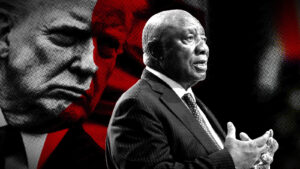
The Section 301 investigation and the resulting tariffs are generally seen as the latest tactic by the Trump Administration to lean on countries to secure better trade deals.
The administration itself has openly admitted that the tariffs are punitive or are being used as negotiation tools.
According to White House Deputy Press Secretary Kush Desai, the tariff strategy proved highly successful for the United States, narrowing key trade deficits in 12 months.
It also helped the US secure more than 20 trade deals with major partners, he said.
However, the tactic was dealt a significant blow in February 2026, when the US Supreme Court ruled that the previous “Liberation Day” tariff regime was illegal.
This forced Washington to find new ways to implement tariffs within the bounds of the law.
Specifically, Desai mentioned the Section 301 investigation as a way to bring tariffs back into the picture, with the outcome—the now proposed 12.5% tariff—seemingly a foregone conclusion.
The new Section 301 tariff, if put into effect, will join the Section 232 tariffs, which have been in place for more than a year.
Section 232 tariffs are those imposed by the US president on imports that he deems a national security risk. This section has been used to impose large tariffs on metals such as steel and aluminium.
“Tariffs are here to stay,” Desai said. “They’ve already delivered too many wins – from securing trade deals to lowering costs in key industries – to go back to the old status quo.”
















 Loading ...