

Another blow for businesses in South Africa


Despite improvements in January, the Purchasing Managers’ Index (PMI) fell sharply in February.
The index is based on surveys with purchasing managers in the country’s manufacturing sector, with managers providing monthly insights into their businesses.
Absa then processes all the data to create an index, with 50 representing stability, higher values indicating increased activity, and lower levels meaning decreased activity.
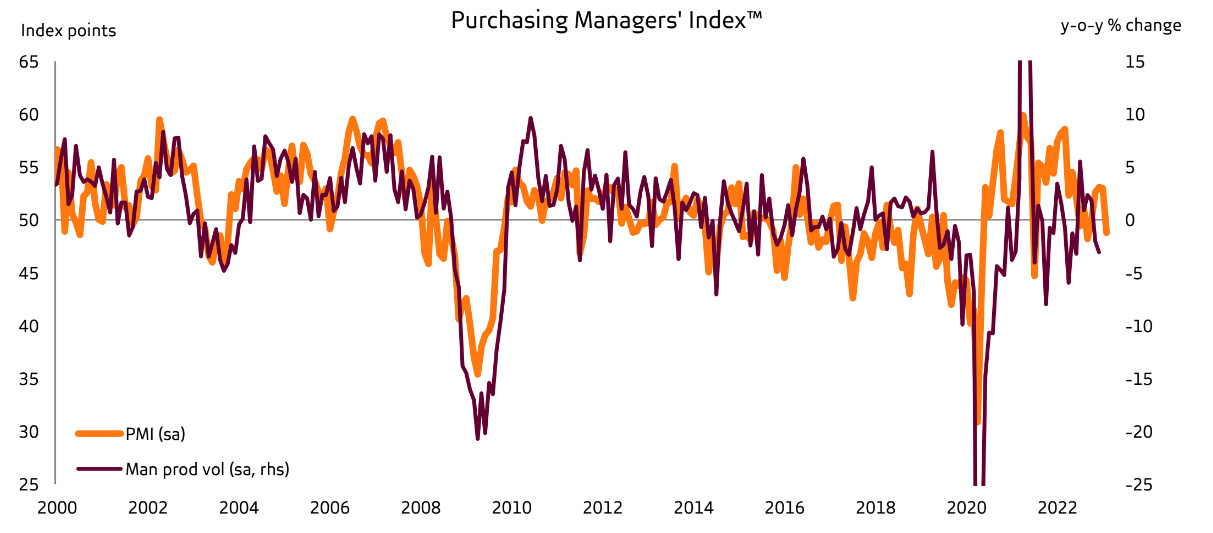
The PMI dropped from 53.0 index points in January to 48.8 in February – the first time the headline index fell below the neutral 50-point mark since September 2022.
This showed a serious deterioration in business conditions – within the factory sector in particular.
February contained an unprecedented seven days of stage 6 load shedding, with many managers including it in their commentary over why activity declined from the previous month.
The business activity and new sales order indices both contracted, with demand dropping for the second month in a row.
Absa recorded the following business activity metrics:
- December: 45.2
- January: 56.0
- February: 45.5
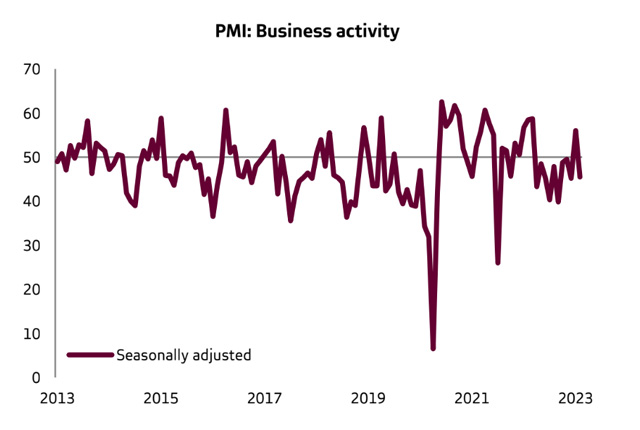
The new sales order index dropped to its lowest level since October 2022, declining from 49.9 in January to 49.4 in February.
Although the February statistics mainly provided negative news, export sales grew to the best level in a year. However, this means that producers solely supplying to the domestic market likely faced a difficult month.
In addition, due to the weaker output picture, the inventories index also dropped below the neutral 50-point mark – declining from 53.1 in January to 46.5 in February.
The employment index declined to 47.1 in February, from 48.8 in the previous month – remaining firmly below the natural 50 mark.
The index measuring the expected business condition in six months’ time also declined to 46.8 – the lowest level since May 2022. Respondents are thus downbeat about future business conditions – to similar levels seen in the early stages of the Covid-19 lockdown.
Moreover, the purchasing price index further increased for the second month to reach the highest levels recorded since September 2022 – standing at 78.6 from 69.3 in January.
The survey took place when the rand was trading at over R18/$, which would have affected costs, particularly imported raw materials and intermediate goods.
The surge in the PMI’s price index may mean an acceleration in factory-gate prices (where low purchasing prices for goods are agreed upon, but the buyer must pay for the transportation of the goods.)
That being said, Absa noted that the index remains well below the peaks reached in the first few months of 2022.
The graph below shows an overview of the PMI and manufacturing production since 2000:
Read: The one province in South Africa where more people are unemployed than working


















 Loading ...